No more time zones from 2020

The digital age hasno more timezones a lot of consequences in our life and the next big reform is the end of the time zones.

As most shops nowadays are web shops being open 24/7 and many people work around the clock from home, travel and anywhere else, we really don’t need time zones around the world anymore.

Therefore, the United Nations have decided that everyone will be on UTC from 1st January 2020.

There will only be a few exceptions:

  • The US Midwest will g.. d.. it stay one their usual time zone.
  • Switzerland will have their separate time zone, the so called cuckoo clock time.
  • The UK prime minister has decided that there first will be a referendum about this in the UK if he wins the next three general elections.

Bookmark and Share

Did You Mean Potato or Potahto?

As told in the post Where the Streets have Two Names one aspect of address validation is the fact, that in some parts of the world, a given postal address can be presented in more than one language.

I experienced that today when using Google Maps for directions to a Master Data Management (MDM) conference in Helsinki, Finland. When typing in the address I got this message:

Helsinki

The case is that the two addresses proposed by Google Maps are exactly the same address, just spelled in Swedish and Finnish, the two official languages used in this region.

I think Google Maps is an example of a splendid world-wide service. But even the best world-wide services sometimes don’t match local tailored services. This is in my experience the case when it comes to address management solutions as address validation and assistance whether they come as an integrated part of a Master Data Management (MDM) solution, a stand-alone data quality tool or a general service as Google Maps.

Global MDM versus Local BPM

The linkage between Master Data Management (MDM) and Business Process Management (BPM) was intensively discussed at a workshop on a MDM conference organized by Marcus Evans in Barcelona, Spain today. More than 30 master data professionals from a range of large mainly European originated companies attended the workshop.

There was a broad agreement about that the intersection between MDM and BPM is growing – and should be doing so.

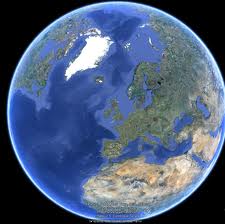
Google EarthOne of the challenges identified is that MDM tends to be global within the enterprise while BPM tends to be local.

The global versus local theme has frequently been mentioned as a challenge over the decade MDM has existed as a discipline. The core MDM global versus local challenges spans over common definitions, common value tables and common data models across different geographies. Having a mix of common business rules and business rules that have to be local adds to the difficulties. When applying the full impact of business process management with the variety of formal and informal organizational structures, decision rules and working culture there are certainly both wins and obstacles in linking MDM and BPM.

I think the commonly used phrase about thinking globally and acting locally makes sense in the intersection between MDM and BPM. Thinking big and starting small helps too.

Bookmark and Share

The Shortcut to Lapland

11th of November and it’s time for the first x-mas post on this blog this year. My London gym is to blame for this early start.

Santa’s residence is disputed. As told in the post Multi-Domain MDM, Santa Style one option is Lapland.

Yesterday this yuletide challenge was included in an eMail in my inbox:

Lapland

Nice. Lapland is in Northern Scandinavia. Scandinavia belongs to that half of the world where comma is used as decimal mark as shown in the post Your Point, My Comma.

So while the UK born gym members will be near fainting doing several thousands of kilometers, I will claim the prize after easy 3 kilometers and 546 meters on the cross trainer.

Bookmark and Share

Cleansing International Addresses

A problem in data cleansing I have come across several times is when you have some name and address registrations where it is uncertain to which country the different addresses belong.

Many address-cleansing tools and services requires a country code as the first parameter in order to utilize external reference data for address cleansing and verification. Most business cases for address cleansing is indeed about a large number of business-to-consumer (B2C) addresses within a particular country. But sometimes you have a batch of typical business-to-business (B2B) addresses with no clear country registration.

The problem is that many location names applies to many different places. That is true within a given country – which was the main driver for having postal codes around. If a none-interactive tool or service have to look for a location all over the world that gets really difficult.

For example I’m in Richmond today. That could actually be a lot of places all over the world as seen on Wikipedia.

popeI am actually in the Richmond in the London, England, UK area. If I were in the state capital of the US state of Virginia, I could have written I’m in “Richmond, VA”. If an international address-cleansing tool looked at that address, I guess it would first look for a country code, quickly find VA as a two-character country code in the end of the string and firmly conclude I’m at something called Richmond in the Vatican City State.

Have you tried using or constructing an international address cleansing process? Where did you end up?

Bookmark and Share

Data Quality in Different Languages

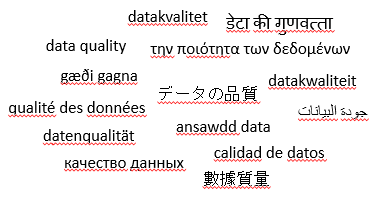
The term ”data quality” exists in many different languages.

As reported in the post Häagen-Dazs Datakvalitet, the Scandinavian word for data quality is datakvalitet. Well, actually there is no such language as Scandinavian, but datakvalitet is used in Danish, Swedish and Norwegian all together. Maybe even in both Norwegian languages, though Google Translate only know of one Norwegian language.

In other Germanic languages the words for data quality are close to datakvalitet. In German: Datenqualität. In Dutch: Datakwaliteit.

The above terms are compound words. Even though English is also classified as a Germanic language we see a Latin influence as “data quality” is two words in English. And that goes for all English variants. It is only when it comes to if we have to standardise this or standardize that we are in trouble. British English is best when we have to select if data quality improvement is a program or a programme.

In true Latin languages we have three words. French: Qualité des données. Spanish: Calidad de datos.

And then there are of course terms in other alphabets than latin and other script systems:

data quality in different languages

Bookmark and Share

MDM in LED

All airports have a tree letter code usually being a mnemonic of the city name or airport name. The airport at Saint Petersburg in Russia thus has the code LED because the code was assigned when the city was called LEningraD. That’s how it is with master data: Names may change but the code of an entity must be kept as it was. And that’s why you usually shouldn’t put meaning into codes.

Europe by Midnight
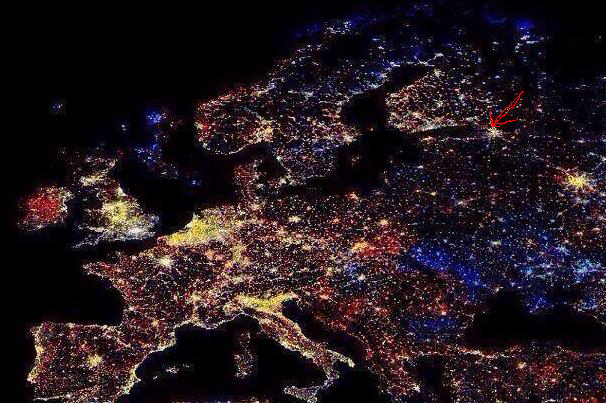
First sight of Europe 2014.

The Russian MDM (Master Data Management) market has been well described by Dmitry Kovalchuk in a post on the Hub Design Magazine.

This year I had the pleasure of celebrating New Year in Saint Petersburg, a city with great palaces from the time of the czars and czarinas and a growing awareness of Master Data Management including some very interesting start-ups around MDM, where I had the chance to visit TaskData and to revisit the social PIM entrepreneur Actualog.

So from Saint Petersburg: Happy New Year and Merry Christmas.

Bookmark and Share

Happy New Year and Merry Christmas

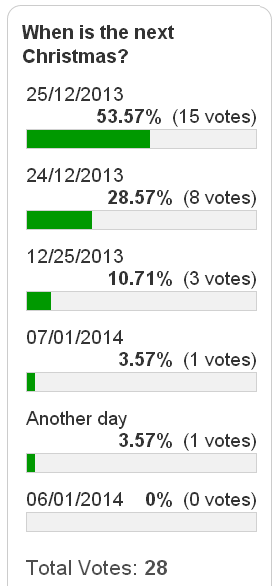
A week ago I had a quick vote here on the blog about when it will be Next Christmas.

Vote on xmasThe results are as seen to the right (or above on a mobile device). Most readers think it will be on 25th December 2013 either written in the straight forward date format as 25/12/2013 or in the awkward date format used in the United States thus being 12/25/2013. Some people, probably from Scandinavia, think it’s today the 24/12/2013. For people living in countries mostly observing the Eastern Orthodox Church Christmas will be on the 7th January, 07/01/2014 in the straight forward date format used there, using the secular Gregorian calendar. This is because the Eastern Church still sticks to the old Julian calendar which is 14 days behind the Gregorian calendar.

So, depending on what you celebrate and in which order:

  • Happy Holidays
  • Merry Christmas and Happy New Year
  • Happy New Year and Merry Christmas

Bookmark and Share

What’s Different about MDM in Denmark?

little_mermaid_copenhagenAfter writing about What’s Different about MDM in France? It’s now time for a few words about what’s different about MDM (Master Data Management) in my native country Denmark.

International aspects of MDM isn’t strange

As a small market the domestic aspects is a minor thing for the large Danish companies as Maersk, Lego and Carlsberg. But even smaller companies grow out of the domestic market very early and that means that international aspects of MDM and related data quality are important in many implementations.

Even the flagship Danish MDM vendor Stibo Systems operated for many years with large foreign clients before recently getting their first domestic client.

Exploiting external reference data is imperative

Some industry sectors like finance and utility are still very domestic oriented. In party master data management good quality external reference data about domestic addresses, properties, companies and citizens are available at an affordable price and in some degree even free.

In my work at iDQ we have utilized this a lot as told in the story from the utility sector in the post instant Data Quality at Work. iDQ also help foreign companies as for example the largest bank in the Eurozone. As an example of another MDM domain than customer the service is also used for the HR domain by one of the the world’s largest employers.

The government isn’t a laggard

As reported in the post Making Data Quality Gangnam Style the government supports the use of reference data in private entities. But the data sources are indeed handled as a MDM program within the public sector ensuring that data silos in the public sector are eliminated with big wins for public administration as another result. Newest development is centralized support for handling master data about Danes abroad. Good to be involved.

Bookmark and Share

Our Double Trouble

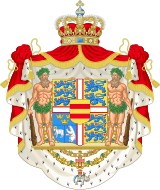
Royal Coat of Arms of DenmarkUsing the royal we is usually only for majestic people, but as a person with a being in two countries at the same time, I do sometimes feel that I am we.

So, this morning we once again found our way to London Heathrow Airport for one of our many trips between London and Copenhagen as we have lived in the United Kingdom the last couple of years but still have many business and private ties with The Kingdom of Denmark where we (is that was or were?) born, raised and worked and from where we still hold a passport.

Most public sector and private sector business processes and master data management implementations simply don’t cope with the fast evolving globalization. Reflecting on this, flying over Doggerland, we memorize situations where:

  • We as a prospect or customer in a global brand are stored as a duplicate record for each country as told in the post Hello Leading MDM Vendor.
  • You as an employee in a multi-national firm have a duplicate record for each country you have worked in.

People moving between countries are still treated as an exception not covered by adequate business rules and data capture procedures. Most things are sorted out eventually, but it always takes a whole lot of more trouble compared to if you just are born, raised and stays in the same country.

When we landed in Copenhagen this morning we (is that was or were?) able to use the new local smart travel card in order to travel on with public transit. But it wasn’t easy getting the card we remember. With a foreign address you can’t apply online. So we had to queue up at the Central Station, fill in a form and explain that you don’t have an official document with your address in the UK – and we avoided explaining the shocking fact that in the UK your electricity bill is your premier proof of almost anything related to your identity.

What about you? Do you have a being in several countries? Any war stories experienced related to your going back and forth?

Bookmark and Share