Data Governance, Data Quality and MDM

The data governance discipline, the data quality discipline and the Master Data Management (MDM) discipline are closely related and happens to be my fields of work.

Data quality improvement is important within data governance and MDM. Furthermore you seldom see an MDM implementation without a (master) data governance work stream today.

Information Ven

Over time it has often been suggested that data quality should rightfully be named information quality as told in the post New Blog Name. In addition, data governance could be referred to as information governance as suggested in the Mike2 Open Methodology here.

Within MDM we have the term Product Information Management (PIM) which is partly,  but maybe not fully,  the same as Product MDM,  as examined by Monica McDonnell of Informatica in the post PIM is Not Product MDM – Product MDM is not PIM.

Product is one of several domains within MDM, where customer (or rather party), location and asset are other domains going into multi-domain MDM as reported in the post Multi-Entity MDM vs Multidomain MDM.

While replacing the term data with the term information for data quality, data governance and for that matter (multi-domain) master data management has had limited success outside academic circles, I do see it very suitable for being part of a term covering these three disciplines as a whole.

So what should these three disciplines be called as a whole? Have you noticed any good terms or smart hypes out there? Or are they just three out of more disciplines within data or information management?

Bookmark and Share

An Alternative Multi-Domain MDM Quadrant

No, this is not an(other) attempt to challenge Gartner, the analyst firm, in making quadrants about vendors in the Master Data Management (MDM) realm.

This an attempt to highlight some capabilities of Multi-Domain MDM solutions here focusing on party and product master data and the sell-side and the buy-side of MDM as discussed some years ago in the post Sell-side vs Buy-side Master Data Quality.

A simple quadrant will look like this:

Quadrant

  • The upper right corner is where MDM started, being with solutions back then called Customer Data Integration (CDI).
  • The Product Information Management (PIM) side is quite diverse and depending on the industry vertical where implemented:
    • Retailers and distributors have their challenges with sometimes high numbers of products that goes in and comes out as the same but with data reflecting different viewing points.
    • Manufacturers have other issues managing raw materials, semi-finished products, finish products and products and services used to facilitate the processes.
    • Everyone have supplies.
  • The supplier master data management has more or less also been part of the PIM space but looks more like customer master data and should be part of a party master data discipline also embracing other party roles as employee.

Also, this quadrant is by the way without other important domains as location (as discussed in the post Bringing the Location to Multi-Domain MDM) and asset (as discussed in the post Where is the Asset?)

Bookmark and Share

Happy 10 Years Birthday MDM Solutions

326px-10piece-blank-R_k.svgEvery year Information Difference publishes a report about the Master Data Management (MDM) Landscape. This year’s report celebrates the 10th year of MDM solutions around. Of course, the MDM industry didn’t start on a certain date 10 years ago, but the use of MDM as a common accepted notation for a branch of IT solutions within data management, and in my eyes as a much needed spinoff of the data quality discipline, was commonly being accepted.

A birthday is a good occasion to look ahead. The Information Difference report takes on some of the trends in the MDM solutions around, being that:

  • Most MDM vendors today claims to be multi-domain MDM providers, but certainly they are on different stages coming from different places
  • Providing MDM in the cloud is slowly but steadily adapted
  • Integrating big data into MDM solutions has, in my words, reached the marketing and R&D departments at the MDM vendors and will someday also reach the professional service and accounting folks there

Read the MDM landscape Q2 2014 report from Information Difference here.

Bookmark and Share

Slicing the MDM Space

Master DataThese days I am attending the Gartner MDM summit in London.

MDM (Master Data Management) initiatives and MDM solutions are not created equal and different ways of slicing the MDM world were put forward on the first day.

Gartner is famous for the magic quadrants and during the customer master data quadrant presentation I heard Bill O’Kane explain why this is a separate quadrant from the product master data quadrant and why there are no challengers and no visionaries.

In another session about MDM milestones Bill O’Kane for this context sliced the MDM world a bit differently based on moving between MDM styles. Here we had:

  • Business-to-consumer (B2C) Customer Data Integration (CDI)
  • Business-to-business (B2B) customer MDM, Product Information Management (PIM) and other domains.

The vendors in general seems to want to do everything MDM.

Stibo Systems, a traditional PIM vendor, presented the case for multidomain MDM based on how things have developed within eCommerce. Stibo even smuggled the term omnidomain MDM into the slides. A marketing gig in the making perhaps.

The megavendors has bought who ever they need to be multidomain.

Some new solutions are born in the multidomain age. Semarchy is an interesting example as they are so the evolutionary way.

Bookmark and Share

Multi-Domain MDM Uptake

Within Master Data Management (MDM) doing multi-domain MDM has been trending for a couple of years. Yesterday Gartner (the analyst firm) had a chat session on twitter preceding the upcoming Gartner MDM summits around the world.

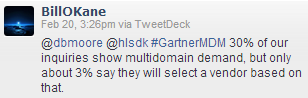
Along the way @BillOKane of @Gartner_inc revealed some numbers about multi-domain MDM from the Gartner camp:

Multi-Domain 1

Multi-Domain 2

So, stating these numbers using the MoSCoW method we have that among companies considering MDM:

  • 3 % sees multi-domain MDM as a MUST have now
  • 10 % thinks they SHOULD have multiple-domain MDM now
  • 17 % regards multi-domain MDM as something they COULD have now
  • 70 % WONT have multi-domain MDM now

Bookmark and Share

So, we have four and a half multi-domain MDM vendors

It has been discussed a few times on this blog if Gartner should make a single (multi-domain) Master Data Management quadrant latest in the post MDM for Product Data Quadrant: No challengers. A half visionary.

Well, if Gartner will not Forrester will, as Forrester has just released their MDM wave focusing on multi-platform platforms for MDM. Yep, there is nothing like analyst firms insisting in using their wording as multi-entity, multi-domain or multi-platform MDM within their special visualization as quadrant, landscape, wave and other bulls…. eye stuff to blur things a bit.

If you are a Forrester client or otherwise like to pay money to Forrester, you can get the report here. If you would like to feed one of your eMail addresses into the Informatica marketing machine, you can get the report here.

MDM Brands
This is not the wave. Just some names.

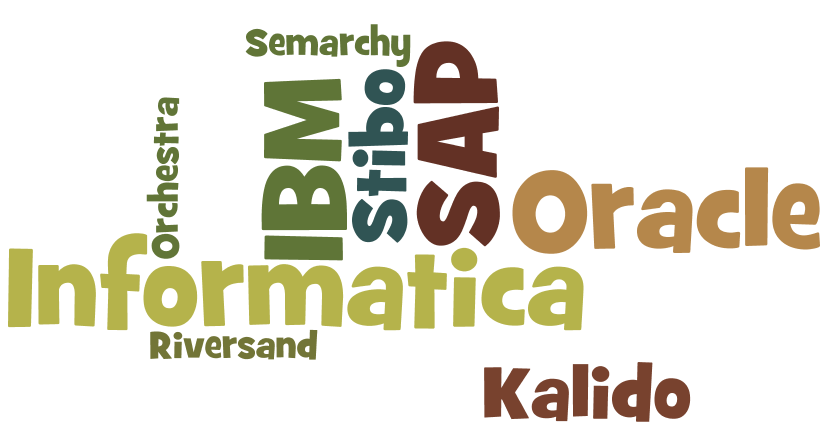
There are only four and half multi-platform MDM vendors in the universe according to Forrester. Three and a half of them are no surprise. Maybe Talend is. I guess one or two more of the Trois acteurs français dans le marché du MDM would like to be there as well.

Bookmark and Share

Where is the Asset?

The pevious post on this blog was called A Master Data Mind Map. In there I tried to map some different examples of master data entities within some known master data domains as party, product, location, financial and calendar.

In the comments and in a following twitter conversation, the placement of the asset entity was questioned.

Asset Master Data

Prash Chan (@MDMGeek) said: “There is another type of asset I came across once, mapped to location domain, largely because the assets were identified by the place where they were installed.”

Jamie Watters (@jamietwatters) said: “Don’t disagree, but think there are other areas of asset data that makes it unique instead of using product or location.  Areas such as engineering, design, construction, maintenance, commissionin make managing asset data pretty unique.”

Indeed, I am actually also on the fence here.

There are certainly often strong relations to a location for an asset. But that is also true for parties as well and some products too as told in the post Product Placement.

Assets can be many things. Gartner (the analyst firm) has the concept of the things domain encompassing products and assets.

Asset may in fact just be its own domain. Property too perhaps as the Real Estate Domain. Services could claim independence from the other products someday. Customer is today often seen as its own domain not belonging to party as examined in the post MDM for Customer Data Quadrant…

Andrew White of Gartner did address these naming issues in a blog post back in 2009 here.

Bookmark and Share

MDM for Product Data Quadrant: No challengers. A half visionary.

The Gartner Magic Quadrant for Master Data Management of Product Data Solutions is out. You may have a free look at it for example going through Tibco’s press release on the matter here or directly thanks to IBM here.

MDM Brands
This is not the quadrant. Just some names.

My thoughts are kind of the same as told in the post MDM for Customer Data Quadrant: No challengers. No visionaries. Let’s just have a (Multi-Domain) MDM quadrant.

The quadrant for customer MDM solutions had no challengers and no visionaries. The quadrant for product MDM solutions has a half visionary, as Informatica is positioned as a niche player with its recent Heiler acquisition and just on the right side of the border between niche players and visionaries with what must be the Siperian acquisition from a couple of years ago. This solution has multi-domain capabilities as an important strength.

Bookmark and Share

Multi-Facet MDM

In MDM (Master Data Management) there is the term Multi-Domain MDM being how we manage respectively parties, products, locations and other entity types and handling master data within a Multi-Channel environment encompassing offline, online and social channels is a huge challenge within MDM today. Yet another multi view of MDM is handling different facets of master data being:

  • Mulit-Facet MDMEntities
  • Relations
  • Events

Entities

Handling entities is the core of master data management. Ensuring that master data are fit for multiple purposes most often by ensuring real world alignment is the basic goal of master data management. Entity resolution is at key discipline in doing that. In the party master data domain doing Customer Data Integration (CDI) is the good old activity aiming at compiling all the customer data silos in the enterprise into a golden copy with golden records. Product Information Management (PIM) is another ancestor in the MDM evolution history predominately focusing at the entities.

Relations

A possible distinction between Master Entity Management and Master Relation Management is discussed in the post Another Facet of MDM: Master Relationship Management.

As we get better and better solutions for handling entities the innovation shifts to handling the relationships between entities. These relations exists for example in Multi-Channel environments by linking entities in the old systems of record with the same real world entities in the new systems of engagement as told in the post Social MDM and Systems of Engagement.

Events

Getting the master data right the first time is crucial.

In product master data management getting to that stage is often done by managing a flow of events where the product data are completed and approved by a team of knowledge workers.

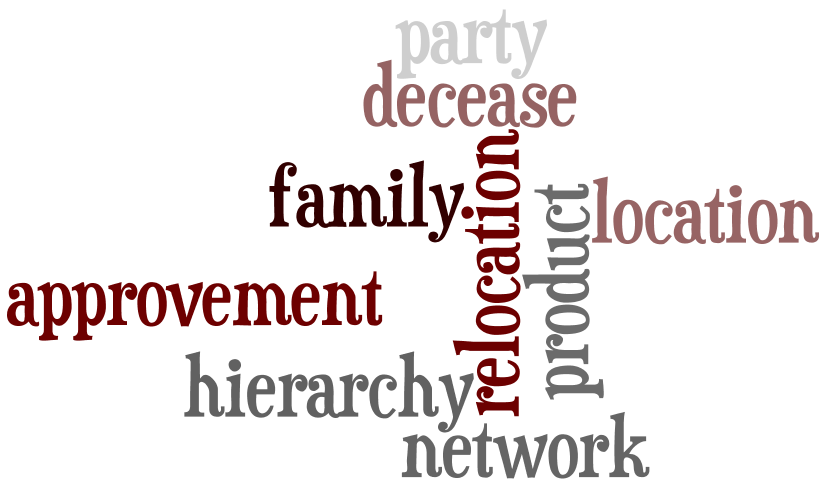
In party master data management a way of ensuring first time right is examined in the post instant Single Customer View. But that is only the start. Party master data has a life cycle with important events as:

Bookmark and Share

Time to Turn Your Product Master Data Management Social?

Yesterday’s post on this blog had the title Time To Turn Your Customer Master Data Management Social? In a true Multi-Domain MDM spirit it is of course also timely to ask if it is time to turn your product master data management social.

Social PIMHere are a few ways to go when thinking social into product master data management:

Making product data lively

Kimmo Kontra had a blog post called With Tiger’s clubs, you’ll golf better – and what it means to Product Information Management. Herein Kimmo examined how stories around products help with selling products. Kimmo concluded that within master data management there is going to be a need for storing and managing stories.

So while traditional product master data management is about having the right hard facts about products consistent across multiple channels, and having the right images and other rich media consistent as well, in the social era you will also need to include the right and consistent stories when the multiple channels embraces social media.

Sharing product data

How do we ensure that we share the same product information, including the same stories, across the ecosystem of product manufacturers, distributors, retailers and end users?

During recent times I have followed a new cloud service called Actualog. Actualog is aiming at doing exactly that with emphasis on the daunting task of sharing product data in an international environment with different measurement systems, languages, alphabets and script systems.

Listening to big data

As discussed in the post Big Data and Multi Domain Master Data Management a prerequisite for getting sense out of analyzing social data (and other big data sources) is, that you not only have a consistent view of the product data related to products that you sell yourself, but also have a consistent view of competing products and how they relate to your products.

Therefore social product master data management requires you to extend the volume of products handled by your product information management solution probably in alternate product hierarchies.

Bookmark and Share