What’s Different about MDM in Denmark?

little_mermaid_copenhagenAfter writing about What’s Different about MDM in France? It’s now time for a few words about what’s different about MDM (Master Data Management) in my native country Denmark.

International aspects of MDM isn’t strange

As a small market the domestic aspects is a minor thing for the large Danish companies as Maersk, Lego and Carlsberg. But even smaller companies grow out of the domestic market very early and that means that international aspects of MDM and related data quality are important in many implementations.

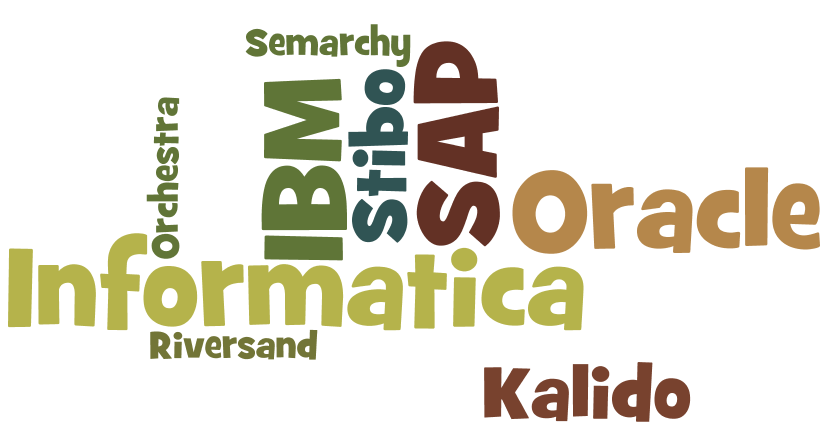
Even the flagship Danish MDM vendor Stibo Systems operated for many years with large foreign clients before recently getting their first domestic client.

Exploiting external reference data is imperative

Some industry sectors like finance and utility are still very domestic oriented. In party master data management good quality external reference data about domestic addresses, properties, companies and citizens are available at an affordable price and in some degree even free.

In my work at iDQ we have utilized this a lot as told in the story from the utility sector in the post instant Data Quality at Work. iDQ also help foreign companies as for example the largest bank in the Eurozone. As an example of another MDM domain than customer the service is also used for the HR domain by one of the the world’s largest employers.

The government isn’t a laggard

As reported in the post Making Data Quality Gangnam Style the government supports the use of reference data in private entities. But the data sources are indeed handled as a MDM program within the public sector ensuring that data silos in the public sector are eliminated with big wins for public administration as another result. Newest development is centralized support for handling master data about Danes abroad. Good to be involved.

Bookmark and Share

Multi-Facet MDM

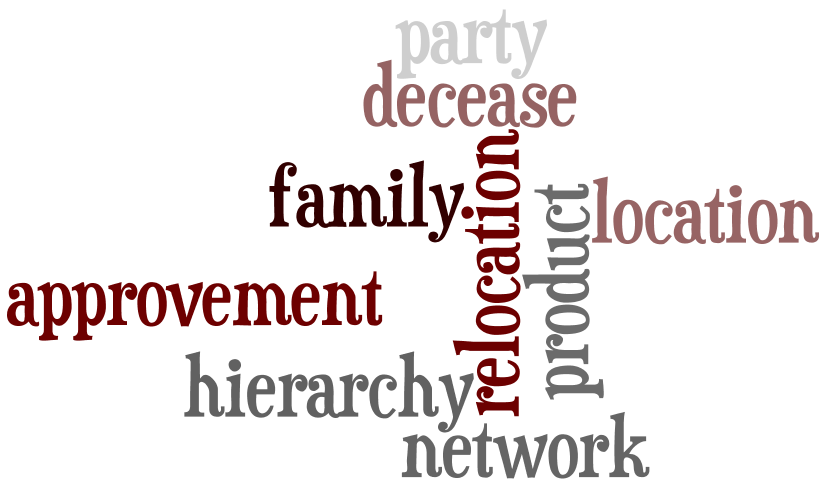
In MDM (Master Data Management) there is the term Multi-Domain MDM being how we manage respectively parties, products, locations and other entity types and handling master data within a Multi-Channel environment encompassing offline, online and social channels is a huge challenge within MDM today. Yet another multi view of MDM is handling different facets of master data being:

  • Mulit-Facet MDMEntities
  • Relations
  • Events

Entities

Handling entities is the core of master data management. Ensuring that master data are fit for multiple purposes most often by ensuring real world alignment is the basic goal of master data management. Entity resolution is at key discipline in doing that. In the party master data domain doing Customer Data Integration (CDI) is the good old activity aiming at compiling all the customer data silos in the enterprise into a golden copy with golden records. Product Information Management (PIM) is another ancestor in the MDM evolution history predominately focusing at the entities.

Relations

A possible distinction between Master Entity Management and Master Relation Management is discussed in the post Another Facet of MDM: Master Relationship Management.

As we get better and better solutions for handling entities the innovation shifts to handling the relationships between entities. These relations exists for example in Multi-Channel environments by linking entities in the old systems of record with the same real world entities in the new systems of engagement as told in the post Social MDM and Systems of Engagement.

Events

Getting the master data right the first time is crucial.

In product master data management getting to that stage is often done by managing a flow of events where the product data are completed and approved by a team of knowledge workers.

In party master data management a way of ensuring first time right is examined in the post instant Single Customer View. But that is only the start. Party master data has a life cycle with important events as:

Bookmark and Share

Our Double Trouble

Royal Coat of Arms of DenmarkUsing the royal we is usually only for majestic people, but as a person with a being in two countries at the same time, I do sometimes feel that I am we.

So, this morning we once again found our way to London Heathrow Airport for one of our many trips between London and Copenhagen as we have lived in the United Kingdom the last couple of years but still have many business and private ties with The Kingdom of Denmark where we (is that was or were?) born, raised and worked and from where we still hold a passport.

Most public sector and private sector business processes and master data management implementations simply don’t cope with the fast evolving globalization. Reflecting on this, flying over Doggerland, we memorize situations where:

  • We as a prospect or customer in a global brand are stored as a duplicate record for each country as told in the post Hello Leading MDM Vendor.
  • You as an employee in a multi-national firm have a duplicate record for each country you have worked in.

People moving between countries are still treated as an exception not covered by adequate business rules and data capture procedures. Most things are sorted out eventually, but it always takes a whole lot of more trouble compared to if you just are born, raised and stays in the same country.

When we landed in Copenhagen this morning we (is that was or were?) able to use the new local smart travel card in order to travel on with public transit. But it wasn’t easy getting the card we remember. With a foreign address you can’t apply online. So we had to queue up at the Central Station, fill in a form and explain that you don’t have an official document with your address in the UK – and we avoided explaining the shocking fact that in the UK your electricity bill is your premier proof of almost anything related to your identity.

What about you? Do you have a being in several countries? Any war stories experienced related to your going back and forth?

Bookmark and Share

Social IT and Business

business partnersThe distinction between IT and business is an often used concept in a lot of disciplines from Enterprise Architecture (EA) over data quality management to Master Data Management (MDM). While it may be a good concept to use when assigning responsibilities and finding out who should be driving what I have personally always kind of disliked the concept. It’s a concept practically only used by the IT side and in my eyes IT is part of the business just as much as marketing, sales, accounting and all the other departments are.

So, now when business is going social, how does that affect the IT and business distinction?

Social business is in large parts done today in the enterprises around without involving the internal IT department. The use of data and functionality in social business done with so called systems of engagement is much more external focused than the internal focused nature of the traditional systems of record.

However, if enterprises are to harvest the fruits of systems of engagement it must be done by linking the new systems of engagement to the old systems of record and that means involving internal IT. Please do this without dividing the enterprise into IT and business again. Please be more social this time.

Bookmark and Share

What’s Different about MDM in France?

franceAs told in the post about French MDM vendors yesterday I have been on a MDM (Master Data Management) event in Paris today.

An interesting take away from the event’s presentations and the mingling is some differences between how MDM is handled in France (and the rest of continental Europe as I know it) compared to the English speaking world. Some observations are:

People, process and technology

Many MDM gurus (and gurus in other disciplines) stress that you shouldn’t focus on technology (alone) but take people and process very serious too. That’s not so important in France. Everyone knows that already.

Multi-Domain MDM

In France it’s common to start with product MDM and then continue with customer (party) MDM.

The Quadrant Magic

If you made a Gartner Magic Quadrant for MDM solutions in France you wouldn’t have a quadrant for customer data and another one for product data. There would be only one quadrant for (multi-domain) MDM and some of the local vendors would be leaders as discussed in the post MDM for Customer Data Quadrant: No challengers. No visionaries.

Bookmark and Share

Trois acteurs français dans le marché du MDM

I am looking forward to going to Paris today in order to be at the Forum MDM arranged by Micropole taking place tomorrow.

The French MDM market is a vibrant one with several French grown solutions also going well on the world-wide MDM market:

Semarchy

As told in the post Eating the MDM Elephant the MDM solution provider Semarchy has emphasized on making a MDM platform that supports evolutionary MDM which means that you don’t have to pre-think every aspect of your to-be MDM implementation before going ahead. This is a recommendable approach indeed.

Orchestra Networks

Master data and reference data are, besides of sometimes actually being used synonymously, close terms and so are Master Data Management (MDM) and Reference Data Management (RDM). Orchestra Networks seems to be on the forefront in offering a well founded solution for both disciplines at the same time.

Talend

The open source provider Talend has over the years developed a solution that started with data integration and then added data quality functionality and some years ago also included MDM and, in touch with the way of the world today, now also is embracing big data.

Bandeau_partenaires_Forum_MDM_2
All the sponsors at the Forum MDM in Paris 24th October 2013

Bookmark and Share

MDM for Customer Data Quadrant: No challengers. No visionaries.

The Gartner Magic Quadrant for Master Data Management of Customer Data Solutions is out. You may have a free look at it for example going through Talend’s press release on the matter here.

MDM Brands
PS: This isn’t the quadrant. Just a few vendor names.

It’s not a crowded picture. There are few solutions in there and several come from the same brand. And there are no challengers and no visionaries.

Gartner expect that challengers may arrive later for example as those who are building up multi-domain MDM solutions right now. Should be interesting to see what comes first: Challengers in the customer MDM quadrant or a multi-domain MDM quadrant. Other analysts have a single view of MDM vendors.

From where will we see the visionaries then? Gartner says current niche players may spread into the visionary field. If we will see new vendors emerging into the visionary field it may in my eyes be based on the Growing Variety in Big Master Data which includes widening the term customer data into taking care of all kinds of party master data.

Bookmark and Share

Growing Variety in Big Master Data

With the rise of big data we will see that master data is going to be Small Data with Big Impact.

Master data itself is going to grow in terms of volume and velocity. This is because we will have to manage more types of master data in order to make sense of big data. Notable examples are:

  • We will have to identify more locations in order to make sense of the geospatial attributes in big data.
  • We will be forced to manage some attributes of our competitor’s product master data, besides our own product master data, in order to listen to the talk in the social media stream.
  • We will need to take care of more party master data roles. Besides the classic party master data roles of real world entities being customers, suppliers and employees we will have to care about subscribers, users and visitors of online services, followers and friends in social media and the spouses, relatives, friends of friends and other influenced ones of those.

Party roles

It’s not the volume and probably neither the velocity that will be the big issue here. It’s the variety in the data which will support the processes in caring about those entities that is a huge challenge, not at least for ensuring the veracity of the master data here.

Bookmark and Share

What Should a Data Quality Tool Do?

Earlier this month we had this year’s magic quadrant for data quality tools from Gartner (the analyst firm). The magic quadrant always stirs up posts about data quality tools and this is true again this year. For example yours truly had a post here and Lorraine Lawson had a say on the ITBusinessEdge in the post Eight Questions to Ask Before Investing in Data Quality Tools.

Some of these questions asked by Lorraine relates to a grounding principle in the magic quadrant that is, that the data quality tool should be able to do everything data quality and even, as stated in Lorraine’s question 2: Can it be embedded into business process workflows or other technology-enabled programs or initiatives, such as MDM and analytics?

The LEGO StoryThinking that question  to the end inevitably makes you think about where data quality tools ends and where applications for different business processes, with data quality built in, takes over?

That question is close to me as I’m right now working with a tool for maintaining party master data with two main advantages:

  • Making the business process as smooth as possible
  • Ensuring data quality at pre data entry and all through the data lifetime

So, it’s not a true data quality tool. It doesn’t do everything data quality. It’s not a true MDM platform. It doesn’t do everything master data. But I would say that it does do what it does better than the full monty behemoths.

Bookmark and Share

Another Facet of MDM: Master Relationship Management

When talking about Master Data Management (MDM) we deal with something that maybe could be better coined as Master Entity Management. As a good old (logical or not) data model in the relational database world also have relations between entities there must of course then also be something called Master Relationship Management. And indeed there is as mentioned by Aaron Zornes in the interview called MDM and Next-Generation Data Sources on Information Management.

As touched by Aaron Zornes the solution to handling relations in the future may come from outside the relational database world in the form of graph databases. This was also discussed in the post Will Graph Databases become Common in MDM?

An often mentioned driver for looking much more into relationships is the promise of finding customer, and other, insights in social data based on the match between traditional master entity data and social network profiles. Handling these relations is an important facet of social MDM, an often mentioned subject on this blog.

puzzleBuilding the relations doesn’t stop with party master entities. There are valuable relations to location master entities and not at least crucial relations between party master entities and product master entities as told in the post Customer Product Matrix Management.

So Master Relationship Management fits very well with the current main trends in the MDM world being embracing big data not at least social data and encompassing multi-domain MDM. The third main trend being MDM in the cloud also fits. It’s not that we can’t explore all the relations out there from on-premise solutions; it’s just that there is a better relationship in doing so in the cloud.

Bookmark and Share