The difference between doing Business-to-Consumer (B2C) or Business-to-Business (B2B) reflects itself in many IT enabled disciplines.
 When it comes to Product Information Management (PIM) this is true as well. As PIM has become essential with the rise of eCommerce, some of the differences are inherited from the eCommerce discipline. There is a discussion on this in a post on the Shopify blog by Ross Simmonds. The post is called B2B vs B2C Ecommerce: What’s The Difference?
Some significant observations to go into the PIM realm is that for B2B, compared to B2C:
- The audience is (on average) narrower
- The price is (on average) higher
- The decision process is (on average) more thoughtful
How these circumstances affect the difference for PIM was exemplified here on the blog in the post Work Clothes versus Fashion: A Product Information Perspective.
To sum up the differences I would say that some of the technology you need, for example PIM solutions, is basically the same but the data to go into these solutions must be more elaborate and stringent for B2B. This means that for B2B, compared to B2C, you (on average) need:
- More complete and more consistent attributes (specifications, features, properties) for each product and these should be more tailored to each product group.
- More complete and consistent product relations (accessories, replacements, spare parts) for each product.
- More complete and consistent digital assets (images, line drawings, certificates) for each product.
How to achieve that involves deep collaboration in the supply chains of manufacturers, distributors and merchants. The solutions for that was examined in the post The Long Tail of Product Data Synchronization.




 Nope, there is no such thing as a single version of the truth.
 One example close to me is how data quality via completeness of product information can lead directly to selling more online as told in the post
  “No one dared to admit that he couldn’t see anything, for who would want it to be known that he was either stupid or unfit for his post?”
 While every data quality dimension applies to all domains of Master Data Management (MDM), some different dimensions apply a bit more to one of the domains or the intersections of the domains as explained in the post
 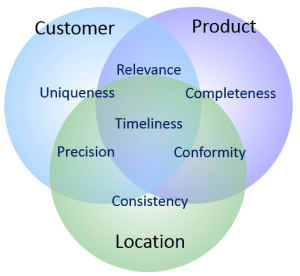 Customer and other party master data have plenty of other completeness challenges. In my experience the best approach to control completeness is involving third party reference data wherever possible and as early in the data capture as feasible. There is no reason to type something probably in a wrong and incomplete way, if it is already digitally available in a righter and more complete way.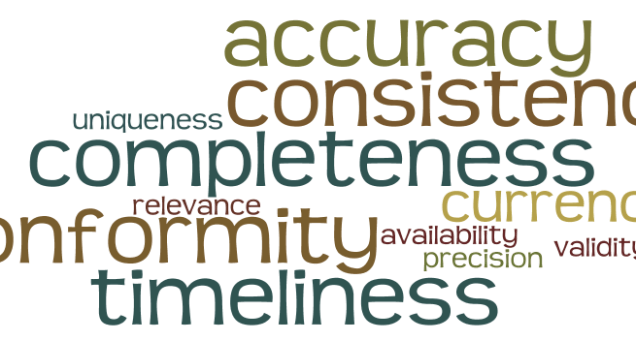
 Liliendahl on Data Quality