What’s Different about MDM in France?

franceAs told in the post about French MDM vendors yesterday I have been on a MDM (Master Data Management) event in Paris today.

An interesting take away from the event’s presentations and the mingling is some differences between how MDM is handled in France (and the rest of continental Europe as I know it) compared to the English speaking world. Some observations are:

People, process and technology

Many MDM gurus (and gurus in other disciplines) stress that you shouldn’t focus on technology (alone) but take people and process very serious too. That’s not so important in France. Everyone knows that already.

Multi-Domain MDM

In France it’s common to start with product MDM and then continue with customer (party) MDM.

The Quadrant Magic

If you made a Gartner Magic Quadrant for MDM solutions in France you wouldn’t have a quadrant for customer data and another one for product data. There would be only one quadrant for (multi-domain) MDM and some of the local vendors would be leaders as discussed in the post MDM for Customer Data Quadrant: No challengers. No visionaries.

Bookmark and Share

Data Quality, Real World Alignment and Visualization by Maps

Babbling about data quality, real world alignment and maps is a regular topic on this blog and this Saturday is no exception.

This week I stumbled on a discussion in the “Data, Data, Data” community on Google Plus. There was a map:

InternetPopulation2011_HexCartogram_v6_2_LD

The map visualizes how the world would look like if every internet user had an equal amount of space to live on. This turns the land masses on the earth to have a different shape than in reality given:

  • Population density
  • Internet penetration

As internet penetration is the main purpose of the map the penetration percentage for the different countries are highlighted by color in order to be fit for the purpose of use and thus showing highest  penetration in Canada, Northern Europe, Qatar, South Korea and New Zealand.

Some countries seem to have disappeared from the planet as mentioned in the comments on Google Plus: Singapore, Taiwan (officially Republic of China) and North Korea (officially Democratic People’s Republic of Korea). The latter one has probably gone because of no data or no users. Well, probably both reasons.

On a side note it’s a bit peculiar that countries on the map are labeled by the ISO 3 character code and not the 2 character code that more resembles country domains on the internet.

Bookmark and Share

Think global from day one

The title of this post is taken from a blog post by Hans Peter Bech. The post is called Entering a Foreign Market – The 9 Steps to Success for Software Companies.

Decimal_mark

In the post Hans Peter says:

“German software companies having access to 7% of world demand and US based companies with a domestic market representing 38% of world demand often ignore the global perspective until forced to face the challenge. That’s very fortunate for the smaller companies from the smaller countries!”

This observation from the software market in general certainly also applies to software for data quality improvement and master data management as examined in the post 255 Reasons for Data Quality Diversity.

If you are a software company in the data management space the meaning of thinking global may apply to various activities as:

  • How the product is designed in respect to handling data from all over the world. Here thinking global from day one is crucial.
  • How the product is marketed to a world-wide audience. Here the global approach could wait a bit.

On the latter matter I have teased one of the magic quadrant data quality tool vendors, Trillium Software, for having used a date format only used in the United States on their blog. Maybe it’s a small matter and just me who is sensitive to this normal glitch. Anyway I’m pleased to congratulate Trillium Software on their new blog design with a world-wide fit date format. Check out the blog, which is a good one indeed, here.

Bookmark and Share

A Universal Challenge

Yesterday on The Postcode Anywhere blog Guy Mucklow wrote a nice piece called University Challenge. The blog post is about challenges with shared addresses and a remedy at least for addresses in the United Kingdom.

And sure, I also had my challenges with a shared address in the UK as reported in the post Multi-Occupancy.

But I guess the University Challenge is a universal challenge.

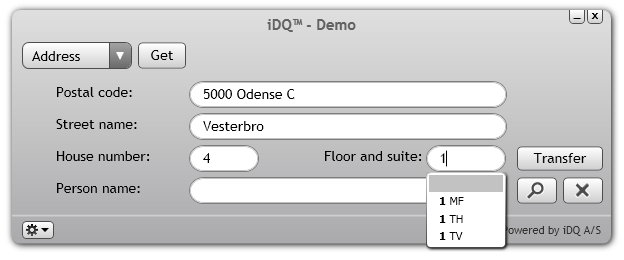
The postal formats and available reference data sources are of course very different around. Below is an example from the iDQ™ (instant Data Quality) tool when handling a Danish address with multiple flats. Here the tool continuously display what options is available to make the address unique:

iDQ(tm) multi occupancy

Bookmark and Share

On Maps, Data Quality and MDM

Maps are great but sometimes you’ll have some trouble with data quality issues on maps as told in the post Troubled Bridge over Water.

When it comes to political borders on maps things may get really nasty as it happened lately for Huawei with a congratulation to Pakistan on the independence day showing a map with borders not in line with the Pakistani version of the truth. The story is told here.

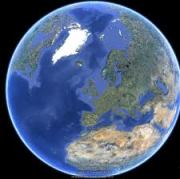
Google EarthThere are plenty of disputes about borders in the world stretching from the serious situations in the Himalaya region to for example the close to comical case between Canada and Denmark/Greenland over Hans Island.

In these situations you can’t settle on a single version of the truth.

However, even if we don’t have disputes on what is right or wrong we may have very different views on how to look at various entities as examined in the post The Greenland Problem in MDM.

Bookmark and Share

Know Your (Foreign Luxury Bag) Customer

Gucci BagA story featured a lot in the media the last days is the incident where one of richest women on the planet, Oprah Winfrey, was told that she couldn’t afford the handbag she wanted to look at in a Zürich shop. Was it racism or a misunderstanding because Oprah isn’t good at speaking German?

Either way it was for sure an example of bad things happening when you don’t know your customer. This story also highlights the issues we have with foreign customers as Oprah may not be just as famous in Zürich as in New York.

We have these challenges in customer master data management all over as described in the post Know Your Foreign Customer.

And oh: Maybe it’s time to start a sister blog called Liliendahl on Fashion. This is my second post on luxury handbags. The first post was called Data Quality Luxury.

Bookmark and Share

Where the Streets have one Name but Two Spellings

Last week’s post called Where The Streets have Two Names caught a lot of comments both on this blog and in LinkedIn groups as here on Data Quality Professionals and on The Data Quality Association, with a lot of examples from around the world on how this challenge actually exist more or less everywhere.

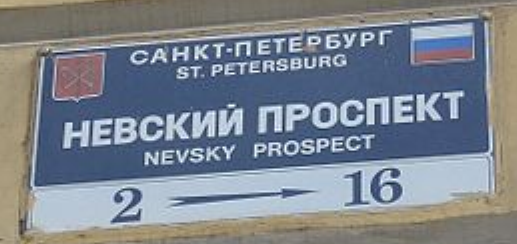
Recently I had the pleasure of experiencing a variant of the challenge when driving around in a rented car in the Saint Petersburg area in Russia. Here the streets usually only have one name but that may be presented in two different alphabets being the local Cyrillic or the Latin alphabet I’m used to which also was included in the reference data on the Sat Nav. So while it was nice for me to type destinations in Latin letters it was nice to have directions in Cyrillic in order to follow the progress on road signs.

So here standardization (or standardisation) to one preferred language, alphabet or script system isn’t the best solution. Best of breed solutions for handling addresses must be able to handle several right spellings for the same address.

Nevsky_Prospekt,_St_Petersburg,_street_sign
Street sign in Cyrillic with Latin subtitle

Bookmark and Share

Where the Streets have Two Names

As told in post The Art in Data Matching a common challenge in matching names and addresses is that in some parts of the world the streets have more than one name at the same time because more than one language is in use.

We have the same challenge when building functionality for rapid addressing, being functionality that facilitates fast and quality assured entry of addresses supported by reference data that knows about postal codes / cities and street names.

The below example is taken from the instant Data Quality tool address form:

Finish Swedish

The Finnish capital Helsinki also has an official name in Swedish being Helsingfors and the streets in Helsinki/Helsingfors have both Finnish and Swedish names. So when you start typing a letter suggestions could be in both Finnish and Swedish.

What challenges have you encountered with street names in multiple languages?

Bookmark and Share

Real World Alignment and Continental Drift

You can find many great analogies for working with data quality and Master Data Management (MDM) in world maps. One example is reported in the post The Greenland Problem in MDM, which is about how different business units have a different look on the same real world entity.

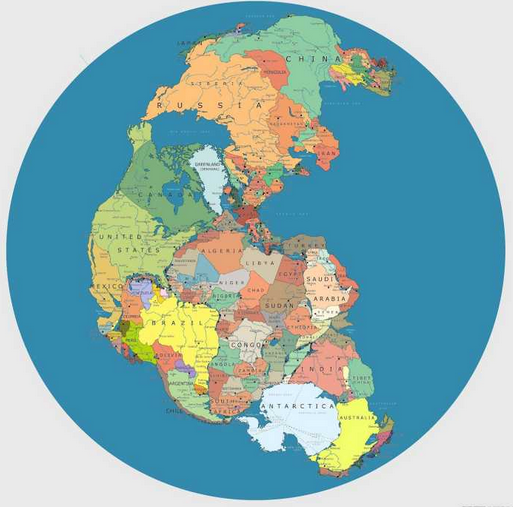
Real world alignment isn’t of course without challenges. Also because the real world changes as reported on Daily Mail in an article about how modern countries would be placed on the landmasses as they were 300 million years ago.

World 300 M years ago

The image above may very well show how many master data repositories today reflect the real world. Yep, we may have the country list covered well enough. We may even do quite well if we look at each geographical unit independently. However, the big picture doesn’t fit the world as it is today.

Bookmark and Share

The World of Measuring

A common data quality issue in data management is the use of different measuring systems. Let’s have a look at some of the issues.

Mile or Kilometer, Pound or Kilogram

There is the imperial system with units as a mile and a pound. And there is the metric system with units as meter and gram.

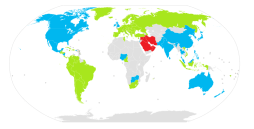
According to Wikipedia the metric system, though there are nuances in world-wide use, is used all over except in notably the United States.

Metric Penetratiion

Celsius or Fahrenheit

For temperature scale we have the Celsius scale used all over and the Fahrenheit scale in the United States.

Big-endian, Little-endian or Middle-endian

When expressing a date we have the ISO standard as a big-endian format like today is 2013-04-27. But all over the world a little-endian format like today is 27-04-2013 is used except in the United States (and all the social networks coming from there) where today is expressed in a middle-endian format being 04-27-2013.

Bookmark and Share