Social IT and Business

business partnersThe distinction between IT and business is an often used concept in a lot of disciplines from Enterprise Architecture (EA) over data quality management to Master Data Management (MDM). While it may be a good concept to use when assigning responsibilities and finding out who should be driving what I have personally always kind of disliked the concept. It’s a concept practically only used by the IT side and in my eyes IT is part of the business just as much as marketing, sales, accounting and all the other departments are.

So, now when business is going social, how does that affect the IT and business distinction?

Social business is in large parts done today in the enterprises around without involving the internal IT department. The use of data and functionality in social business done with so called systems of engagement is much more external focused than the internal focused nature of the traditional systems of record.

However, if enterprises are to harvest the fruits of systems of engagement it must be done by linking the new systems of engagement to the old systems of record and that means involving internal IT. Please do this without dividing the enterprise into IT and business again. Please be more social this time.

Bookmark and Share

The Big Data Secret of SPECTRE

I’m sorry if this blog is turning into a travel blog. But here’s a third Paris story.

Boulevard Haussmann is one of the city’s great thoroughfares (to use the right meta-data term) and is known to be where we can find the headquarters of SPECTRE.

While visiting SPECTRE today I learned a lot about how SPECTRE is exploiting big data as an important way of keeping up with the tough competition in its industry sector today. But all that is of course a secret.

When asking about if they still has trouble with Bond the answer was:

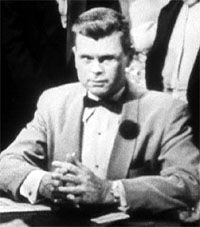
Barry_Nelson_as_Jimmy_Bond_in_1954
Jimmy Bond when he was a field agent

“Bond? – Jimmy Bond? – The sexy data scientist who is working for NSA?”

“Oh no, I replied. James Bond.”

“Oh, yes” the SPECTRE chief data manipulator replied. “He was with British Intelligence. But he has been moved to the EU Data Protection Service. He just got his license to fine. Now 2%  and soon 5% of our global turnover each time. Very dangerous man. Very dangerous”.

Bookmark and Share

What’s Different about MDM in France?

franceAs told in the post about French MDM vendors yesterday I have been on a MDM (Master Data Management) event in Paris today.

An interesting take away from the event’s presentations and the mingling is some differences between how MDM is handled in France (and the rest of continental Europe as I know it) compared to the English speaking world. Some observations are:

People, process and technology

Many MDM gurus (and gurus in other disciplines) stress that you shouldn’t focus on technology (alone) but take people and process very serious too. That’s not so important in France. Everyone knows that already.

Multi-Domain MDM

In France it’s common to start with product MDM and then continue with customer (party) MDM.

The Quadrant Magic

If you made a Gartner Magic Quadrant for MDM solutions in France you wouldn’t have a quadrant for customer data and another one for product data. There would be only one quadrant for (multi-domain) MDM and some of the local vendors would be leaders as discussed in the post MDM for Customer Data Quadrant: No challengers. No visionaries.

Bookmark and Share

Trois acteurs français dans le marché du MDM

I am looking forward to going to Paris today in order to be at the Forum MDM arranged by Micropole taking place tomorrow.

The French MDM market is a vibrant one with several French grown solutions also going well on the world-wide MDM market:

Semarchy

As told in the post Eating the MDM Elephant the MDM solution provider Semarchy has emphasized on making a MDM platform that supports evolutionary MDM which means that you don’t have to pre-think every aspect of your to-be MDM implementation before going ahead. This is a recommendable approach indeed.

Orchestra Networks

Master data and reference data are, besides of sometimes actually being used synonymously, close terms and so are Master Data Management (MDM) and Reference Data Management (RDM). Orchestra Networks seems to be on the forefront in offering a well founded solution for both disciplines at the same time.

Talend

The open source provider Talend has over the years developed a solution that started with data integration and then added data quality functionality and some years ago also included MDM and, in touch with the way of the world today, now also is embracing big data.

Bandeau_partenaires_Forum_MDM_2
All the sponsors at the Forum MDM in Paris 24th October 2013

Bookmark and Share

MDM for Customer Data Quadrant: No challengers. No visionaries.

The Gartner Magic Quadrant for Master Data Management of Customer Data Solutions is out. You may have a free look at it for example going through Talend’s press release on the matter here.

MDM Brands
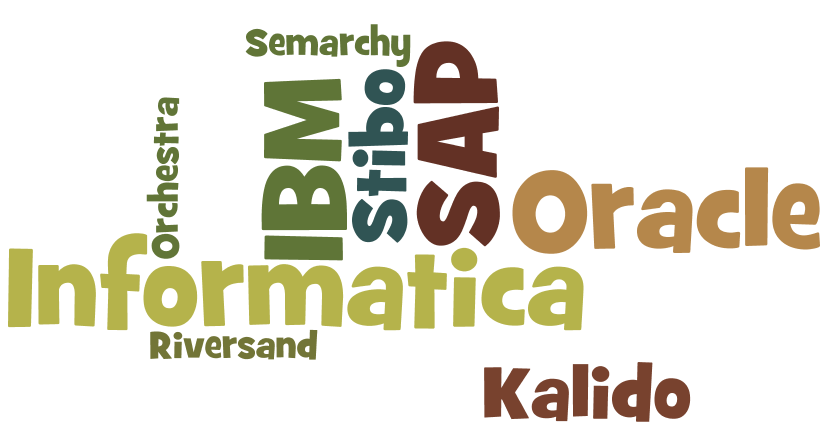
PS: This isn’t the quadrant. Just a few vendor names.

It’s not a crowded picture. There are few solutions in there and several come from the same brand. And there are no challengers and no visionaries.

Gartner expect that challengers may arrive later for example as those who are building up multi-domain MDM solutions right now. Should be interesting to see what comes first: Challengers in the customer MDM quadrant or a multi-domain MDM quadrant. Other analysts have a single view of MDM vendors.

From where will we see the visionaries then? Gartner says current niche players may spread into the visionary field. If we will see new vendors emerging into the visionary field it may in my eyes be based on the Growing Variety in Big Master Data which includes widening the term customer data into taking care of all kinds of party master data.

Bookmark and Share

Growing Variety in Big Master Data

With the rise of big data we will see that master data is going to be Small Data with Big Impact.

Master data itself is going to grow in terms of volume and velocity. This is because we will have to manage more types of master data in order to make sense of big data. Notable examples are:

  • We will have to identify more locations in order to make sense of the geospatial attributes in big data.
  • We will be forced to manage some attributes of our competitor’s product master data, besides our own product master data, in order to listen to the talk in the social media stream.
  • We will need to take care of more party master data roles. Besides the classic party master data roles of real world entities being customers, suppliers and employees we will have to care about subscribers, users and visitors of online services, followers and friends in social media and the spouses, relatives, friends of friends and other influenced ones of those.

Party roles

It’s not the volume and probably neither the velocity that will be the big issue here. It’s the variety in the data which will support the processes in caring about those entities that is a huge challenge, not at least for ensuring the veracity of the master data here.

Bookmark and Share

What Should a Data Quality Tool Do?

Earlier this month we had this year’s magic quadrant for data quality tools from Gartner (the analyst firm). The magic quadrant always stirs up posts about data quality tools and this is true again this year. For example yours truly had a post here and Lorraine Lawson had a say on the ITBusinessEdge in the post Eight Questions to Ask Before Investing in Data Quality Tools.

Some of these questions asked by Lorraine relates to a grounding principle in the magic quadrant that is, that the data quality tool should be able to do everything data quality and even, as stated in Lorraine’s question 2: Can it be embedded into business process workflows or other technology-enabled programs or initiatives, such as MDM and analytics?

The LEGO StoryThinking that question  to the end inevitably makes you think about where data quality tools ends and where applications for different business processes, with data quality built in, takes over?

That question is close to me as I’m right now working with a tool for maintaining party master data with two main advantages:

  • Making the business process as smooth as possible
  • Ensuring data quality at pre data entry and all through the data lifetime

So, it’s not a true data quality tool. It doesn’t do everything data quality. It’s not a true MDM platform. It doesn’t do everything master data. But I would say that it does do what it does better than the full monty behemoths.

Bookmark and Share

Another Facet of MDM: Master Relationship Management

When talking about Master Data Management (MDM) we deal with something that maybe could be better coined as Master Entity Management. As a good old (logical or not) data model in the relational database world also have relations between entities there must of course then also be something called Master Relationship Management. And indeed there is as mentioned by Aaron Zornes in the interview called MDM and Next-Generation Data Sources on Information Management.

As touched by Aaron Zornes the solution to handling relations in the future may come from outside the relational database world in the form of graph databases. This was also discussed in the post Will Graph Databases become Common in MDM?

An often mentioned driver for looking much more into relationships is the promise of finding customer, and other, insights in social data based on the match between traditional master entity data and social network profiles. Handling these relations is an important facet of social MDM, an often mentioned subject on this blog.

puzzleBuilding the relations doesn’t stop with party master entities. There are valuable relations to location master entities and not at least crucial relations between party master entities and product master entities as told in the post Customer Product Matrix Management.

So Master Relationship Management fits very well with the current main trends in the MDM world being embracing big data not at least social data and encompassing multi-domain MDM. The third main trend being MDM in the cloud also fits. It’s not that we can’t explore all the relations out there from on-premise solutions; it’s just that there is a better relationship in doing so in the cloud.

Bookmark and Share

Building an instant Data Quality Service for Quotes

In yesterday’s post called Introducing the Famous Person Quote Checker the issue with all the quotes floating around in social media about things apparently said by famous persons was touched.

The bumblebee can’t fly faster than the speed of light – Albert Einstein

If you were to build a service that could avoid postings with disputable quotes, what considerations would you have then? Well, I guess pretty much the same considerations as with any other data quality prevention service.

Here are three things to consider:

Getting the reference data right

Finding the right sources for say reference data for world-wide postal addresses was discussed in the post A Universal Challenge.

The same way, so to speak, it will be hard to find a single source of truth about what famous persons actually said. It will be a daunting task to make a registry of confirmed quotes.

Embracing diversity

Staying with postal addresses this blog has a post called Where the Streets have one Name but Two Spellings.

The same way, so to speak again, quotes are translated, transliterated and has gone through transcription from the original language and writing system. So every quote may have many true versions.

Where to put the check?

As examined in the post The Good, Better and Best Way of Avoiding Duplicates there are three options:

1)      A good and simple option could be to periodically scan through postings in social media and when a disputable quote is found sending an eMail to the culprit who did the posting. However, it’s probably too late, as even if you for example delete your tweet, the 250 retweets will still be out there. But it’s a reasonable way of starting marking up all the disputable quotes out there.

2)      A better option could be a real-time check. You type in a quote on a social media site and the service prompts you: “Hey Dude, that person didn’t say that”. The weak point is that you already did all the typing, and now you have to find a new quote. But it will work when people try to share disputable quotes.

3)    The best option would be that you start typing “If you can’t explain it simply… “ and the service prompts a likely quote as: “Everything should be as simple as it can be, but not simpler – Albert Einstein”.

Bookmark and Share

Introducing the Famous Person Quote Checker

quoteAs reported in the post Crap, Damned Crap, and Big Data there are data quality issues with big data.

The mentioned issue is about the use of quotes in social data: A famous person apparently said something apparently clever and the one who makes an update with the quote gets an unusual large amount of likes, retweets, +1s and other forms of recognition.

But many quotes weren’t actually said by that famous person. Maybe it was said by someone else and in many cases there is no evidence that the famous person said it. Some quotes, like the Einstein quote in the Crap post, actually contradicts what they apparently also has said.

As I have worked a lot with data entry functionality checking for data quality around if a certain address actually exist, if a typed in phone number is valid or an eMail address will bounce I think it’s time to make a quote checker to be plugged in on LinkedIn, Twitter, Facebook, Google Plus and other social networks.

So anyone else out there who wants to join the project – or has it already been said by someone else?

Bookmark and Share