Should there be an App for MDM?

MDM may be many different things. For me it’s about Master Data Management and for others it’s about Mobile Device Management.

A recent twitter chat session organized by Gartner (the analyst firm) had the tag #GartnerMDM. It was about Master Data Management but of course there also were questions about Mobile Device Management. Andrew White of Gartner replied:

GartnerMDM

And sure. One of the foremost technology trends being mobile doesn’t have the same attention as other hyped trends like big, social and cloudy within this MDM, but mobile may actually also play a role within master data management.

In my current work with product strategy and product management for a startup within data quality and master data management called iDQ we have been playing with some business cases around an App for this MDM. It has for example been aiming at getting it first time right when NGOs are finding new members on the street and when energy retailers are onboarding new customers on the street.

Have you stumbled upon some business cases for an App for this MDM?

Bookmark and Share

Location Data Quality for MDM

The location domain is after the customer, or rather party, domain and the product domain the most frequent addressed domain for Master Data Management (MDM).

In my recent work I have seen a growing interest in handling location data as part of a MDM program.

Traditionally location data in many organizations have been handled in two main ways:

  • As a part of other domains typically as address attributes for customer and other party entities
  • As a silo for special business processes that involves spatial data using Geographic Information Systems (GIS) as for example in engineering and demographic market research.

Handling location data most often involves using external reference data as location data doesn’t have the same privacy considering as party data, not at least data describing natural personals, tend to have and opposite to product data location data are pretty much the same to everyone.

MDM for the location domain is very much about bringing the two above mentioned ways of working with locations together while consistently exploiting external reference data.

As in all MDM work data quality is the important factor and the usual data quality dimensions are indeed in place here as well. Some challenges are:

  • Uniqueness and precision: Locations comes in hierarchies. As told in the post The Postal Address Hierarchy we when referring to textual addresses have levels as country, region, city or district, thoroughfare (street) or block, building number and unit within a building. Uniqueness may be defined within one of these levels. A discussed in the post Where is the Spot? the precision and use case for coordinates may cause uniqueness issues too.
  • locationTimeliness and accuracy: Though it doesn’t happen too often locations do change names as reported in the post MDM in LED and features on new locations does show up every day. I remember a recent press coverage in the United Kingdom over people who couldn’t get car and other insurances because the address of their newly build house wasn’t in the database at the insurance company.
  • Completeness and conformity: Availability of all “points of interest” in reference data is an issue. The available of all attributes of interest at the desired level is an issue too. The available formats and possible mappings between them is a usual challenge. Addresses in both local and standardized alphabets and script systems using endonyms and exonyms is a problem as told in the posts Where the Streets have Two Names and Where the Streets have one Name but Two Spellings.

Bookmark and Share

Four Flavors of Big Reference Data

In the post Five Flavors of Big Data the last flavor mentioned is “big reference data”.

The typical example of a reference data set is a country table. This is of course a very small data set with around 250 entities. But even that can be complicated as told in the post The Country List.

Reference data can be much bigger. Some flavors of big reference data are:

  • Third-party data sources
  • Open government data
  • Crowd sourced open reference data
  • Social networks

Third-party data sources:

The use of third-part data within Master Data Management is discussed in the post Third-Party Data and MDM. These data may also have a more wide use within the enterprise not at least within business intelligence.

Examples of such data sets are business directories, where the Dun & Bradstreet World Base as probably the best known one today counts over 200 million business entities from all over the world. Another example is address and property directories.

Open government data

The above mentioned directories are often built on top of public sector data which are becoming more and more open around the world. So an alternative is digging directly into the government data.

Crowd sourced open reference data

There are plenty of initiatives around where directories similar to the commercial and government directories are collected by crowd-sourcing and shared openly.

Social networks

In social networks profile data are maintained by the entities in question themselves which is a great advantage in terms of timeliness of data.

London Big Data Meet-up

If you are in London please join the TDWI UK and IRM UK complimentary London meet-up on big data on the 19th February 2014 where I will elaborate on the four flavors of big reference data.

Bookmark and Share

When High Quality Data doesn’t Yield High Quality Service

Better data quality is a prerequisite of better quality of service but unfortunately high quality data doesn’t necessarily lead to high quality service when the data flow is broken. This happened to me last night.

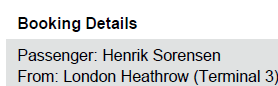
ubicabs2When landing in London Heathrow Airport I usually, economically as I am, use the train to reach my doorstep. However, when I have to catch an early morning flight I order a cab, which actually has a very reasonable price. So yesterday I decided to book a cab in order to cut 30 to 40 minutes of the journey home on the expense of a minor amount of extra pounds.

Excellent data capture

Usually I just call the cab, but as I arrived by airplane and my local cab service is part of an online booking service, I used that service for the first time. The user interface is excellent. There is rapid addressing for entering the pick-up place which quickly presented me the possible terminals at Heathrow. The destination was just a smooth. As the pick-up is an airport they prompted me for the flight number. Very nice as that makes tracking delays possible for them and also you can check that the airline and terminal is a correct match.

Also they have an app that I geekly downloaded to my phablet.

Going down

Landing times at Heathrow are difficult to predict as it often happens that your flight has a couple of circles over London before landing due to heavy traffic. Yesterday was good though as we came directly down and therefore were ahead of schedule.

ubicabsSo it was OK that my name wasn’t at the signs held by drivers already waiting at the passenger exit. Actually I was so early that I could have reached the not so frequent direct train home. But as I now already had troubled the driver to go there I of course waited while spending time on the app.

There actually also was a driver tracking on the app. Marvelous. At first glance it seemed the driver was there. But then I noticed a message saying driver tracking wasn’t available and therefore the spot in the terminal 3 building would be my own position or requested pick-up place.

Going crazy

5 minutes after requested time the driver called:

“Where are you Mr. Sorensen?”

“I’m at the passenger exit where all drivers are waiting.”

“OK. I’m just parking the car. Go to the front of the coffee shop and I’ll be there in a few minutes.”

I spotted a coffee shop in front of the lifts to the short stay parking and went over there.

10 minutes later the driver called:

“Where are you Mr. Sorensen?”

“I am in front of the coffee shop”

“Costa Coffee?”

“No. It has a different name…”. After some ping-pong I mentioned terminal 3.

“Terminal 3?” the driver responded. “I’m at terminal 5. I was told to go here. I’ll be with you in 5 minutes”.

Going by car in 5 minutes I wondered. That would indicate crossing the runways or using the train tunnel.

Well, while spending more happy time on the phablet the clock approached the point where I would be at my doorstep using the slow train.

40 minutes after requested time the driver arrived. I was waiting for the mandatory sorry that Brits use even when they are not sorry at all.

Instead the driver greeted me with: “Did you order the cab yourself Mr. Sorensen?”

“Yes I did. On the internet.”

“Internet?” the driver replied.

“Your company has an excellent online booking system” I friendly remarked.

“When I called you first I asked for confirmation about where you were”.

As I realized that he was trying to establish that everything was my fault I presented the confirmation on the app.

ubicabs3We continued (without the usual smalltalk) to the destination. Here the driver (instead of a discount) presented an upgraded version of the price on the booking confirmation.

At that point it was too difficult to keep calm and carry on…..

Bookmark and Share

Tsundoku

tsundokuThere is a Japanese word called tsundoku. There is no equivalent English word, but in 6 words it means “buying books and not reading them”.

I guess tsundoku could have an eTsundoku variant describing buying software tools and not using them and that could also include data quality tools as told in the post The Worst Best Sale.

My own example isn’t the only one I’m sure. What may be the reasons for buying data quality tools, but not using them? A few suggestions:

  • Organizational changes after ordering (as in my example)
  • Focus has changed before receiving the delivery
  • The tool was never meant to be used as the buy was merely a sign of showing interest in data quality
  • The data quality tool came free (or hidden) as a part of a larger software suite
  • Data quality tools doesn’t solve anything anyway (not my favorite though, as told in the post The Role of Technology in Data Quality Management)

More suggestions?

Bookmark and Share

How Mature are Big Data Maturity Models?

The rise of big data creates a lot of well known side effects. One of them is maturity models.

Here’s a Big Data Maturity Model from 2012. The Data Warehousing Institute has introduced their TDWI Big Data Maturity Model and Assessment Tool. And yesterday over at John Radcliffe’s blog there is an introduction of another Big Data Maturity Model.

Big Data Maturity Model Radcliffe
Click on image to go to John’s blog for more maturity.

The concept of a maturity model is well established since the Capability Maturity Model (CMM) of software development was born and probably we will also see a big data immaturity model one day.

As organizations will be climbing up the steps of the big data maturity models we will learn more about what’s up there and indeed we already know something because the use of big data started long before the use of the term big data.

What do you think: How mature are big data maturity models?

Bookmark and Share

The Data Quality Magi

(No, it’s not magic this time, just magi).three-wise-men-star

The Magi is another term for the Three Wise Men, who are believed to have presented their three gifts on the 6th of January.

Their three gifts were according to the tradition: Gold, frankincense and myrrh.

Now, if three wise men came to your organization today with some data quality related gifts, what would that be?

Bookmark and Share

MDM in LED

All airports have a tree letter code usually being a mnemonic of the city name or airport name. The airport at Saint Petersburg in Russia thus has the code LED because the code was assigned when the city was called LEningraD. That’s how it is with master data: Names may change but the code of an entity must be kept as it was. And that’s why you usually shouldn’t put meaning into codes.

Europe by Midnight
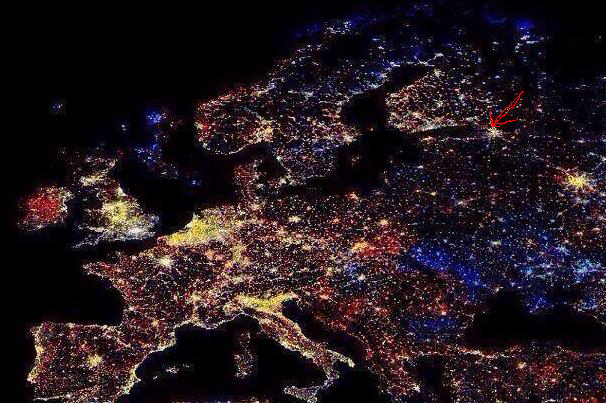
First sight of Europe 2014.

The Russian MDM (Master Data Management) market has been well described by Dmitry Kovalchuk in a post on the Hub Design Magazine.

This year I had the pleasure of celebrating New Year in Saint Petersburg, a city with great palaces from the time of the czars and czarinas and a growing awareness of Master Data Management including some very interesting start-ups around MDM, where I had the chance to visit TaskData and to revisit the social PIM entrepreneur Actualog.

So from Saint Petersburg: Happy New Year and Merry Christmas.

Bookmark and Share

Happy New Year and Merry Christmas

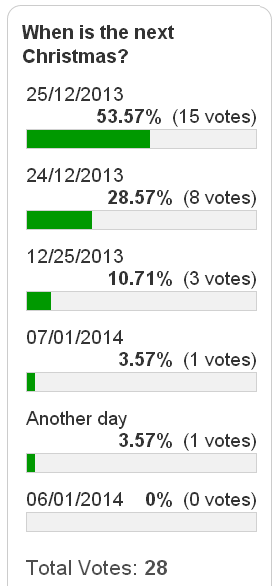
A week ago I had a quick vote here on the blog about when it will be Next Christmas.

Vote on xmasThe results are as seen to the right (or above on a mobile device). Most readers think it will be on 25th December 2013 either written in the straight forward date format as 25/12/2013 or in the awkward date format used in the United States thus being 12/25/2013. Some people, probably from Scandinavia, think it’s today the 24/12/2013. For people living in countries mostly observing the Eastern Orthodox Church Christmas will be on the 7th January, 07/01/2014 in the straight forward date format used there, using the secular Gregorian calendar. This is because the Eastern Church still sticks to the old Julian calendar which is 14 days behind the Gregorian calendar.

So, depending on what you celebrate and in which order:

  • Happy Holidays
  • Merry Christmas and Happy New Year
  • Happy New Year and Merry Christmas

Bookmark and Share

OMG: Santa is Fake

santa facebook picturesThis blog has earlier had some December blog posts about how Santa Claus deals with data quality (Santa Quality) and master data management (Multi-Domain MDM Santa Style).

As I like to be on the top of the hype curve I was preparing a post about how Santa digs into big data, including social data streams, to be better at finding out who is nice and who is naughty and what they really want for Christmas. But then I suddenly had a light bulb moment saying: Wait, why don’t you take your own medicine and look up who that Santa guy really is?

santa on twitterStarting in social media checking twitter accounts was shocking. All profiles are fake. FaceBook, Linkedin and other social networks all turned out having no real Santa Claus. Going to commercial third party directories and open government data had the same result. No real Santa Claus there. Some address directories had a postal code with a relation like the postcode “H0 H0 H0” in Canada and “SAN TA1” in the UK, but they seem to kind of fake too.

So, shifting from relying on the purpose of use to real world alignment I have concluded that Santa Claus doesn’t exist and therefore he can’t have a data store looking like a toy elephant or any other big data operations going on.

Also I won’t, based on the above instant data quality mash up, register Santa Claus (Inc.) as a prospective customer in my CRM system. Sorry.

Bookmark and Share