So, we have four and a half multi-domain MDM vendors

It has been discussed a few times on this blog if Gartner should make a single (multi-domain) Master Data Management quadrant latest in the post MDM for Product Data Quadrant: No challengers. A half visionary.

Well, if Gartner will not Forrester will, as Forrester has just released their MDM wave focusing on multi-platform platforms for MDM. Yep, there is nothing like analyst firms insisting in using their wording as multi-entity, multi-domain or multi-platform MDM within their special visualization as quadrant, landscape, wave and other bulls…. eye stuff to blur things a bit.

If you are a Forrester client or otherwise like to pay money to Forrester, you can get the report here. If you would like to feed one of your eMail addresses into the Informatica marketing machine, you can get the report here.
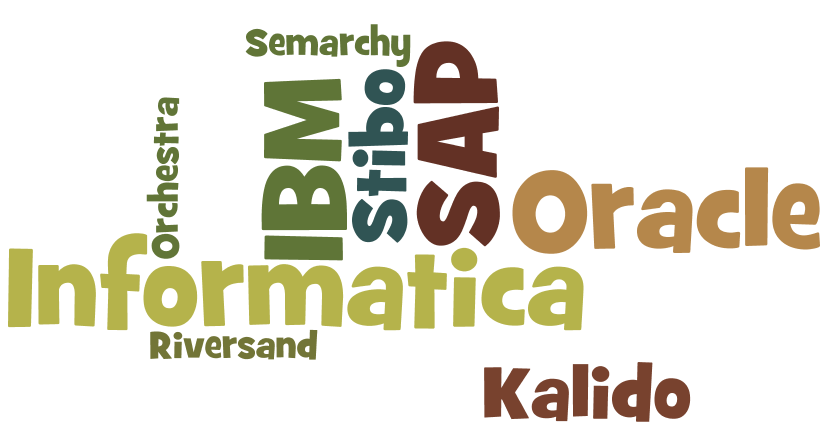
MDM Brands
This is not the wave. Just some names.

There are only four and half multi-platform MDM vendors in the universe according to Forrester. Three and a half of them are no surprise. Maybe Talend is. I guess one or two more of the Trois acteurs français dans le marché du MDM would like to be there as well.

Bookmark and Share

Where is the Asset?

The pevious post on this blog was called A Master Data Mind Map. In there I tried to map some different examples of master data entities within some known master data domains as party, product, location, financial and calendar.

In the comments and in a following twitter conversation, the placement of the asset entity was questioned.

Asset Master Data

Prash Chan (@MDMGeek) said: “There is another type of asset I came across once, mapped to location domain, largely because the assets were identified by the place where they were installed.”

Jamie Watters (@jamietwatters) said: “Don’t disagree, but think there are other areas of asset data that makes it unique instead of using product or location.  Areas such as engineering, design, construction, maintenance, commissionin make managing asset data pretty unique.”

Indeed, I am actually also on the fence here.

There are certainly often strong relations to a location for an asset. But that is also true for parties as well and some products too as told in the post Product Placement.

Assets can be many things. Gartner (the analyst firm) has the concept of the things domain encompassing products and assets.

Asset may in fact just be its own domain. Property too perhaps as the Real Estate Domain. Services could claim independence from the other products someday. Customer is today often seen as its own domain not belonging to party as examined in the post MDM for Customer Data Quadrant…

Andrew White of Gartner did address these naming issues in a blog post back in 2009 here.

Bookmark and Share

A Master Data Mind Map

A challenge within many disciplines is easily to explain what the discipline is about and that certainly is true for Master Data Management (MDM) too as we often have the question: What is master data?

A good short explanation is:

“The description of the who, what and where in transaction data”.

It could also, with help from Wikipedia, be:

“Information that is key to the operation of a business”.

From Gartner (the analyst firm) we have:

“The consistent and uniform set of identifiers and extended attributes that describes the core entities of the enterprise”.

The latter one I would not try on friends and relatives though.

Examples are often a good way to go. Visualization is great too. So, therefore I have played with a mind map of what master data entities may be:

Master Data

Bookmark and Share

From B2B and B2C to H2H

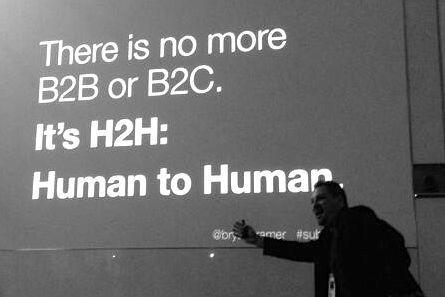
I stumbled upon an article from yesterday by Bryan Kramer called There is no more B2B or B2C: It’s Human to Human, H2H.

H2H

The article is about the implications for marketing caused by the rise of social media which now finally seems to eliminate what we have known as business-to-business (B2B) and more or less merges B2B and business-to-consumer (B2C).

As discussed here on the blog several times starting way back in 2009 in the post Echoes in the Database a problem with B2B indeed is that while business transactions takes place between legal entities a lot of business processes are done between employees related to the selling and buying entities. You may call that employee-to-employee (E2E), people-to-people (P2P) or indeed human-to-human (H2H).

Related to databases, data quality and Master Data Management (MDM) this means we need real world alignment with two kinds of parties:

While B2B and B2C may melt together in the way we do messaging the distinction between B2B and B2C will be there in many other aspects. Even in social media we see it as for example two of the most used social networks being FaceBook and LinkedIn clearly belongs mainly to B2C and B2B respectively for marketing and social selling purposes.

The different possibilities with B2B and B2C in the H2H world was touched in an interview on DataQualityPro last year: What are the Benefits of Social MDM?

Bookmark and Share

Should there be an App for MDM?

MDM may be many different things. For me it’s about Master Data Management and for others it’s about Mobile Device Management.

A recent twitter chat session organized by Gartner (the analyst firm) had the tag #GartnerMDM. It was about Master Data Management but of course there also were questions about Mobile Device Management. Andrew White of Gartner replied:

GartnerMDM

And sure. One of the foremost technology trends being mobile doesn’t have the same attention as other hyped trends like big, social and cloudy within this MDM, but mobile may actually also play a role within master data management.

In my current work with product strategy and product management for a startup within data quality and master data management called iDQ we have been playing with some business cases around an App for this MDM. It has for example been aiming at getting it first time right when NGOs are finding new members on the street and when energy retailers are onboarding new customers on the street.

Have you stumbled upon some business cases for an App for this MDM?

Bookmark and Share

Location Data Quality for MDM

The location domain is after the customer, or rather party, domain and the product domain the most frequent addressed domain for Master Data Management (MDM).

In my recent work I have seen a growing interest in handling location data as part of a MDM program.

Traditionally location data in many organizations have been handled in two main ways:

  • As a part of other domains typically as address attributes for customer and other party entities
  • As a silo for special business processes that involves spatial data using Geographic Information Systems (GIS) as for example in engineering and demographic market research.

Handling location data most often involves using external reference data as location data doesn’t have the same privacy considering as party data, not at least data describing natural personals, tend to have and opposite to product data location data are pretty much the same to everyone.

MDM for the location domain is very much about bringing the two above mentioned ways of working with locations together while consistently exploiting external reference data.

As in all MDM work data quality is the important factor and the usual data quality dimensions are indeed in place here as well. Some challenges are:

  • Uniqueness and precision: Locations comes in hierarchies. As told in the post The Postal Address Hierarchy we when referring to textual addresses have levels as country, region, city or district, thoroughfare (street) or block, building number and unit within a building. Uniqueness may be defined within one of these levels. A discussed in the post Where is the Spot? the precision and use case for coordinates may cause uniqueness issues too.
  • locationTimeliness and accuracy: Though it doesn’t happen too often locations do change names as reported in the post MDM in LED and features on new locations does show up every day. I remember a recent press coverage in the United Kingdom over people who couldn’t get car and other insurances because the address of their newly build house wasn’t in the database at the insurance company.
  • Completeness and conformity: Availability of all “points of interest” in reference data is an issue. The available of all attributes of interest at the desired level is an issue too. The available formats and possible mappings between them is a usual challenge. Addresses in both local and standardized alphabets and script systems using endonyms and exonyms is a problem as told in the posts Where the Streets have Two Names and Where the Streets have one Name but Two Spellings.

Bookmark and Share

MDM in LED

All airports have a tree letter code usually being a mnemonic of the city name or airport name. The airport at Saint Petersburg in Russia thus has the code LED because the code was assigned when the city was called LEningraD. That’s how it is with master data: Names may change but the code of an entity must be kept as it was. And that’s why you usually shouldn’t put meaning into codes.

Europe by Midnight
First sight of Europe 2014.

The Russian MDM (Master Data Management) market has been well described by Dmitry Kovalchuk in a post on the Hub Design Magazine.

This year I had the pleasure of celebrating New Year in Saint Petersburg, a city with great palaces from the time of the czars and czarinas and a growing awareness of Master Data Management including some very interesting start-ups around MDM, where I had the chance to visit TaskData and to revisit the social PIM entrepreneur Actualog.

So from Saint Petersburg: Happy New Year and Merry Christmas.

Bookmark and Share

Do You Like the Lake?

CapgemeniToday Capgemini as a result of a co-innovation partnership with Pivotal released their take on information management in the big data era in a piece called The Principles of the Business Data Lake.

The business data lake concept is a new try on getting rid of all the excel spreadsheets business people operate because of limitations in today’s enterprise data warehouses and the business intelligence solutions sitting on top of those extracted, transformed and loaded data.

In the business data lake you load raw data including unstructured data sources. Single view and related governance is restricted to master and reference data.

It’s not that you are going to load all the data in the world in your business data lake. You will link internal and external data based on where and when needed.

Thomas Redman has made a famous metaphor in the data quality realm about a polluted lake where the best option to deal with that is to prevent polluted water from streaming into the lake. I guess the rise of big data challenges that take as told some years ago in the post Extreme Data Quality.

In the business data lake we will have polluted data. In that view I think it’s a good thing that master and reference data has a special place in the lake.

What do you think? Do you like the lake – the old and/or the new one?

Bookmark and Share

A Little Bit of Truth vs A Big Load of Trust

The soul of Master Data Management (MDM) is often explained as the search for a single version of the truth. It has always puzzled me that that search in many cases has been about finding the truth as the best data within different data silos inside a given organization.

business partnersBig data, including how MDM and big data can be a good match, has been a well covered subject lately. As discussed in the post Adding 180 Degrees to MDM this has shed the light on how external data may help having better master data by looking at data from outside in.

At Gartner, the analyst firm, they have phrased that movement as a shift from truth to trust for example as told in the post by Andrew White called From MDM to Big Data – From truth to trust.

Don’t get me (and master data) wrong. The truth isn’t out there in a single silver bullet shot. You have to mash up your internal master data with some of the most trustworthy external big reference data. This include commercial directory offerings, open data possibilities, public sector data (made available for private entities) and social networks.

Indeed there are potholes in that path.  Timeliness of directories, completeness of open data, consistency and availability and price tags on public sector data and validity of social network data are common challenges.

Bookmark and Share

Third-Party Data and MDM

A recent blog post called Top 14 Master Data Management Misconceptions by William McKnight has as the last misconception this one:

“14. Third-party data is inappropriate for MDM

Third-party data is largely about extending the profile of important subject areas, which are mastered in MDM.  Taking third-party data into organizations has actually kicked off many MDM programs.”

business partnersIndeed, using third-party data, which also could be called big external reference data, is in my eyes a very good solution for a lot of use cases. Some of the most popular exploitations today are:

  • Using a business directory as big reference data for B2B party master data in customer data integration (CDI) and supplier master data management.
  • Using address directories as big reference data for location master data management also related to party master data management for B2C customer data.
  • Using product data directories such as the Global data Synchronization Network (GDSN®) services, the UNSPSC® directory and heaps of industry specific product directories.

The next wave of exploiting external data, which is just kicking off as Social MDM, is digging into social media for sharing data, including:

  • Using professional social networks as LinkedIn in B2B environments where you often find the most timely reference data not at least about contact data related to your business partners’ accounts.
  • Using consumer oriented social networks as Facebook for getting to know your B2C customers better.
  • Using social collaboration as a way to achieve better product master data as told in the post Social PIM.

Bookmark and Share