Buying a PIM Solution at Harrods

Today I attended the Informatica MDM Day for EMEA here in London.

London has a lot of attractions. If you for example want to see a lot of big price tags and go to a public toilet with a very nice odeur the place to go is the famous luxury department store called Harrods.

Harrods

Harrods, represented by Peter Rush, presented their Product Information Management (PIM) journey at the Informatica event. So, how does a luxury PIM implementation look like?

It starts with realising that traditional product master data in retail has mostly been about the buy-side, but today, not at least in light of the multi-channel challenge, you must add the sell-side to product master data, meaning having customer friendly product information.

After setting that scene Harrods went into selecting a PIM solution, meaning eliminating possible vendors one by one until the lucky one was chosen. In this case Heiler (now Informatica). In the last stages evaluated vendors were sent home based on criteria like roadmap, being in Texas and as the last step the price.

Bookmark and Share

An Alternative Multi-Domain MDM Quadrant

No, this is not an(other) attempt to challenge Gartner, the analyst firm, in making quadrants about vendors in the Master Data Management (MDM) realm.

This an attempt to highlight some capabilities of Multi-Domain MDM solutions here focusing on party and product master data and the sell-side and the buy-side of MDM as discussed some years ago in the post Sell-side vs Buy-side Master Data Quality.

A simple quadrant will look like this:

Quadrant

  • The upper right corner is where MDM started, being with solutions back then called Customer Data Integration (CDI).
  • The Product Information Management (PIM) side is quite diverse and depending on the industry vertical where implemented:
    • Retailers and distributors have their challenges with sometimes high numbers of products that goes in and comes out as the same but with data reflecting different viewing points.
    • Manufacturers have other issues managing raw materials, semi-finished products, finish products and products and services used to facilitate the processes.
    • Everyone have supplies.
  • The supplier master data management has more or less also been part of the PIM space but looks more like customer master data and should be part of a party master data discipline also embracing other party roles as employee.

Also, this quadrant is by the way without other important domains as location (as discussed in the post Bringing the Location to Multi-Domain MDM) and asset (as discussed in the post Where is the Asset?)

Bookmark and Share

The True Leader in Product MDM

Magic Quadrants from Gartner are the leading analyst report sources within many IT enabled disciplines. This is also true in the data management realm and one of quadrants here is the Gartner Magic Quadrant for Master Data Management of Product Data Solutions.

The latest version of this quadrant was out in November last year as reported in the post MDM for Product Data Quadrant: No challengers. A half visionary.

Most quotations after a quadrant release are vendors bragging about their position in the quadrant and this habit will possibly also repeat itself when the next quadrant for product MDM is out.

But I think Gartner has got it all wrong here during all the years. As I have seen it, Microsoft is the true leader and the rest of the flock are minor niche players.

Product MDM

Excel rules.

Bookmark and Share

Reading the right Reading

TripItIn order to have all my travel arrangements in one place I use a service called TripIt. When I receive eMail confirmations from airlines, hotels, train planners and so, I simply forward those to plans@tripit.com, and within seconds they build or amend to an itinerary for me that is available in an app.

Today I noticed a slight flaw though. I was going by train from London, UK up to the Midlands via a large town in the UK called Reading.

The strange thing in the itinerary was that the interchanges in Reading was placed in chronology after arriving at and leaving the final destination.

A closer look at the data revealed two strange issues:

  • Reading was spelled Reading, PA
  • The time zone for the interchange was set to EST

Hmmm…  There must be a town called Reading in Pennsylvania across the pond. Tripit must, when automatically reading the eMail, have chosen the US Reading for this ambiguous town name and thereby attached the Eastern American time zone to the interchange.

Picking the right Reading for me in the plan made the itinerary look much more sensible.

Bookmark and Share

Happy 10 Years Birthday MDM Solutions

326px-10piece-blank-R_k.svgEvery year Information Difference publishes a report about the Master Data Management (MDM) Landscape. This year’s report celebrates the 10th year of MDM solutions around. Of course, the MDM industry didn’t start on a certain date 10 years ago, but the use of MDM as a common accepted notation for a branch of IT solutions within data management, and in my eyes as a much needed spinoff of the data quality discipline, was commonly being accepted.

A birthday is a good occasion to look ahead. The Information Difference report takes on some of the trends in the MDM solutions around, being that:

  • Most MDM vendors today claims to be multi-domain MDM providers, but certainly they are on different stages coming from different places
  • Providing MDM in the cloud is slowly but steadily adapted
  • Integrating big data into MDM solutions has, in my words, reached the marketing and R&D departments at the MDM vendors and will someday also reach the professional service and accounting folks there

Read the MDM landscape Q2 2014 report from Information Difference here.

Bookmark and Share

Using External Data in Data Matching

One of the things that data quality tools does is data matching. Data matching is mostly related to the party master data domain. It is about comparing two or more data records that does not have exactly the same data but are describing the same real world entity.

Common approaches for that is to compare data records in internal master data repositories within your organization. However, there are great advantages in bringing in external reference data sources to support the data matching.

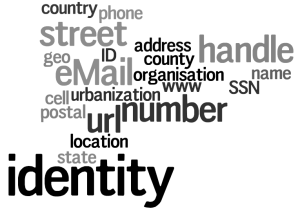
Some of the ways to do that I have worked with includes these kind of big reference data:
identityBusiness directories:

The business-to-business (B2B) world does not have privacy issues in the degree we see in the business-to-consumer (B2C) world. Therefore there are many business directories out there with a quite complete picture of which business entities exists in a given country and even in regions and the whole world.

A common approach is to first match your internal B2B records against a business directory and obtain a unique key for each business entity. The next step of matching business entities with that unique is a no brainer.

The problem is though that an automatic match between internal B2B records and a business directory most often does not yield a 100 % hit rate. Not even close as examined in the post 3 out of 10.

Address directories:

Address directories are mostly used in order to standardize postal address data, so that two addresses in internal master data that can be standardized to an address written in exactly the same way can be better matched.

A deeper use of address directories is to exploit related property data. The probability of two records with “John Smith” on the same address being a true positive match is much higher if the address is a single-family house opposite to a high-rise building, nursery home or university campus.

Relocation services:

A common cause of false negatives in data matching is that you have compared two records where one of the postal addresses is an old one.

Bringing in National Change of Address (NCOA) services for the countries in question will help a lot.

The optimal way of doing that (and utilizing business and address directories) is to make it a continuous element of Master Data Management (MDM) as explored in the post The Relocation Event.


Bookmark and Share

Where to put Master Data?

The core of most Master Data Management (MDM) solutions is a master data hub. MDM solutions as those appearing in analyst reports revolves around a store for master data that is a new different place than where master data usually are. That is for example being in CRM, SCM and ERP systems.

For large organizations with a complex IT landscape having a MDM hub is usually the only sensible solution.

However for many midsize and smaller organizations, and even large organizations with a dominant ERP system as well, the choice is often naming one of the application databases to be the main master data hub for a given master data domain as customer, supplier, product and what else is considered a master data entity.

In such cases you may apply things as data quality services as described in the post Lean MDM and other master data related services as told in post Service Oriented MDM.

scaleThere are arguments for and against both approaches. The probably most used argument against the MDM hub approach is that why you should solve the issue of having X data silos with creating data silo X + 1. The argument against naming a given application as the place of master data is that an application is built for a specific purpose and therefore is not good for other purposes of master data use.

Where do you put your master data? Why?

Bookmark and Share

Service Oriented MDM

puzzleMuch of the talking and doing related to Master Data Management (MDM) today revolves around the master data repository being the central data store for information about customers, suppliers and other parties, products, locations, assets and what else are regarded as master data entities.
The difficulties in MDM implementations are often experienced because master data are born, maintained and consumed in a range of applications as ERP systems, CRM solutions and heaps of specialized applications.

It would be nice if these applications were MDM aware. But usually they are not.

As discussed in the post Service Oriented Data Quality the concepts of Service Oriented Architecture (SOA) makes a lot of sense in deploying data quality tool capacities that goes beyond the classic batch cleansing approach.

In the same way, we also need SOA thinking when we have to make the master data repository doing useful stuff all over the scattered application landscape that most organizations live with today and probably will in the future.

MDM functionality deployed as SOA components have a lot to offer, as for example:

  •  Reuse is one of the core principles of SOA. Having the same master data quality rules applied to every entry point of the same sort of master data will help with consistency.
  •  Interoperability will make it possible to deploy master data quality prevention as close to the root as possible.
  •  Composability makes it possible to combine functionality with different advantages – e.g. combining internal master data lookup with external reference data lookup.

Bookmark and Share

Completeness is still bad, while uniqueness is improving

In a recent report called The State of Marketing Data prepared by Netprospex over 60 million B2B records were analyzed in order to assess the quality of the data measured as fitness for use related to marketing purposes.

An interesting find was that out of a score of maximum 5.0 duplication, the dark side of uniqueness, was given the average score 4.2 while completeness was given the average score 2.7.

The STaTe of MarkeTing DaTa

This corresponds well with my experience. We have in the data quality realm worked very hard with deduplication tools using data matching approaches over the years and results are showing up. We are certainly not there yet, but it seems that completeness, and in my experience also accuracy, are data quality dimensions currently suffering more.

In my eyes the remedy for improvement in completeness and accuracy goes hand in hand with even better uniqueness. It is about getting the basic data right the first time as described in the post instant Single Customer View and being able to keep up completeness and accuracy as told in the post External Events, MDM and Data Stewardship.

Bookmark and Share

Now We Have a Data Governance Tool Market

Do we need data governance tools? This was a question discussed recently here on the blog in the comments to the post called Data Governance Tools: The New Snake Oil?

As mentioned in a comment one analyst firm, Bloor, has actually made a data governance market update with vendors positioned in their bulls-eye style of visualization. Both a data quality market update and the data governance market update can be fetched via Trillium Software here.

The data governance report states that especially regulations has urged organizations to focus on data quality and thereby data governance. Furthermore Bloor says: “Previously, compliance was typically process-focused: you had to prove the lineage of data, for example, but not its accuracy.”

The vendors positioned in the data governance market is pretty much the usual suspects known from the analyst reports on the data quality tool market. Interesting to see that Experian though makes one of the not so frequent appearances in such a report. That must be about accuracy, since Experian is not so known for process-focused tools but indeed for tools using external reference data in order to improve accuracy.

Market Update Data Governance

Bookmark and Share