We all use Excel though we know it is bad. It is a user friendly and powerful tool, but there are plenty of stories out there where Excel has caused so much trouble like this one from Computerworld in 2008 when the credit crunch struck.
I guess all people who works in data management curses Excel. Data kept in Excel is a pain – you know where – as it is hard to share, you never know if you have the latest version, nice informative colouring disappears when transforming, narrow columns turns into rubbish, different formatting usually makes it practically impossible to combine two sheets and heaps of other not so nice behaviours.
Even so, Excel is still the most used tool for many crucial data management purposes as for example reported in the post The True Leader in Product MDM.
Excel is still a very frequent used option when it comes to exchanging data as touched by Monica McDonnell of Informatica in a recent blog post on Four Technology Approaches for IDMP Data Management.
Probably, the use of Excel as a mean to exchange data between organizations is the field where it will be most difficult to eliminate the dangerous use of Excel. The problem is that the alternative usually is far too rigid. The task of achieving consensus between many organizations on naming, formatting and all the other tedious stuff makes us turn to Excel.

When working with data quality within data management we may wrongly strive for perfection. We should rather strive for excellence, which is something better than the ordinary. In this case Excel is the ordinary. As Harriet Braiker said: “Striving for excellence motivates you; striving for perfection is demoralizing.”
In order to be excellent, though not perfect, in data sharing, we must develop solutions that are better than Excel without being too rigid. Right now, I am working on a solution for sharing product data being of that kind. The service is called the Product Data Lake.
 But, have any new trends showed up in the past years?
 From own experience in working predominantly with product master data during the last couple of years there are issues and big pain points with product data. They are just different from the main pain points with party master data as examined in the post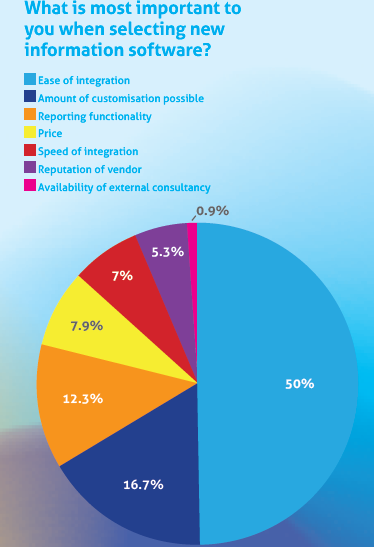

 While there still is a market for standalone data quality tools an increasing part of data quality tooling is actually made with tools being a Master Data Management (MDM) tool, a Data Governance tool, an Extract Load and Transform (ETL) tool, a Customer Relationship Management (CRM) tool or an other kind of tool or software suite.
 The first analyst reactions and line up of the potential benefits and the potential drawbacks can be found here on searchCIO in an article called
 An important part of implementing Master Data Management (MDM) is to capture the business rules that exists within the implementing organization and build those rules into the solution. In addition, and maybe even more important, is the quest of crafting new business rules that helps making master data being of more value to the implementing organization.
 Liliendahl on Data Quality