Master Data, Product Information, Digital Assets and Digital Ecosystems

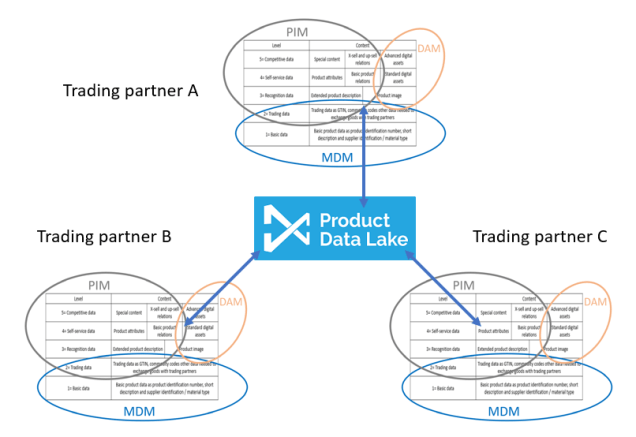
When it comes to mastering product data there are these three kinds of data and supporting managing disciplines and solutions:

  • Master data and the supporting Master Data Management (MDM) discipline and a choice of MDM solutions for the technology part
  • Product information and the supporting Product Information Management (PIM) discipline and a choice of PIM solutions for the technology part
  • Digital assets and the supporting Digital Asset Management (DAM) discipline and a choice of DAM solutions for the technology part

What these disciplines are and how the available solutions relate was examined in the post How MDM, PIM and DAM Sticks Together. This post includes a model for that proposed by Simon Walker of Gartner (the analyst firm).

The right mix for your company depends on your business model and you will also have the choice of using a best of breed technology solution for your focus, that being MDM, PIM or DAM, as well as there are choices for a same branded solution, and in some cases also actually integrated solution, that supports MDM, PIM and DAM.

When selecting a (product) data management platform today you also must consider how this platform supports taking part in digital ecosystems, here meaning how you share product data with your trading partners in business ecosystems.

For the digital platform part supporting interacting with master data, product information and digital assets with your trading partners, who might have another focus than you, the solution is Product Data Lake.
MDM PIM DAM PDL

The Need for a MDM Vision

Many of the MDM programs we see are increasingly tactical rather than enterprise in nature. This observation was examined in the previous post on this blog as well as in the comments. If you missed it, check out Do we need better business decisions about MDM?

MDM BlocksA crucial point is that organizations have a MDM vision. The need for a MDM vision was also the top block in the seven building blocks of MDM proposed by John Radcliffe, when John worked at Gartner (the analyst firm).
In here, John advised that there should be one unifying, strategic MDM vision that needs to reflect the organization’s business vision. However, due to internal politics and entrenched working practices a pragmatic, step-by-step approach is necessary for the entire organization to embrace the vision.

Does your organization have a MDM vision? What is included in the MDM vision? How is the vision embraced by various organizational entities?

Do we need better business decisions about MDM?

In an Information Management article today Aaron Zornes, president of the MDM Institute, writes about that Master Data Management (MDM is) driving better business decisions.

In here Aaron says: “Many of the MDM programs we see are increasingly tactical rather than enterprise in nature. That is, organizations are more likely to fund MDM programs to solve a specific business problem than a wide range of business problems”.

MDMDG 2013 wordleWhile I agree with the observation and have been involved in making exactly such business cases, it stills puzzles me that this is quite a contradiction to the idea behind MDM, which is to consolidate master data across the enterprise.
What do you think? Do tactical MDM implementations cater for better business decisions? Or do we need better business decisions when scoping MDM programs around?

MDM / PIM Platform Vendors Need to Grow Up Too

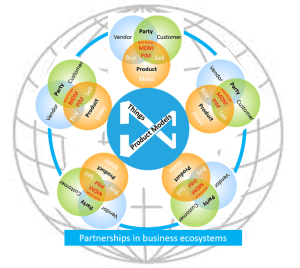
Participating in digital ecosystems is the way forward for enterprises who wants to be tomorrow’s winners through digital transformation.

Some figures from Gartner, the analyst firm, tells this about digital transformation:

  • 79% of top performing companies indicate that they participate in a digital ecosystem
  • 49% of typical companies indicate the same
  • 24% of trailing companies does it

These figures were lately examined by Bryan Kirschner of Apigee (now part of Google) in a Cio.com article called Ecosystems: when digital transformation grows up.

Master Data Share
Master Data Share for Business Ecosystems

As a Master Data Management (MDM) and/or Product Information Management (PIM) platform vendor you should support your current and prospective clients with means to participate in digital ecosystems.

Current offerings from MDM and PIM platforms vendors have become quite mature in supporting inhouse (enterprise wide) handling of master data and product information. Next step is supporting sharing within business ecosystems. A concept for that is introduced in Master Data Share.

Master Data or Shared Data or Critical Data or What?

What is master data and what is Master Data Management (MDM) is a recurring subject on this blog as well as the question about if we need the term master data and the concept of MDM. Recently I read two interesting articles on this subject.

Andrew White of Gartner wrote the post Don’t You Need to Understand Your Business Information Architecture?

In here, Andrew mentions this segmentation of data:

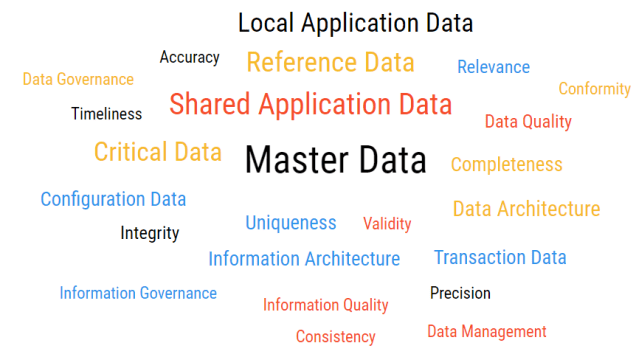
  • Master data – widely referenced, widely shared across core business processes, defined initially and only from a business perspective
  • Shared application data – less widely but still shared data, between several business systems, that links to master data
  • Local application data – not shared at all outside the boundary of the application in mind, that links to shared application and master data

Teemu Laakso of Kone Corporation has just changed his title from Head of Master Data Management to Head of Data Design and published an article called Master Data Management vs. Data Design?

In here, Teemu asks?

What’s wrong in the MDM angle? Well, it does not make any business process to work and therefore doesn’t create a direct business case. What if we removed the academic borderline between Master Data and other Business Critical data?

The shared sentiment, as I read it, between the two pieces is that you should design your “business information architecture” and the surrounding information governance so that “Data Design Equals Business Design”.

My take is that you must look from one level up to get the full picture. That will be considering how your business information architecture fits into the business ecosystem where your enterprise is a part, and thereby have the same master data, shares the same critical data and then operates your own data that links to the shared critical data and business ecosystem wide master data.

Master Data or

Product Information Sharing Issue No 1: We Need to Mature Internally

A current poll on sharing product information with trading partners running on this blog has this question: As a manufacturer: What is Your Toughest Product Information Sharing Issue?

The most votes in the current standing has gone to this answer:

We must first mature in handling our product information internally

PDL MenuSolving this issue is one of the things we do at Liliendahl.com. Besides being an advisory service in the Master Data Management (MDM) and Product Information Management (PIM) space, we have a developing collaboration with companies providing consultancy, cleansing and, when you come to that step, specialized technology for inhouse MDM and PIM. Take a look at Our Business Ecosystem.

If you are a manufacturer with a limited need for scaling the PIM technology part and already have much of your needs covered by an ERP and/or Product Lifecycle Management (PLM) solution, you may also fulfill your inhouse PIM capabilities and the external sharing needs in one go by joining Product Data Lake.

IIoT (or Industry 4.0) Will Mature Before IoT

Internet of Things (IoT) is a hot topic in the data management world and yours truly is also among those who sees IoT as a theme that will have a tremendous impact on data management including data quality, data governance and Master Data Management (MDM).

However, I think the flavour of IoT called Industrial Internet of Things (IIoT) or Industry 4.0 will mature, and already have matured, before the general IoT theme.

globalIIoT / Industry 4.0 is about how manufacturers use connected intelligent devices to improve manufacturing processes where the general IoT theme extends the reach out in the consumer world – with all the security and privacy concerns related to that.

A clue about the maturity in IIoT is found in a Forbes article by Bernard Marr. The article is called Unlocking The Value Of The Industrial Internet Of Things (IIoT) And Big Data In Manufacturing.

In this article, Justin Hester of automotive part manufacturer Hirotec tells about their approach to embracing IIoT. Justin Hester states that “…we can finally harness the data coming in from all of these different sources, whether they are machines, humans, parts – but I think the real challenge is the next step – how do I execute? That’s the challenge.”

Indeed, how to execute and take (near) real-time action on data will be the scenario where Return on Investment (ROI) will show up. This means, as explained in the article, that you should make incremental implementations.

It also means, that you must be able to maintain master data that can support (near) real-time execution. As IIoT/Industry 4.0 is about connected devices in business ecosystems, my suggestion is a data architecture as described on Master Data Share.

Encompassing Relational, Document and Graph the Best Way

The use of graph technology in Master Data Management (MDM) has been a recurring topic on this blog as the question about how graph approaches fits with MDM keeps being discussed in the MDM world.

Multi-Domain MDM GraphRecently Salah Kamel, the CEO at the agile MDM solution provider Semarchy, wrote a blog post called Does MDM Need Graph?

In here Salah states: “A meaningful graph query language and visualization of graph relationships is an emerging requirement and best practice for empowering business users with MDM; however, this does not require the massive redesign, development, and integration effort associated with moving to a graph database for MDM functionality”.

In his blog post Salah discusses how relationships in the multi-domain MDM world can be handled by graph approaches not necessarily needing a graph database.

At Product Data Lake, which is a business ecosystem wide product information sharing service that works very well besides Semarchy MDM inhouse solutions, we are on the same page.

Currently we are evaluating how graph approaches are best delivered on top of our document database technology (using MongoDB). The current use cases in scope are exploiting related products in business ecosystems and how to find a given product with certain capabilities in a business ecosystem as examined in the post Three Ways of Finding a Product.

10 Analyst Firms in the MDM Space

When working with Master Data Management (MDM) it is always valuable to follow the analyst firms that are active on this subject and the related subjects as data quality, data governance and data management in general. You can learn from their insights – and disagreements – on the matters. Here are 10 analyst firms I follow:

Gartner, the large analyst firm known for their magic quadrants, hype cycles and cool vendor lists. There is a lot of brain power in this firm and they have never been caught in admitting a mistake. Quite a lot of posts on this blog mentions Gartner.

Forrester, another firm with heaps of analysts. Forrester has though been less prominent in the MDM world since Robert Karel left for Informatica. However, there are lots of wider insights to gain from as mentioned in the post Ecosystems are The Future of Digital and MDM.

The MDM Institute, which basically is Aaron Zornes, known as the Father Christmas of MDM. Aaron Zornes was the inspirational source in my recent post called MDM as Managed Service.

The Information Difference, headed by Andy Hayler. They publish a yearly MDM landscape report latest referenced on this blog in the post Emerging Database Technologies for Master Data.

Bloor Group has occasionally made reports about MDM latest mentioned on this blog in the post The MDM Market Wordle.

Ventana Research has been especially active around Product Information Management (PIM) as seen in the recent press release on their Product Information Management Research.

Intelligent Business Strategies, run by Mike Ferguson. No nonsense, plain English insights from the around the UK Midlands. Home page here.

Constellation Research, the Silicon Valley perspective. Home page here.

The Group of Analysts has published a series of interviews with MDM and PIM notabilities as for example this one with Richard Hunt of Agility Multichannel on Content Gravity.

Aberdeen Group, a company you as a MDM vendor can hire to put numbers on your blog as for example Stibo Systems did here.

Analysts

MDM as Managed Service

This month I am going to London to attend the Master Data Management Summit Europe 2017.

As a teaser before the conference Aaron Zornes made a post called MDM Market 2017-18: Facts vs. Beliefs (with apologies to current political affairs fans!).

In his article, Aaron Zornes looks at the slow intake of multi-domain MDM, proactive data governance, graph technology and Microsoft stuff ending with stating that MDM as MANAGED SERVICE = HOT:

“Just as business users increasingly gave up on IT to deliver modest CRM in a timely, cost effective fashion (remember all the Siebel CRM debacles), so too are marketing and sales teams especially looking to improve the quality of their customer data… and pay for it as a “service” rather than as a complex, long-time-to-value capital expenditure that IT manages”.

Master Data ShareI second that, having been working with the iDQ™ service years ago, and will add, that the same will be true for product data as well and then eventually also multi-domain MDM.

How that is going to look like is explained here on Master Data Share.