Happy Uniqueness

When making the baseline for customer data in a new master data management hub you often involve heavy data matching in order to de-duplicate the current stock of customer master data, so you so to speak start with a cleansed duplicate free set of data.

I have been involved in such a process many times, and the result has never been free of duplicates. For two reasons:

  • Even with the best data matching tool and the best external reference data available you obviously can’t settle all real world alignments with the confidence needed and manual verification is costly and slowly.
  • In order to make data fit for the business purposes duplicates are required for a lot of good reasons.

Being able to store the full story from the result of the data matching efforts is what makes me, and the database, most happy.

The notion of a “golden record” is often not in fact a single record but a hierarchical structure that reflects both the real world entity as far as we can get and the instances of this real world entity in a form that are suitable for different business processes.

Some of the tricky constructions that exist in the real world and are usual suspects for multiple instances of the same real world entity are described in the blog posts:

The reasons for having business rules leading to multiple versions of the truth are discussed in the posts:

I’m looking forward to yet a party master data hub migration next week under the above conditions.

Bookmark and Share

Hierarchical Completeness

A common technique used when assessing data quality is data profiling. For example you may count different measures as number of fields in a table that have null values or blank values, distribution of filled length of a certain field, average values, highest values, lowest values and so on.

If we look at the most prominent entity types in master data management being customers and products you may certainly also profile your customer tables and product tables and indeed many data profiling tutorials use these common sort of tables as examples.

However, in real life profiling an entire customer table or product table will often be quite meaningless. You need to dig into the hierarchies in these data domains to get meaningful measures for your data quality assessment.

Customer master data

In profiling customer master data you must consider the different types of party master data as business entities, department entities, consumer entities and contact entities, as the demands for completeness will be different for each type. If your raw data don’t have a solid categorization in place, a prerequisite for data profiling will often be to make such a categorization before going any further.

If your customer data model isn’t too simple, as explained in post A Place in Time, your location data (like shipping addresses, billing addresses, visiting addresses) will be separated from your customer naming and identification data. This hierarchical structure must be considered in your data profiling.

For international customer data there will also be different demands and possibilities for completeness of customer data elements.    

Depending on your industry and way of doing business there may also be different demands for customer data related to different industry verticals, demographic groups and data sourced in different channels. However this may be a slippery ground, as current and not at least future requirements for multiple uses of the same master data may change the picture.   

Product master data

For most businesses the requirements for completeness and other data profiling measures will be very different depending on the product type.

Some requirements will only apply to a small range of products; other requirements apply to a broader range of products.

All in all the data profiling requirements is an integrated part of hierarchy management for product master data which make a very strong case for having data profiling capabilities implemented as part of a product information management (PIM) solution.

Multi-Domain Master Data Management

For master data management solutions embracing both customer data integration (CDI) and product information management (PIM) integrated capabilities for profiling customer master data, location master data and product master data as part of hierarchy management makes a lot of sense.

As improving data quality isn’t a one-off activity but a continuous program, so is the part being measuring the completeness of your master data of any kind.

Bookmark and Share

All that glisters is not gold

As William (not Bill) Shakespeare wrote in the play The Merchant of Venice:

All that glisters is not gold;
Often have you heard that told

I was reminded about that phrase when commenting on a comment from John Owens in my recent post called Non-Obvious Entity Relationship Awareness.

Loraine Lawson wrote a piece on IT Business Edge yesterday called Adding Common Sense to Data Quality. That post relates to a post by Phil Simon on Mike 2.0 called Data Error Inequality. That post relates to a post on this blog called Pick Any Two.

Anyway, one learning from all this glistering relationship fuzz is that when looking for return on investment (Gold) in data quality improvement and master data management perfection I agree with adding some common sense.

One of the first posts on this blog actually was Data Quality and Common Sense.  

Bookmark and Share

#MDM is dead, long live #XXX

When tweeting about Master Data Management (MDM) it has been custom to use the #MDM hashtag.

However you sometimes have seen other subjects tagged with #MDM, often in other languages than English as for example “Matin de Merde”.

But now #MDM has been completely taken over by the Tourism Queensland (Australia) Million Dollar Memo campaign.

So, Master Data Management tweeps: Do we have to find a new hashtag?.

Is #MasterDataManagement too long?

Other suggestions?

Bookmark and Share

The Worst Best Sale

One of my large disappointments from my data quality tool selling days was being involved in a great license sale.

It was a new way of doing business. The initial contact was made through social media by getting in talk with a key employee in one of the not so small players in world-wide multi-channel fashion selling.

It also from there was the good old way of doing business. We spend plus one year with proof of concept and price bargaining until finally standing head to head with one other competitor: The Data Quality quadrant leader owned by a company with the same name as our local airline.

Done deal – and then a few days after much of the business in question was outsourced. I’m actually not aware if the outsource partner had some homemade data quality techniques or couldn’t care less about data quality.

But there is a not opened box with a data quality tool somewhere out there. 

Bookmark and Share

Non-Obvious Entity Relationship Awareness

In a recent post here on this blog it was discussed: What is Identity Resolution?

One angle was the interchangeable use of the terms “Identity Resolution” and “Entity Resolution”. These terms can be seen as truly interchangeable, as that “Identity Resolution” is more advanced than “Entity Resolution” or as (my suggestion) that “Identity Resolution” is merely related to party master data, but “Entity Resolution” can be about all master data domains as parties, locations and products.

Another term sometimes used in this realm is “Non-Obvious Relationship Awareness”. Also this term is merely related to finding relationships between parties, for example individuals at a casino that seems to do better than the croupiers. Here’s a link to a (rather old) O’Reilly Radar post on Non-Obvious Relationship Awareness.

Going Multi-Domain

So “Non-Obvious Entity Relationship Awareness” could be about finding these hidden relationships in a multi-domain master data scope.

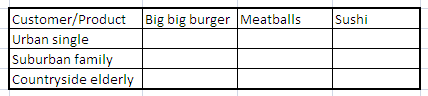
An example could be non-obvious relationships in a customer/product matrix.

The data supporting this discovery will actually not be found in the master data itself, but in transaction data probably being in an Enterprise Data Warehouse (EDW). But a multi-domain master data management platform will be needed to support the complex hierarchies and categorizations needed to make the discovery.   

One technical aspect of discovering such non-obvious relationships is how chains of keys are stored in the multi-domain master data hub.

Customer Master Data

The transactions or sums hereof in the data warehouse will have keys referencing customer accounts. These accounts can be stored in staging areas in the master data hub with references to a golden record for each individual or company in the real world. Depending on the identity resolution available the golden records will have golden relations to each other as they are forming hierarchies of households, company family trees, contacts within companies and their movements between companies and so on.

My guess as described in the post Who is working where doing what? is that this will increasingly include social media data.

Product Master Data

Some of the same transactions or sums hereof in the data warehouse will have keys referencing products. These products will exist in the master data hub as members of various hierarchies with different categorizations.

My guess is that future developments in this field will further embrace not just your own products but also competitor products and market data available in the cloud all attached to your hierarchies and categorizations.   

Bookmark and Share

As Bill Shakespeare Wrote …

This post is a follow up on the post Foreign Affairs and the post Fuzzy Matching and Information Quality over at the Mastering Data Management blog.

The fuzzy post and comments including mine circles around how the relation between “Bill” and “William” must be handled in data matching.

While “Bill” and “William” may be used interchangeable in modern Anglo-Saxon data, it may be a mistake in time (anachronism) to use them interchangeable related to the grand old playwright.

Also it may be a mistake in place to use them interchangeable in other cultures.

For example in my home country Denmark “Bill” and “William” are two different names. Globalization has been going on for a long time as far more people are baptized (or given the name otherwise) William than the original Danish form Wilhelm. There are only 286 people with the name Wilhelm today opposite to 7,355 with the name William including 800 new during the last year. And then there are 353 different people with the name Bill.

But the same use of nicknames has not been localized here yet.

So with Danish data matching “Bill Nielsen” and “William Nielsen” is almost certainly a false positive.

It’s not that it’s a big problem; the risk of making the mistake is very low. The problem is rather that focus should be on different more pressing issues with specific challenges (and possibilities) related to data from each culture and country.

Bookmark and Share

Data Quality and Data Visualization

This is a self-centric blog post about data quality and data visualization.

The figure to the right is a statistic about who viewed my profile in a certain period on LinkedIn.

Looking at that makes me think about a couple of data quality and data visualization issues especially linked to visualization of data on a world map.

Hidden value

Fortunately there is both a map and some numbers below, because the map is too small to show from where I have the most views: My very small home country Denmark.

Misleading proportions

I have no views from the grey countries. So I should certainly concentrate on Greenland (the big grey land in the top of the map) to get more viewers, right?

Well, the Mercator projections make areas close to the poles like Greenland look much bigger than in the real world. Greenland is a big island, but in fact only less than 1/3 of Australia (the almost as big light blue land in the down under right corner) – and Greenland only has 1/400 of the population of Australia.

Cultural dependency

My blogging and LinkedIn activities are in English due to the moderate population of Denmark. Therefore, and because of the spread of LinkedIn biased in the English speaking world, it’s no surprise most viewers are from English speaking countries.

Bookmark and Share

Foreign Affairs

There is a famous poster called The New Yorker. This poster perfectly illustrates the centricity we often have about the town, region or country we live in.

The same phenomenon is often seen in data management.

I mentioned United States centricity as a minor criticism in my recent book review about the excellent book “Master Data Management and Data Governance”.  

An example from the book is this statement:

“It is important to differentiate between U.S. domestic addresses and international addresses. This distinction is important for U.S.-centric MDM solutions because U.S. domestic addresses are normally better defined and therefore can be processed in a more automatic fashion, while international addresses require more manual intervention.”

The same fact could be expressed by saying:

“It is important to differentiate between Danish domestic addresses and international addresses. This distinction is important for Danish-centric MDM solutions because Danish domestic addresses are normally better defined and therefore can be processed in a more automatic fashion, while international addresses require more manual intervention.”

Only, the better formatted address in the first case is the messy address in the last case, and the better formatted address in the last case is the messy address in the first case.

If your MDM scope is country-centric it is sensible to concentrate on automation related to that country.

If your MDM scope is international there are two options:

  • The easy way: The one size fits all option. This is a moderate investment, but also, it only yields moderate results in terms of automation and data quality.
  • The hard way: You have to implement specialized automation and investigate best external reference data for each country. I made a Danish-centric post on that last year here.

Bookmark and Share

Book Review: Berson and Dubov on MDM

A few days ago Julian Schwarzenbach over at the Data and Process Advantage Blog published a review of the book “Master Data Management and Data Governance” by Alex Berson and Larry Dubov. Link to Julian’s review here.

And hey, that’s the book I have been reading too during the last months. So why not make my review too.    

I agree very much with Julian’s positive review of the book. It is a very comprehensive book – and thick and heavy I have learned from bringing it with me on travel which is where I usually read offline stuff. But master data management and related data governance is a big and heavy discipline with a lot of details that has to be dealt with.

Probably I have annoyed fellow travellers in trains and airplanes while reading the book with exclamations as: Yes, precisely, that’s what I always have said, good point and so on. Because I agree very much with many of the issues described and the solutions discussed in the book.

For the mandatory bit of criticism that must be included in every book review I will bring on my pet bashing about United States and English language centricity. Well, it’s actually not that bad, as the book at many places does indicate that other angles and pains exist than those being prominent in the United States and with the English language.

Oh, and I bear with that  my surname in the references are spelled “Sorensen” instead of “Sørensen” and that a related date are formatted like “11/22/2009” which will be the 11th day in the 22nd month of the year 2009 to me.     

Bookmark and Share