10 MDMish TLAs You Should Know

TLA stands for Three Letter Acronym. The world is full of TLAs. The IT world is indeed full of TLAs. The Data Management world is also full of TLAs. Here are 10 TLAs from the data management space that surrounds Master Data Management:
Def MDM

MDM: Master Data Management can be defined as a comprehensive method of enabling an enterprise to link all of its critical data to a common point of reference. When properly done, MDM improves data quality, while streamlining data sharing across personnel and departments. In addition, MDM can facilitate computing in multiple system architectures, platforms and applications. You can find the source of this definition and 3 other – somewhat similar – definitions in the post 4 MDM Definitions: Which One is the Best?

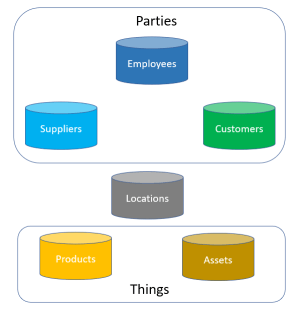
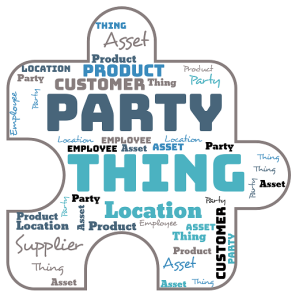
The most addressed master data domains are parties encompassing customer, supplier and employee roles, things as products and assets as well as location.
Def PIM

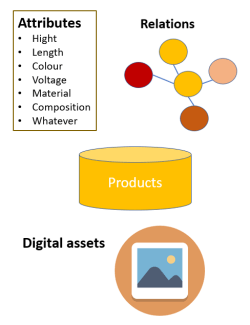
PIM: Product Information Management is a discipline that overlaps MDM. In PIM you focus on product master data and a long tail of specific product information – often called attributes – that is needed for a given classification of products.

Furthermore, PIM deals with how products are related as for example accessories, replacements and spare parts as well as the cross-sell and up-sell opportunities there are between products.

PIM also handles how products have digital assets attached.

This data is used in omni-channel scenarios to ensure that the products you sell are presented with consistent, complete and accurate data. Learn more in the post Five Product Information Management Core Aspects.

Def DAM

DAM: Digital Asset Management is about handling extended features of digital assets often related to master data and especially product information. The digital assets can be photos of people and places, product images, line drawings, certificates, brochures, videos and much more.

Within DAM you are able to apply tags to digital assets, you can convert between the various file formats and you can keep track of the different format variants – like sizes – of a digital asset.

You can learn more about how these first 3 mentioned TLAs are connected in the post How MDM, PIM and DAM Stick Together.
Def DQM

DQM: Data Quality Management is dealing with assessing and improving the quality of data in order to make your business more competitive. It is about making data fit for the intended (multiple) purpose(s) of use which most often is best to achieved by real-world alignment. It is about people, processes and technology. When it comes to technology there are different implementations as told in the post DQM Tools In and Around MDM Tools.

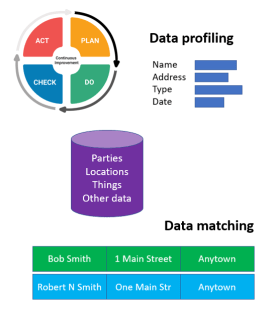
The most used technologies in data quality management are data profiling, that measures what the data stored looks like, and data matching, that links data records that do not have the same values, but describes the same real world entity.
Def RDM

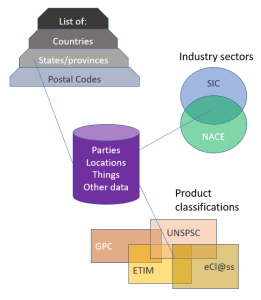
RDM: Reference Data Management encompass those typically smaller lists of data records that are referenced by master data and transaction data. These lists do not change often. They tend to be externally defined but can also be internally defined within each organization.

Examples of reference data are hierarchies of location references as countries, states/provinces and postal codes, different industry code systems and how they map and the many product classification systems to choose from.

Learn more in the post What is Reference Data Management (RDM)?

Def CDI

CDI: Customer Data Integration is considered as the predecessor to MDM, as the first MDMish solutions focused on federating customer master data handled in multiple applications across the IT landscape within an enterprise.

The most addressed sources with customer master data are CRM applications and ERP applications, however most enterprises have several of other applications where customer master data are captured.

You may ask: What Happened to CDI?
Def CDP

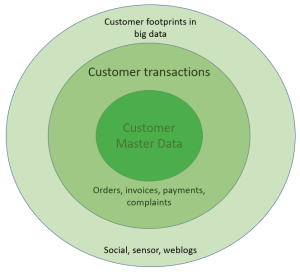
CDP: Customer Data Platform is an emerging kind of solution that provides a centralized registry of all data related to parties regarded as (prospective) customers at an enterprise.

In that way CDP goes far beyond customer master data by encompassing traditional transaction data related to customers and the emerging big data sources too.

Right now, we see such solutions coming both from MDM solution vendors and CRM vendors as reported in the post CDP: Is that part of CRM or MDM?
Def ADM

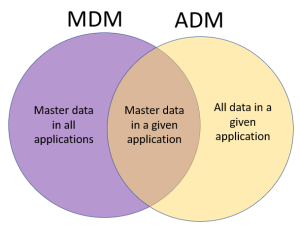
ADM: Application Data Management is about not just master data, but all critical data that is somehow shared between personel and departments. In that sense MDM covers all master within an organization and ADM covers all (critical) data in a given application and the intersection is looking at master data in a given application.

ADM is an emerging term and we still do not have a well-defined market – if there ever will be one – as examined in the post Who are the ADM Solution Providers?
Def PXM

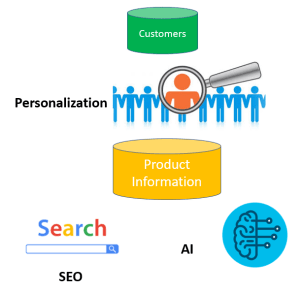
PXM: Product eXperience Management is another emerging term that describes a trend to distance some PIM solutions from the MDM flavour and more towards digital experience / customer experience themes.

In PXM the focus is on personalization of product information, Search Engine Optimization and exploiting Artificial Intelligence (AI) in those quests.

Read more about it in the post What is PxM?
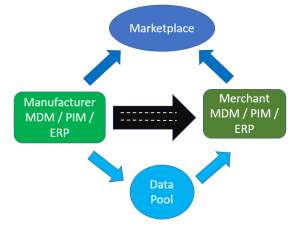
Def PDS

PDS: Product Data Syndication connects MDM, PIM (and other) solutions at each trading partner with each other within business ecosystems. As this is an area where we can expect future growth along with the digital transformation theme, you can get the details in the post What is Product Data Syndication (PDS)?

One example of a PDS service is the Product Data Lake solution I have been working with during the last couple of year. Learn why this PDS service is needed here.


MDM License Distribution

Some of the hard facts presented in the Gartner Magic Quadrant for Master Data Management (MDM) Solutions is how the vendor licenses are distributed between the various master data domains. You can find these figures from the previous quadrant in the post Counting MDM Licenses.

The Latest MDM Magic Quadrant also includes these numbers. In order to highlight how the vendors have different profiles, let us concentrate on the innovative solutions registered on The Disruptive MDM / PIM / DQM List.

MDM License Distribution
Source: Gartner

The above figure shows the three domains where the vendor has sold the most licenses and how many customers who are handling multiple domains.

Contentserv is coming from a strong position in the Product Information Management (PIM) market and still have the vast part of licenses attached to product master data.

Enterworks is also coming from the PIM space and are with their ecosystem wide (or interenterprise as Gartner says) approach building up the multidomain grip through encompassing supplier master data.

Informatica is covering all domains with their suite of 360 solutions and have a good portion of customers doing multidomain MDM.

Reltio does cover all domains but are increasingly focusing on the customer domain with their connected customer 360 offering that encompasses all customer data.

Riversand is another vendor coming from the PIM space that is now growing into the multidomain MDM sphere with their new cloud-native platform.

Semarchy is with their Intelligent Data Hub concept going beyond multidomain MDM into handling more kinds of data as reference data and critical application data.

This diversity means that you cannot just use a generic ranking as presented in the magic quadrant when selecting the best fit solution for your intended solution. You must make a tailored selection.

Most Visited Posts in 2019

Another year has gone as this blog is well into the 11th year of being online.

The 3 most visited blog posts this year were:

AI iconData Matching, Machine Learning and Artificial Intelligence: A post from November 2018 about how AI and data matching has been combined for many years and how this theme has got a revival with the general rise of Artificial Intelligence (AI).

Data ManagementA Data Management Mind Map: A post with not so much text but instead an image reflecting how some of most addressed data management disciplines can be mind-mapped.

Forrester vs GartnerForrester vs Gartner on MDM/PIM: A post about how the two most acknowledged analyst firms rate the vendors on the Master Data Management (MDM) / Product Information Management (PIM) market. Early next year we can expect a new MDM Magic Quadrant from Gartner, so let us see how things look then.

Looking forward to what the next year – and decade – brings in the data quality, MDM and PIM space and to write some posts about it.

Happy New Year.

So, you have the algorithm! But do you have the data?

In the game of winning in business by using Artificial Intelligence (AI) there are two main weapons you can use: Algorithms and data. In a recent blog post Andrew White of Gartner, the analyst firm, says that It’s all about the data – not the algorithm.

AI iconIn the Master Data Management (MDM) space the equipment of solutions with AI capabilities has been going on for some time as reported in the post Artificial Intelligence (AI) and Master Data Management (MDM).
So, next thing is how to provide the data? It is questionable if every single organization has the sufficient (and well managed) master data to make a winning formula. Most organizations must, for many use cases, look beyond the enterprise firewall to get the training data or better the data fuelled algorithms to win the battles and the whole game.

An example of such a scenario is examined in the post Artificial Intelligence (AI) and Multienterprise MDM.

Are These Familiar Hierarchies in Your MDM / DQM / PIM Solution?

The term family is used in different contexts within Master Data Management (MDM), Data Quality Management (DQM) and Product Information Management (PIM) when working with hierarchy management and entity resolution.

Here are three frequent examples:

Consumer / citizen family

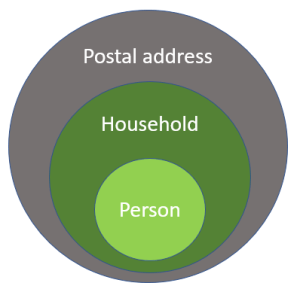
Family consumer citizenWhen handling party master data about consumers / citizens we can deal with the basic definition of a family, being a group consisting of two parents and their children living together as a unit.

This is used when the business scenario does not only target each individual person but also a household with a shared economy. When identifying a household, a common parameter is that the persons live on the same postal address (at the same time) while observing constellations as:

  • Nuclear families consisting of a female and a male adult (and their children)
  • Rainbow families where the gender is not an issue
  • Extended families consisting of more than two generations
  • Persons who happen to live on the same postal address

There are multicultural aspects of these constellations including the different family name constructions around the world and the various frequency and acceptance of rainbow families as well of frequency of extended families.

Company family tree

When handling party master data about companies / organizations a valuable information is how the companies / organizations are related most commonly pictured as a company family tree with mothers and sisters. This can in theory be in infinite levels. The basic levels are:

  • A global ultimate mother being the company that ultimately owns (fully or partly) a range of companies in several countries.
  • A national ultimate mother being the company that owns (fully or partly) a range of companies in a given country.
  • A legal entity being the basic registered company within a country having some form of a business entity identifier.
  • A branch owned by a legal entity and operating from a given postal / visiting address.

Family companyYou can build your own company tree describing your customers, suppliers and other business partners. Alternatively or supplementary, you can rely on third party business directories. It is here worth noticing that a national source will only go to the ultimate national mother level while a global source can include the global ultimate mother and thus form larger families.
Having a company family view in your master data repository is a valuable information asset within credit risk, supply risk, discount opportunities, cross-selling and more.

Product family

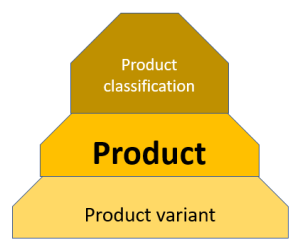
The term “product family” is often used to define a level in a homegrown product classification / product grouping scheme. It is used to define a level that can have levels above and levels below with other terms as “product line”, “product category”, “product class”, “product group”, “product type” and more.

Family productSometimes it is also used as a term to define a product with a family of variants below, where variants are the same product produced and kept in stock in different colours, sizes and more.

Read more about Stock Keeping Units (SKUs), product variants, product identification and product classification in the post Five Product Information Management Core Aspects.

Welcome EntityWise on The Disruptive MDM / PIM / DQM / List

EntityWiseThere is yet a new entry on the Disruptive MDM / PIM /DQM List.

EntityWise is a data matching solution specializing in the healthcare sector. At EntityWise they use machine learning and artificial intelligence (AI) based technology to overcome the burden of inspecting suspect duplicates.

As such EntityWise is a good example of the long tail of Data Quality Management (DQM) solutions that provides a good return of investment at organizations with specific data quality issues.

Learn more about EntityWise here.

Combining Data Matching and Multidomain MDM

Data Matching GroupTwo of the most addressed data management topics on this blog is data matching and multidomain Master Data Management (MDM). In addition, I have also founded two LinkedIn Groups for people interested in one of or both topics.
The Data Matching Group has close to 2,000 members. In here we discus nerdy stuff as deduplication, identity resolution, deterministic matching using match codes, algorithms, pattern recognition, fuzzy logic, probabilistic learning, false negatives and false positives.

Check out the LinkedIn Data Matching Group here.

Multidomain MDM GroupThe Multi-Domain MDM Group has close to 2,500 members. In here we exchange knowledge on how to encompass more than a single master data domain in an MDM initiative. In that way the group also covers the evolution of MDM as the discipline – and solutions – has emerged from Customer Data Integration (CDI) and Product Information Management (PIM).
Check out the LinkedIn Multi-Domain MDM Group here.

The result of combining data matching and multi-domain MDM is golden records. The golden records are the foundation of having a 360-degree / single view of parties, locations, products and assets as examined in The Disruptive MDM / PIM / DQM List blog post Golden Records in Multidomain MDM.

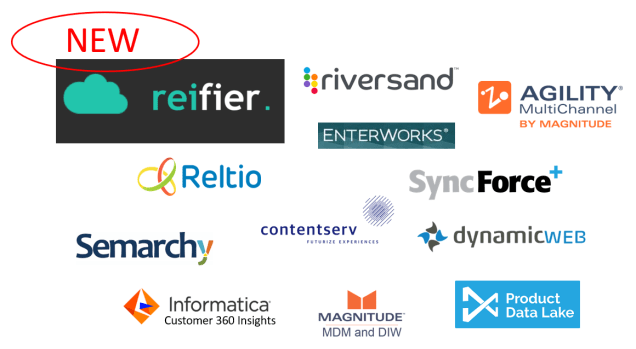
Welcome Reifier on the Disruptive MDM / PIM List

The Disruptive MDM / PIM List is list of solutions in the Master Data Management (MDM), Product Information Management (PIM) and Data Quality Management (DQM) space.

The list presents both larger solutions that also is included by the analyst firms in their market reports and smaller solutions you do not hear so much about, but may be exactly the solution that addresses the specific challenges you have.

The latest entry on the list, Reifier, is one of the latter ones.

Matching data records and identifying duplicates in order to achieve a 360-degree view of customers and other master data entities is the most frequently mentioned data quality issue. Reifier is an artificial intelligence (AI) driven solution that tackles that problem.

Read more about Reifier here.

New entry Reifier

Three Not So Easy Steps to a 360-Degree Customer View

Getting a 360-degree view (or single view) of your customers has been a quest in data management as long as I can remember.

This has been the (unfulfilled) promise of CRM applications since they emerged 25 years ago. Data quality tools has been very much about deduplication of customer records. Customer Data Integration (CDI) and the first Master Data Management (MDM) platforms were aimed at that conundrum. Now we see the notion of a Customer Data Platform (CDP) getting traction.

There are three basic steps in getting a 360-degree view of those parties that have a customer role within your organization – and these steps are not at all easy ones:

360 Degree Customer View

  • Step 1 is identifying those customer records that typically are scattered around in the multiple systems that make up your system landscape. You can do that (endlessly) by hand, using the very different deduplication functionality that comes with ERP, CRM and other applications, using a best-of-breed data quality tool or the data matching capabilities built into MDM platforms. Doing this with adequate results takes a lot as pondered in the post Data Matching and Real-World Alignment.
  • Step 2 is finding out which data records and data elements that survives as the single source of truth. This is something a data quality tool can help with but best done within an MDM platform. The three main options for that are examined in the post Three Master Data Survivorship Approaches.
  • Step 3 is gathering all data besides the master data and relate those data to the master data entity that identifies and describes the real-world entity with a customer role. Today we see both CRM solution vendors and MDM solution vendors offering the technology to enable that as told in the post CDP: Is that part of CRM or MDM?

Top 15 MDM / PIM Requirements in RFPs

A Request for Proposal (RFP) process for a Master Data Management (MDM) and/or Product Information Management (PIM) solution has a hard fact side as well as there are The Soft Sides of MDM and PIM RFPs.

The hard fact side is the detailed requirements a potential vendor has to answer to in what in most cases is the excel sheet the buying organization has prepared – often with the extensive help from a consultancy.

Here are what I have seen as the most frequently included topics for the hard facts in such RFPs:

  • MDM and PIM: Does the solution have functionality for hierarchy management?
  • MDM and PIM: Does the solution have workflow management included?
  • MDM and PIM: Does the solution support versioning of master data / product information?
  • MDM and PIM: Does the solution allow to tailor the data model in a flexible way?
  • MDM and PIM: Does the solution handle master data / product information in multiple languages / character sets / script systems?
  • MDM and PIM: Does the solution have capabilities for (high speed) batch import / export and real-time integration (APIs)?
  • MDM and PIM: Does the solution have capabilities within data governance / data stewardship?
  • MDM and PIM: Does the solution integrate with “a specific application”? – most commonly SAP, MS CRM/ERPs, SalesForce?
  • MDM: Does the solution handle multiple domains, for example customer, vendor/supplier, employee, product and asset?
  • MDM: Does the solution provide data matching / deduplication functionality and formation of golden records?
  • MDM: Does the solution have integration with third-party data providers for example business directories (Dun & Bradstreet / National registries) and address verification services?
  • MDM: Does the solution underpin compliance rules as for example data privacy and data protection regulations as in GDPR / other regimes?
  • PIM: Does the solution support product classification and attribution standards as eClass, ETIM (or other industry specific / national standards)?
  • PIM: Does the solution support publishing to popular marketplaces (form of outgoing Product Data Syndication)?
  • PIM: Does the solution have a functionality to ease collection of product information from suppliers (incoming Product Data Syndication)?

Learn more about how I can help in the blog page about MDM / PIM Tool Selection Consultancy.

MDM PIM RFP Wordle