Reduce Costs by Breaking Down Walls

Walls between data management silos are some of the worst causes of generating costs in data management. I have seen three main kinds of such walls:

The walls between enterprise units

If you have been working more than a day or two with data management within any kind of larger organization, you have probably noticed walls between data used in enterprise units. These walls may be due to using different applications in various geographies, lines of business, departments or other organizational units. It may also be different ways of storing data in the same application.

Countless Master Data Management (MDM) programmes are launched to tackle this conundrum, and many of them run into the wall without breaking it. But keep trying using more agile and lean thinking – and you will reduce costs by federating data silos.

The wall between business and IT

This is the silliest kind of wall I have ever seen as told in the post Tear Down This Wall! “Just break it” and reduce a lot of costs by simplifying data management.

The wall (and moat) around the enterprise

For some data domains, like product data, there are great cost reductions in working closely with your trading partners as told in the post The days of castle and moat are over, just as brick and mortar is slowly diminishing too.

tear-down-wall

Investing In PIM Is Like Investing In Customer Value

In his fourth guest blog post here on this blog Rajneesh Kumar of Pimcore makes the case for investing in Product Information Management in order to drive customer engagement and sell more:

shutterstock_627467546 (002)

What makes customers to buy a product? Lots of theories are conceptualized regarding the science, art, and psychology of customer behavior. Companies leave no stone unturned to grab customers’ attention and importune them to buy products. But, things are not as simple as it looks like because the buying cycle is becoming more and more complicated with growing options and multiple customer touch points.

Brands must adapt to the new reality, faster. They need to make consistent efforts in all dimensions. During each buying stage, customers formulate a consideration set and evaluate each option on criteria significant to them. Thus, organizations need to consider all aspects of buying cycle to woo more customers. Here are few factors that can play an important part to hook more customers:

Create Desire:

Let’s put aside what’s in consumer’ mind rather than focus on what should be presented to customers. The simpler and authentic product information would be, easier it will be for customers to make a buying decision. The first line of engagement is to infuse trust with reliable information that would influence and attract buyers. It must create desire amongst customers while providing value that is required.

Unlock Full Value:

Every product has its unique value. More explicitly you represent it; better the chances will be to attract customers. Make sure the hidden USP or locked value of your product should come in front of the customers at every channel where customers interact. Every type of product information, its attributes, and its relations make a decisive contribution in buying decision. You must make a conscious effort to reveal the full value and all potential benefits.

Immerse in Omnichannel World:

We live in a world of interconnected systems and brands cannot flourish without taking an omnichannel approach. It means your product information must be seamless across all channels. And, it is something you cannot go wrong with. Every customer demands same experience across all channels. Never let the bad omnichannel experience ruin the party. You must do it when you can do it.

Be Agile:

‘I am the first one who grabbed it.’ Customers love competition amongst themselves. When we add up competitors’ equation, you can understand how competitive the market has become. Delays kill the experience. You always need to make sure your product is introduced timely to get maximum benefits. In today’s scenarios, maintaining and managing spreadsheets won’t work. You got to be agile in today’s time to ensure higher growth. Decrease complexity within the purchase occasion as much as you can.

Investing in Product Information Management:

In the world of digital, product information management is an involving discipline. Product information management in organizations encompasses a wide range of functions. In most centrally managed organizations, product information management is seen as a key functional area alongside other key functions. While product quality, brand, and price, responsiveness, speediness, courtesy may be important in the shopping process, high level of product knowledge may be more important for organizations to streamline the process.

But, it is equally important to have a rock-solid product information management system that facilitates in consolidating scattered data, provides faster-time-to-market and enables omnichannel success, including:

  • Provide trusted, relevant and complete product data that delight customers.
  • Quickly publish consistent and accurate product information across channel for seamless omnichannel experience.
  • Provide a consolidated view of product information to enable sales and marketing teams to cross-sell and up-sell.
  • Consolidate, enrich, translate, and manage product data and other various data such as customer data, vendor data, and other digital assets.
  • Keep track of web, mobile, app, marketplace, and social.
  • Enable Point of Sale integration, digital signage, and web-to-print omnichannel enablement.

The other side of the story is that there is still no clear-cut unanimity about how a product information management solution does good to an organization. Thus, it is essential to understand the critical role of product information in achieving desired business goals. We recommend you start not just by identifying your product information management challenges but also how solving the problems will make your life easier, plus you can run your business better.

Forward-thinking brands understand the need to unleash the disruptive power of consolidated information to drive customer engagement and boost revenue. Thus, the investment in providing better and unique customer value should be deeply considered. It is not just a technology or platform investment; it is a customer investment.

Rajneesh KumarA digital marketer and growth hacker, Rajneesh Kumar is currently marketing manager at Pimcore Global Services (PGS), an award-winning consolidated open source platform for product information management (PIM), web content management (CMS), digital asset management (DAM) and e-commerce. He is well versed with web analytic tools, paid media marketing and has hands on experience on seo techniques, organic promotion and content marketing.

Using Pull or Push to Get to the Next Level in Product Information Management

The importance of having a viable Product Information Management (PIM) solution has become well understood for companies who participates in supply chains.

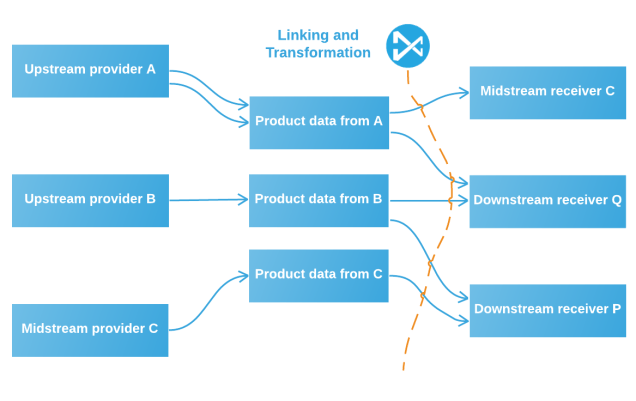
The next step towards excellence in PIM is to handle product information in close collaboration with your trading partners. Product Data Lake is the solution for that. Here upstream providers of product information (manufacturers and upstream distributors) and downstream receivers of product information (downstream distributors and retailers) connect their choice of in-house PIM solution or other product master data solution as PLM (Product Lifecycle Management) or ERP.

Read more about that in the post What a PIM-2-PIM Solution Looks Like.

The principle behind Product Data Lake is inspired by how a data lake differs from a traditional data warehouse. In a data lake the linking and transformation takes place late, when the data is consumed by the receiver.

pdl-diagram-new

Product Data Lake resembles a social network as you connect with your trading partners from the real world in order to collaborate on getting complete and accurate product data from the manufacturer to the point-of-sales:

  • Pull-PushAs a downstream receiver, you can be on the winning side by utilizing our Product Data Pull service
  • As an upstream provider, you can be on the winning side by utilizing our Product Data Push service

To the Cloud and Beyond

Over at the Informatica blog Joe McKendrick recently wrote about When It’s Time to Give Data Warehouse a Digital Makeover.

In here Joe examines how data warehouses can be modernized to augment architectures supporting data lakes and Mater Data Management and the case for moving data warehouses to the cloud.

In my view, a lot of data management disciplines will eventually move to the cloud as one follows the other. By adding “beyond” I suggest, that cloud solutions will not only be something that is supported company by company. Eventually you will be able to get business outcome by sharing data management burdens within your business ecosystem.

My current venture called Product Data Lake is an example of such a solution. It modernizes the data warehouse thinking within product information sharing by using a data lake concept in the cloud ready-to-use by trading partners within business ecosystems:

  • If you are a provider of product information, typically as a manufacturer of goods, you can harvest your business outcome by using us for Product Data Push
  • If you are a receiver of product information, you can harvest your business outcome by using us for Product Data Pull

pdl-top

Data Quality and Business Outcome

take-2The connection between MDM (Master Data Management) and business outcome was discussed on this blog in the previous post called MDM, Reltio, Gartner and Business Outcome.
Now, MDM and Data Quality are closely connected disciplines. So, it was interesting to read today’s post on the Experian Data Quality UK blog, where James Marrable states this: Want to improve performance? Improve your data.

In his section around improving data James, among other things, suggests asking this question: “Do you have other data sources you can bring in to support the data you have?”

This is a key question to me and in my eyes a very important mean to make your data bring business outcome. Applying second party and third party data can increase the potential value of your first party data in these ways:

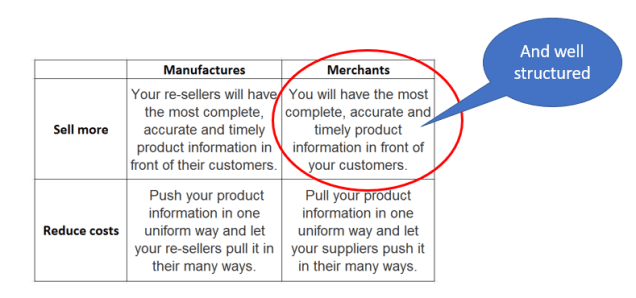
  • Utilizing third party data to compile complete, accurate and timely party data assets needed for understanding and connecting with customers.
  • Receive second party data to compile complete, accurate and timely product information.
  • Having a holistic view of internal and external data needed for decision making.

Hereby you will sell more, reduce costs and mitigate risks.

MDM, Reltio, Gartner and Business Outcome

A recent well commented blog post by Andrew White of Gartner, the analyst firm, debates What’s Happening in Master Data Management (MDM) Land?

The post is an answer to a much liked and commented LinkedIn status post by Ramon Chen, Chief Product Officer of Reltio.

In his post Andrew connects the classic dots: How does technology lead to business outcome? Especially the use of cloud solutions and the multi-tenant aspect is in the focus. Andrew asks: What do you see “out there”?

My view is that multi-tenant is not just about offering the same subscription based cloud solutions to a range of clients. It is about making clients sharing the same business ecosystem work in the same MDM realm. This is the platform described in Master Data Share.

Gartner Digital Platforms 2
Source: Gartner

Oh, and what does that have to do with business outcome? A lot. Organizations will not win the future the race by optimizing there inhouse MDM capabilities alone. With the rise of digitalization, they need to connect with and understand their customers, which I believe is something Reltio is good at. Furthermore, organisations need to be much better at working with their business partners in a modern way, including at the master data level. The business outcome of this is:

  • Having complete, accurate and timely data assets needed for understanding and connecting with customers. You will sell more.
  • Having a fast and seamless flow of data assets, not at least product information, to and from your trading partners. You will reduce costs.
  • Having a holistic view of internal and external data needed for decision making. You will mitigate risks.

Solving GDPR Issues Using a Data Lake Approach

Some of the hot topics on the agenda today is the EU General Data Protection Regulation (GDPR) and the data lake concept. These are also hot topics for me, as GDPR is high on the agenda in doing MDM (and currently TDM – Test Data Management) consultancy and the data lake approach is the basic concept in my Product Data Lake venture.

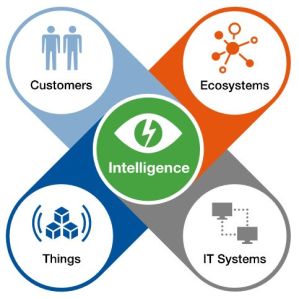
EU GDPRIn my eyes the data lake concept can be used for a lot of business challenges. One of the them was highlighted in a CIO article called Informatica brings AI to GDPR compliance, data governance. In here Informatica CEO Anil Chakravarthy tells how a new tool, Informatica’s Compliance Data Lake, can help organisations getting a grasp on where data elements relevant to be compliant with GDPR resides in the IT landscape. This is a task very close to me in a current engagement.
The Informatica compliance tool is built on the Informatica’s Intelligent Data Lake, which was touched in the post Multi-Domain MDM 360 and an Intelligent Data Lake.

From Business Ecosystem Strategy to PIM Technology

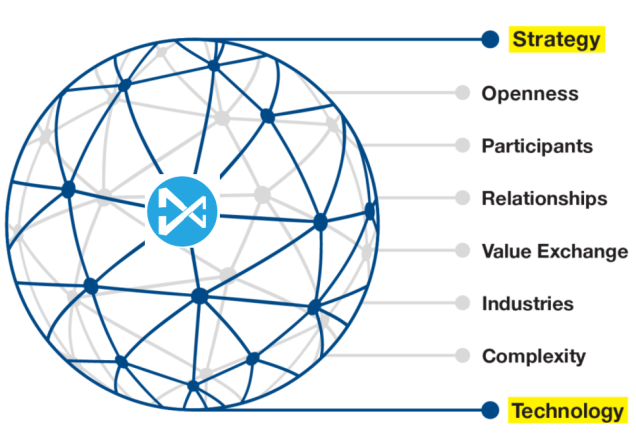
Recently Gartner, the analyst firm, published a paper with the title 8 Dimensions of Business Ecosystems.

Right now, I am working with the Product Data Lake service, that is aimed at supporting business ecosystems when it comes to sharing product information. Our take at business ecosystems seems to fit quite nicely into the 8-dimension model.

Business Ecosystem
Source: Gartner

Participants in supply chains must adapt a business ecosystem strategy when it comes to handling product information. An inhouse Product Information Management (PIM) system is only the beginning. This system must be an active part of a digital ecosystem as explained in the post Passive vs Active Product Information Exchange.

This digital ecosystem must be able to support different degrees of openness as public, private or hybrid and embrace engagement of diverse participants having various types of relationships. How this is achieved for product information sharing was touched in the post Product Data Management is Like an Ironman.

The value exchanged with product information was examined in the post Infonomics and Second Party Data. We do that by acknowledging the diversity of industries and complexity of multiple ecosystems as exemplified in the post Five Product Classification Standards.

As stated in the Gartner article: “Success will require a strategic integration of technology, information and business processes.”

Learn how this is achieved when it comes to Product Information Management (PIM) at Product Data Lake Documentation and Data Governance.

Customer Insight vs Product Insight

The rise of big data is very much driven by a craving for getting more insight on your (prospective) customers. However, the coin has a (better) flip side.

Looking at it from the other side

As a customer, we will strike back. We do not need to be told what to buy. But we do want to know what we are buying. This means we want to be able to see rich product information when making a self-service purchase. This subject was examined in the post You Must Supplement Customer Insight with Rich Product Data.

Many companies who are involved in selling to private and business customers are ramping up maintenance of product data by implementing inhouse Product Information Management (PIM) solutions as told in yesterday’s guest post on this blog. The article is called The Relation of PIM to Retail Success.

One further challenge is that you have to get product information from the source, usually being the manufacturers.

Big data approaches work for both

As data lakes are used to being the place to harvest customer insight, the data lake concept can be the approach to provide product insight to end customers as well.

The problem with having product data flowing from manufacturers to distributors and merchants is that everyone does not use the same standard, format, structure and taxonomy for product information.

The solution is a data lake shared by the business ecosystem. It is called Product Data Lake.

Sell more Reduce costs