Welcome Reifier on the Disruptive MDM / PIM List

The Disruptive MDM / PIM List is list of solutions in the Master Data Management (MDM), Product Information Management (PIM) and Data Quality Management (DQM) space.

The list presents both larger solutions that also is included by the analyst firms in their market reports and smaller solutions you do not hear so much about, but may be exactly the solution that addresses the specific challenges you have.

The latest entry on the list, Reifier, is one of the latter ones.

Matching data records and identifying duplicates in order to achieve a 360-degree view of customers and other master data entities is the most frequently mentioned data quality issue. Reifier is an artificial intelligence (AI) driven solution that tackles that problem.

Read more about Reifier here.

New entry Reifier

MDM / PIM solution ranking based on your context, scope and requirements

Popular Master Data Management (MDM) and Product Information Management (PIM) market reports with solution vendor rankings as the Gartner MDM Magic Quadrant, the Forrester MDM / PIM wave and the Information Difference MDM Landscape are generic, meaning they are not based on the specific context, scope and requirements that every organization on the look for a solution has.

So, no organization can just pick the solution positioned in the top right corner at their favourite analyst firm, neither make a shortlist with the solutions being most top-right or even a longlist with the well positioned solutions. They will need own research or consultancy from the report makers or consultancy firms – or yours truly.

Well, until now.

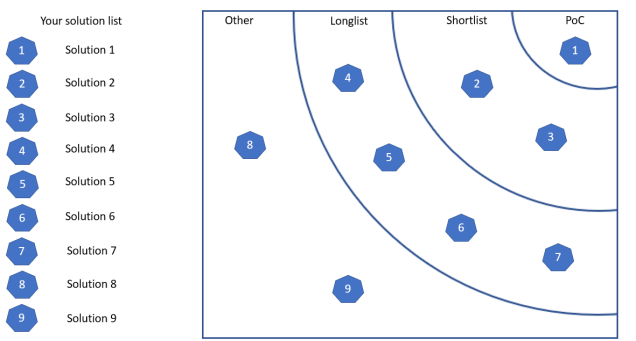
At The Disruptive MDM / PIM List there is a new service that, based on information about your context, scope and requirements, will provide a solution list that is fit for you.

Your solution list

Curious? Go to select your solution here.

Syncsort Nabs Pitney Bowes Software Solutions

Today it was announced that Syncsort acquires Pitney Bowes Software Solutions. In the announcement it is said that “The acquisition, Syncsort’s largest ever, brings to the company best-in-class location intelligence, data enrichment, customer information management and customer engagement solutions that are highly complementary to its existing portfolio”.

Pitney Bowes has offered a data quality oriented suite called Spectrum. Back in the 00’s Pitney Bowes acquired pioneer data quality tool vendor Group1 (and intended to buy FirstLogic).

Syncsort has its data quality tool from the Trillium Software acquisition.

Both Pitney Bowes and Syncsort were well positioned in the latest Gartner Magic Quadrant for Data Quality Tools as reported in the post Data Quality Tools are Vital for Digital Transformation.

Pitney Bowes has also been recognized as a MDM platform vendor by Forrester as mentioned in the post Several Sources of Truth about MDM / PIM Solutions.

Will be exciting to see how long Syncsort will move into the data management space. Will Syncsort stay with name and address data quality and customer data or will they, as many other vendors on the market, move towards a multidomain MDM and more comprehensive data management offering?

Syncsort Pitney Bowes Group1 FirstLogic Trillium

The Disruptive MDM, PIM and Data Quality Solution List

This blog has a sister site called The Disruptive MDM / PIM List.

The site is a list of available solutions for:

  • Master Data Management (MDM) and
  • Product Information Management (PIM)

as well as:

  • Application Data Management (ADM) – kind of NEW,
  • Customer Data Integration (CDI),
  • Customer Data Platform (CDP),
  • Data Quality Management (DQM) – NEW on the list,
  • Digital Asset Management (DAM),
  • Product Data Syndication (PDS),
  • Product experience Management (PxM) and
  • Reference Data Management (RDM) – NEW.

You can use this site as an addition to the likes of Gartner, Forrester, MDM Institute and others when selecting your new MDM, PIM and data quality solution, not at least because this site will include both larger and smaller disruptive solutions.

Vendors can register their solutions here.

Organizations on the look for a solution within these disciplines can inspect the solutions here.


Data Management New Wordle

Three Not So Easy Steps to a 360-Degree Customer View

Getting a 360-degree view (or single view) of your customers has been a quest in data management as long as I can remember.

This has been the (unfulfilled) promise of CRM applications since they emerged 25 years ago. Data quality tools has been very much about deduplication of customer records. Customer Data Integration (CDI) and the first Master Data Management (MDM) platforms were aimed at that conundrum. Now we see the notion of a Customer Data Platform (CDP) getting traction.

There are three basic steps in getting a 360-degree view of those parties that have a customer role within your organization – and these steps are not at all easy ones:

360 Degree Customer View

  • Step 1 is identifying those customer records that typically are scattered around in the multiple systems that make up your system landscape. You can do that (endlessly) by hand, using the very different deduplication functionality that comes with ERP, CRM and other applications, using a best-of-breed data quality tool or the data matching capabilities built into MDM platforms. Doing this with adequate results takes a lot as pondered in the post Data Matching and Real-World Alignment.
  • Step 2 is finding out which data records and data elements that survives as the single source of truth. This is something a data quality tool can help with but best done within an MDM platform. The three main options for that are examined in the post Three Master Data Survivorship Approaches.
  • Step 3 is gathering all data besides the master data and relate those data to the master data entity that identifies and describes the real-world entity with a customer role. Today we see both CRM solution vendors and MDM solution vendors offering the technology to enable that as told in the post CDP: Is that part of CRM or MDM?

Product Data in ERP, MDM and PIM

Organizations typically holds product data in three different kind of applications:

  • In an ERP application together with all other kinds of master data and transaction data.
  • In an MDM (Master Data Management) application either as a Product MDM implementation or a multidomain MDM implementation together with other master data domains.
  • In a PIM (Product Information Management) application.

Each of these applications have their pros and cons and where an organization utilizes several of these applications we often see that there is no single source of truth for all product data, but that some product attributes are controlled by one application and some other attributes are controlled by another application. Recently I wrote a post on the Pimnews think forum with a walk through of different kinds of product attributes and if they typically are controlled in PIM or ERP / MDM. The post had the title Six Product Attribute Levels.

The overwhelming part of organizations still use ERP as the place for product data – often supplemented by satellite spreadsheets with product data.

However, more and more organizations, not at least larger global ones, are implementing MDM solutions and, also midsize organisations, are implementing PIM solutions. The solution market was before split between MDM and PIM solutions, but we now do see some of the PIM solution providers also encompassing MDM capabilities. On the Disruptive MDM/PIM List there is a selection of solutions either being more MDM-ish or more PIM-ish as examined in the post MDM, PIM or Both.

MDM ish and PIM ish vendors

Unifying Data Quality Management, MDM and Data Governance

During the end of last century data quality management started to gain traction as organizations realized that the many different applications and related data stores in operation needed some form of hygiene. Data cleansing and data matching (aka deduplication) tools were introduced.

In the 00’s Master Data Management (MDM) arised as a discipline encompassing the required processes and the technology platforms you need to have to ensure a sustainable level of data quality in the master data used across many applications and data stores. The first MDM implementations were focused on a single master data domain – typically customer or product. Then multidomain MDM (embracing customer and other party master data, location, product and assets) has become mainstream and we see multienterprise MDM in the horizon, where master data will be shared in business ecosystems.

MDM also have some side disciplines as Product Information Management (PIM), Digital Asset Management (DAM) and Reference Data Management (RDM). Sharing of product information and related digital assets in business ecosystems is here supported by Product Data Syndication.

Lately data governance has become a household term. We see multiple varying data governance frameworks addressing data stewardship, data policies, standards and business glossaries. In my eyes data governance and data governance frameworks is very much about adding the people side to the processes and technology we have matured in MDM and Data Quality Management (DQM). And we need to combine those themes, because It is not all about People or Processes or Technology. It is about unifying all this.

In my daily work I help both tool providers and end user organisations with all this as shown on the page Popular Offerings.

DG DQ and MDM


Top 15 MDM / PIM Requirements in RFPs

A Request for Proposal (RFP) process for a Master Data Management (MDM) and/or Product Information Management (PIM) solution has a hard fact side as well as there are The Soft Sides of MDM and PIM RFPs.

The hard fact side is the detailed requirements a potential vendor has to answer to in what in most cases is the excel sheet the buying organization has prepared – often with the extensive help from a consultancy.

Here are what I have seen as the most frequently included topics for the hard facts in such RFPs:

  • MDM and PIM: Does the solution have functionality for hierarchy management?
  • MDM and PIM: Does the solution have workflow management included?
  • MDM and PIM: Does the solution support versioning of master data / product information?
  • MDM and PIM: Does the solution allow to tailor the data model in a flexible way?
  • MDM and PIM: Does the solution handle master data / product information in multiple languages / character sets / script systems?
  • MDM and PIM: Does the solution have capabilities for (high speed) batch import / export and real-time integration (APIs)?
  • MDM and PIM: Does the solution have capabilities within data governance / data stewardship?
  • MDM and PIM: Does the solution integrate with “a specific application”? – most commonly SAP, MS CRM/ERPs, SalesForce?
  • MDM: Does the solution handle multiple domains, for example customer, vendor/supplier, employee, product and asset?
  • MDM: Does the solution provide data matching / deduplication functionality and formation of golden records?
  • MDM: Does the solution have integration with third-party data providers for example business directories (Dun & Bradstreet / National registries) and address verification services?
  • MDM: Does the solution underpin compliance rules as for example data privacy and data protection regulations as in GDPR / other regimes?
  • PIM: Does the solution support product classification and attribution standards as eClass, ETIM (or other industry specific / national standards)?
  • PIM: Does the solution support publishing to popular marketplaces (form of outgoing Product Data Syndication)?
  • PIM: Does the solution have a functionality to ease collection of product information from suppliers (incoming Product Data Syndication)?

Learn more about how I can help in the blog page about MDM / PIM Tool Selection Consultancy.

MDM PIM RFP Wordle

MDM Vendor Revenues According to Gartner

A recent post on this blog has the title MDM Spending Might be 5 Billion USD per Year.

The 5 B USD figure was a guestimate based on an estimate by Information Difference about the total yearly revenue at 1.6 B USD collected by MDM software vendors.

Prash Chandramohan, who has his daily work at Informatica, made a follow up blog post with the title The Size of the Global Master Data Management Market. In here Prash mentions some of the uncertainties there are when making such a guestimate.

In a Linkedin discussion on that post Ben Rund, who is at Riversand, asks about other sources – Gartner and others.

The latest Gartner MDM Magic Quadrant mentions the 2017 revenues as estimated by Gartner:

MDM market vendors re Gartner

It is worth noticing that Oracle is not a Gartner MDM Magic Quadrant vendor anymore and the Gartner report indicate that Oracle still have an MDM (or is it ADM?) revenue from the installed base resembling the ones of the other mega-vendors being SAP, IBM and Informatica.

Update: The revenues mentioned are assumed to be software license and maintenance. The vendors may then have additional professional services revenue.

The 14 MDM vendors that qualified for inclusion in the latest quadrant constituted, according to Gartner estimates, 84% of the estimated MDM market revenue (software and maintenance) for 2017  – which according to Gartner criteria must be excluding Oracle.

The Trouble with Data Quality Dimensions

Data Quality Dimensions

Data quality dimensions are some of the most used terms when explaining why data quality is important, what data quality issues can be and how you can measure data quality. Ironically, we sometimes use the same data quality dimension term for two different things or use two different data quality dimension terms for the same thing. Some of the troubling terms are:

Validity / Conformity – same same but different

Validity is most often used to describe if data filled in a data field obeys a required format or are among a list of accepted values. Databases are usually well in doing this like ensuring that an entered date has the day-month-year sequence asked for and is a date in the calendar or to cross check data values against another table and see if the value exist there.

The problems arise when data is moved between databases with different rules and when data is captured in textual forms before being loaded into a database.

Conformity is often used to describe if data adheres to a given standard, like an industry or international standard. This standard may due to complexity and other circumstances not or only partly be implemented as database constraints or by other means. Therefore, a given piece of data may seem to be a valid database value but not being in compliance with a given standard.

For example, the code value for a colour being “0,255,0” may be the accepted format and all elements are in the accepted range between 0 and 255 for a RGB colour code. But the standard for a given product colour may only allow the value “Green” and the other common colour names and “0,255,0” will when translated end up as “Lime” or “High green”.

Accuracy / Precision – true, false or not sure

The difference between accuracy and precision is a well-known statistical subject.

In the data quality realm accuracy is most often used to describe if the data value corresponds correctly to a real-world entity. If we for example have a postal address of the person “Robert Smith” being “123 Main Street in Anytown” this data value may be accurate because this person (for the moment) lives at that address.

But if “123 Main Street in Anytown” has 3 different apartments each having its own mailbox, the value does not, for a given purpose, have the required precision.

If we work with geocoordinates we have the same challenge. A given accurate geocode may have the sufficient precision to tell the direction to the nearest supermarket is, but not precise enough to know in which apartment the out-of-milk smart refrigerator is.

Timeliness / Currency – when time matters

Timeliness is most often used to state if a given data value is present when it is needed. For example, you need the postal address of “Robert Smith” when you want to send a paper invoice or when you want to establish his demographic stereotype for a campaign.

Currency is most often used to state if the data value is accurate at a given time – for example if “123 Main Street in Anytown” is the current postal address of “Robert Smith”.

Uniqueness / Duplication – positive or negative

Uniqueness is the positive term where duplication is the negative term for the same issue.

We strive to have uniqueness by avoiding duplicates. In data quality lingo duplicates are two (or more) data values describing the same real-world entity. For example, we may assume that

  • “Robert Smith at 123 Main Street, Suite 2 in Anytown”

is the same person as

  • “Bob Smith at 123 Main Str in Anytown”

Completeness / Existence – to be, or not to be

Completeness is most often used to tell in what degree all required data elements are populated.

Existence can be used to tell if a given dataset has all the needed data elements for a given purpose defined.

So “Bob Smith at 123 Main Str in Anytown” is complete if we need name, street address and city, but only 75 % complete if we need name, street address, city and preferred colour and preferred colour is an existent data element in the dataset.

More on data quality dimensions: