A Blast from the Past

Many days I work in a so called day office, which is an office booked for a single day at a location convenient for where I am and is going to do on that day.

My day office today comes with a Rolodex.

rolodex

But I have trouble connecting it with Bluetooth 🙂

Fortunately means of keeping a contact list has improved over the years, not at least when it comes to connectivity:

  • The Personal Digital Assistant (PDA) usually could do Bluetooth or had other ways to connect to other devices and share data that way.
  • With the rise of Customer Relationship Management (CRM) systems your contact list was blended with the contact list of everyone else in your company.
  • Now with Social CRM (SCRM) your company’s contact list is (or will be) integrated with social networks.

Data Quality challenges and opportunities also have changed with the development in how to keep a contact list:

  • The Rolodex was totally dependent on you keeping the data up-to-date and it was your choice how it was indexed – by given name, surname or whatever.
  • The PDA data should be kept timely by you as well. When exchanging with other devices different ways of organizing data could be a pain somewhere.
  • With CRM systems updates from third party sources became relevant and you aren’t alone on making the updates – differently. Duplicates and data not fit for your purpose is a pain.
  • Now with SCRM your contacts themselves may make most of the updates. Now you have to figure out which ones to rely upon and how to link with your old recording. In other words: Social Master Data Management.

Well, perhaps I better have to forget about using the Rolodex and get on with today’s tweeting. Now, where is my pencil?

Papertweet

Bookmark and Share

The Data Enrichment ABC

A popular and indeed valuable method of avoiding decay of data quality in customer master data and other master data entities is setting up data enrichment services based on third party reference data sources. Examples of such services are:

  • Relocation updates like National Change Of Address services from postal services
  • Change of name, address and a variety of status updates from business directories and in some countries citizen directories too

When using such services you will typically want to consider the following options for how to deal with the updates:

A: Automatic Update

Here your internal master data will be updated automatically when a change is received from the external reference data source.

C: Excluded Update

Here an automated rule will exclude the update as there may be a range reasons for why you don’t want to update certain entity segments under certain circumstances.

B: Interactive Update

Here the update will require a form of manual intervention either to be fulfilled or excluded based on human decision.

An example will be if a utility supplier receives a relocation update for the occupier at an installation address. This will trigger/support a complex business process far beyond changing the billing address.

iDQ logo
iDQ

As explained in the post When Computer Says Maybe we need functionality within data quality tools and Master Data Management (MDM) solutions to support data stewards in cost effectively handling these situations and this certainly also applies to the B pot in data enrichment.

Right now I’m working with designing such data stewardship functionality within the instant Data Quality environment.

Bookmark and Share

In the future, data quality will be more social

Every time I walk in and out of a plane at London-Gatwick Airport I always nod at an advert from the HSBC bank saying that in the future, selling will be more social:

Selling will be more social

A natural consequence of this will also be that data quality improvement (and master data management) will be more social.

One example is how complex sales, being sales processes typically in business-to-business (B2B) environments, will be heavily depended on integrating the exploitation of professional social networks as discussed on the DataQualityPro interview about the benefits of Social MDM.

Traditional Master Data Management (MDM) and related data quality improvement in B2B environments has been a lot about a single view of the business account and the legal entity behind. As Social Customer Relation Management (CRM) is much about the relations to the business contacts, the people side of business, we need a solid master data foundation behind the people being those contacts.

The same individual may in fact be an important influencer related to a range of business accounts being the legal entity with who you are aiming for a sales contract. You need a single view of that. So many sales contracts are based on a relation to a buyer moving from one business account to another. You need to be the winner in that game and the answer to that may very well be your ability to do better social MDM and embrace the data quality issues related to that.

Social selling of course also relates to business-to-consumer (B2C) activities and in doing that we will see new data quality issues. When exploiting social networks, both in B2B and B2C activities you need to link the traditional attributes as name and address with new attributes in the online and social world as explained in the post Multi-Channel Data Matching.

Besides exploiting social networks we will also see social collaboration as a mean to improve data quality. Social collaboration will go beyond collaboration within a single company and extend to the ecosystems of manufacturers, distributors, resellers and end users. A good example of this is the social collaboration platform called Actualog, which is about sharing product master data and thereby improving product data quality.

Bookmark and Share

Social Score Credibility

A recent piece from Fliptop is called What’s the Score. It is a thorough walk through on what is usually called social scoring done in influence scoring platforms within social media, where Klout, Kred and PeerIndex are the most known services of that kind.

The Fliptop piece has a section around faking, which was also the subject in a post lately on this blog. The post is called Fact Checking by Mashing Up, and is about how to link social network profiles with other known external sources in order to detect cheat. Linking social network profiles with other external sources and internal sources is what is known as Social MDM, a frequent subject on this blog for several years.

A social score must of course be seen in context, as it matters a lot what you are influential about when you want to use social scoring for business. As told in the post Klout Data Quality this was a challenge two years ago, and this is probably still the case. Also here I think linking with other (big) data sources and letting Social MDM be the hub will help.

Kred
Taken from Kred on my twitter handle.

PS: I have no idea why moron ended up there. Einstein is OK.

Bookmark and Share

Real World Alignment and Continental Drift

You can find many great analogies for working with data quality and Master Data Management (MDM) in world maps. One example is reported in the post The Greenland Problem in MDM, which is about how different business units have a different look on the same real world entity.

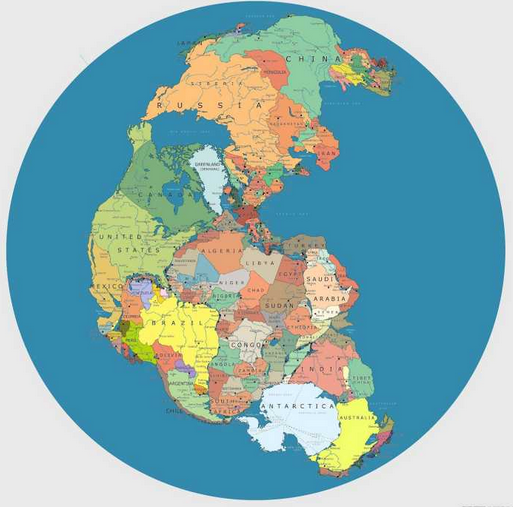
Real world alignment isn’t of course without challenges. Also because the real world changes as reported on Daily Mail in an article about how modern countries would be placed on the landmasses as they were 300 million years ago.

World 300 M years ago

The image above may very well show how many master data repositories today reflect the real world. Yep, we may have the country list covered well enough. We may even do quite well if we look at each geographical unit independently. However, the big picture doesn’t fit the world as it is today.

Bookmark and Share

Psychographic Master Data Management

As told in the post Psychographic Data Quality marketers are moving from demographic marketing to psychographic marketing where a lot more data than before are used to getting the right message, to the right suspect at the right time. This affects the way we are working with data quality around customer master data and eventually how we do multi-domain master data management.

Using data for building psychographic profiles not only deals with lead generation. It’s usable throughout the whole customer master data life cycle by for example:

  • psychographic MDMFinding the best suspects at the right moment
  • Keeping the prospects on the optimal track coordinated with the prospects need
  • Ensuring a well received customer experience and facilitating up-sell and cross-sell.
  • Preventing churn
  • Making win-back possible

These opportunities apply to business-to-consumer (B2C) and business-to-business (B2B) as well.

Location master data management is essential in this quest as well, because we are not abandoning the basic demographic attributes in the physiographic world. We are building a deeper data universe on top of the traditional demographic (and firmographic) data. Having accurate location master data only helps here.

Mastering product master data is essential in the psychographic world too. This does not only apply to having your product hierarchies well manages for your own products, but will eventually also lead to a need for handling data on your competitors products and services in order to listen to social data streams.

Master Data Management (MDM) will extend to Social Master Data Management and must support wider exploitation of big data sources by being the hub for the psychographic customer profiles and the reference for descriptions of the product and service realm related to the psychographic attributes.

Bookmark and Share

Know Your Supplier

Social Responsibility for Retailers and Distributors is No Longer an Option is the title of a new blog post by Paul Sirface on the Stibo Systems Datafusion blog.

Herein Paul writes:

“While many companies know that they have to respond to consumers’ demands, those with an active Master Data Management strategy have the best chance of responding effectively.  Multi-domain Master Data Management (MDM) is the perfect place to begin organizing and collecting the data on product related information within the supply chain, including supplier compliance..”

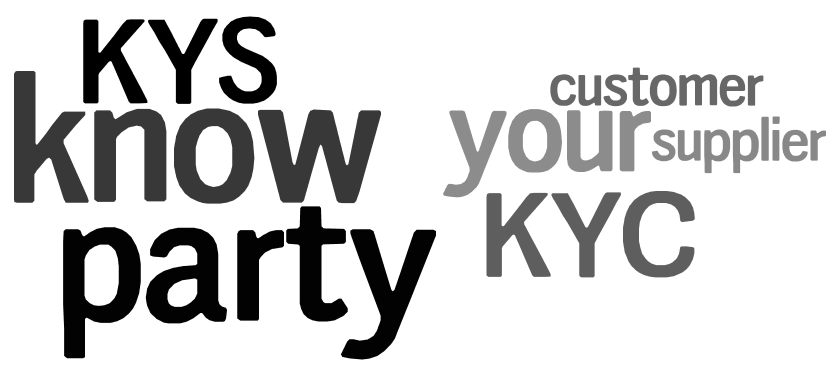
KYC KYSKnow Your Customer (KYC) is a well established term within data management and linked to fraud protection and anti money laundering.

Know Your Supplier (KYS) is indeed an equally important side of party master data management.

While customer master data management is on the way of evolving from handling mostly domestic customer data quality issues to also handling international customer data quality issues, supplier master data management has always been about international data quality challenges for most businesses.

As with customer master data having supplier master data that is well aligned with the real world and that can be maintained to reflect changes in the real world is indeed the starting point.

Bookmark and Share

Call me on Phone, Mobile or Skype

When calling people in order to have a long distance conversation there are three main ways today:

  • The landline phone, which have been around since the 19th century and penetrated most homes and businesses in the last century
  • The mobile phone, which came around in the 70’s and spread rapidly in the 90’s
  • Skype, a voice over internet service that grew in the 00’s

Using these services involves and identifier which may be stored in customer tables and other party master data repositories with some implications for data management and identity resolution:

TelephoneThe Landline Phone Number

The landline phone number is a very common attribute in databases around and is often used as the main identifier of a customer in ERP and CRM solutions around.

Using a landline phone number for identity resolution has some challenges, including:

  • As with most attributes they may change. Depending on the country in question they may change during relocation and most phone number systems gets and upgrade over the years.
  • In business-to-business (B2B) a company typically has more than one phone number.
  • In business-to-consumer (B2C) the landline phone number merely belongs to a household rather than a single individual. That may be good or not good depending on purpose of use.

The Mobile Phone Number

Mobile phone numbers also piles up in databases around. In relation to identity resolution there are issues with mobile phone numbers, namely:

  • They change a lot.
  • It’s not always clear to who a number actually belongs:
    • A company paid phone may be used for both business and pleasure and may be transferred to another individual
    • In a household a person may be registered for a range of mobile phones used by individual members of the household including children

The Skype ID

I seldom see databases with Skype ID’s. In my experience Skype ID aren’t used a lot in internal master data. They reside in Skype and social network profiles like for example LinkedIn.

A final rant

Today I hardly ever use a landline phone, I use my mobile once in a while and I use Skype a lot. Not because it’s convenient, but because the telecom companies has decided to charge international mobile calls in ways so greedy that it make Somali sea pirates look like honest business men.

Bookmark and Share

How is Social MDM different?

In a recent interview with yours truly on the Fliptop blog I had the chance to answer a question about how Social MDM is different from traditional MDM (Master Data Management). Check out the interview here.

As said in the interview I think that:

“The main difference between MDM as it has been practiced until now and Social MDM is that traditional MDM has been around handling internal master data and Social MDM will be more around exploiting external reference data and sharing those data.”

This is in line with a take away from the MDM Summit Europe 2013 as reported in the post Adding 180 Degrees to MDM.

But, as asked by a member of the Social MDM group on LinkedIn:

What is the industry or analysts’ consensus on the meaning of Social MDM? Is it just gathering Master Data from social sources? Not really MDM – where is the Management part?”

Social MDM IconYou may follow the discussion here.

I definitely think that the management part is there, but it is different. Management is different in the social sphere in general. Data governance is different when it comes to social data (and other big data for that matter). Relying on social collaboration when maintaining master data is different from implementing “a data steward regime”.

In my eyes the management part is about balancing the use of internal master and the use of external reference data. Every organization should very carefully assess if they are good at maintaining different aspects of their internal master data (Hint: Many aren’t). Getting help from traditional data collectors and the new social sources and using social collaboration may very well be an important part of the solution.

Bookmark and Share

Adding 180 Degrees to MDM

Master Data Management (MDM) has traditionally been about being better at utilizing and sharing internal registrations about our customers, suppliers, products, assets and other core business entities.

My latest work around master data management revolves around the concept of bringing in external data sources in order to make on-boarding processes more efficient and provide more accurate, complete and timely master data.

So, it was good to see that this approach is gaining more traction when attending the MDM Summit Europe 2013.

The old stuff

Andy Walker of BP presented how BP has built the management of party master data around aligning with the D&B WorldBase for business-to-business (B2B) customer and vendor master data.

Knowing about with which actual legal entities you are doing business and which external hierarchies they belong to is crucial for BP both in daily operations and when it comes to reporting and analysis utilizing party master data.

Using business directories isn’t new at all; it has been around for ages and from what I have seen: It works when you do it properly and consistently.

The new stuff

Big data was a hot topic on the conference. As reported in a post from the first day embracing big data may lead to Double Trouble with Social MDM and Big Data.

Steve Jones TweetHowever, digging into big data and doing social MDM may certainly also provide new opportunities as we by utilizing these new sources actually may be able to obtain (or closing in at) a 360 degree view on various master data entity types. It is, as said and tweeted by Steve Jones of Capgemini, about looking outside-in.

Bookmark and Share