Getting eMail Addresses Right the First Time

emailChecking if an eMail address will bounce is essential for executing and measuring campaigns, news letter operations and other activities based on sending eMails as explained here on the site Don’t Bounce by BriteVerify.

A good principle within data quality prevention and Master Data Management (MDM) is the first time right approach. There is a 1-10-100 rule saying:

“One dollar spent on prevention will save 10 dollars on correction and 100 dollar on failure costs”.

(Replace dollars with your favorite currency: Euros, pounds, rubles, rupees, whatever.)

This also applies to capturing an eMail address of a (prospect) customer and other business partners. Many business processes today requires communication through eMails in order to save costs and speed up processes. If you register an invalid eMail address or allow self registration of an invalid eMail address you have got yourself some costly scrap and rework or maybe lost an opportunity.

As a natural consequence the instant Data Quality MDM Edition besides ensuring right names and correct postal addresses also checks for valid eMail addresses.


Bookmark and Share

What’s Different about MDM in Denmark?

little_mermaid_copenhagenAfter writing about What’s Different about MDM in France? It’s now time for a few words about what’s different about MDM (Master Data Management) in my native country Denmark.

International aspects of MDM isn’t strange

As a small market the domestic aspects is a minor thing for the large Danish companies as Maersk, Lego and Carlsberg. But even smaller companies grow out of the domestic market very early and that means that international aspects of MDM and related data quality are important in many implementations.

Even the flagship Danish MDM vendor Stibo Systems operated for many years with large foreign clients before recently getting their first domestic client.

Exploiting external reference data is imperative

Some industry sectors like finance and utility are still very domestic oriented. In party master data management good quality external reference data about domestic addresses, properties, companies and citizens are available at an affordable price and in some degree even free.

In my work at iDQ we have utilized this a lot as told in the story from the utility sector in the post instant Data Quality at Work. iDQ also help foreign companies as for example the largest bank in the Eurozone. As an example of another MDM domain than customer the service is also used for the HR domain by one of the the world’s largest employers.

The government isn’t a laggard

As reported in the post Making Data Quality Gangnam Style the government supports the use of reference data in private entities. But the data sources are indeed handled as a MDM program within the public sector ensuring that data silos in the public sector are eliminated with big wins for public administration as another result. Newest development is centralized support for handling master data about Danes abroad. Good to be involved.

Bookmark and Share

Multi-Facet MDM

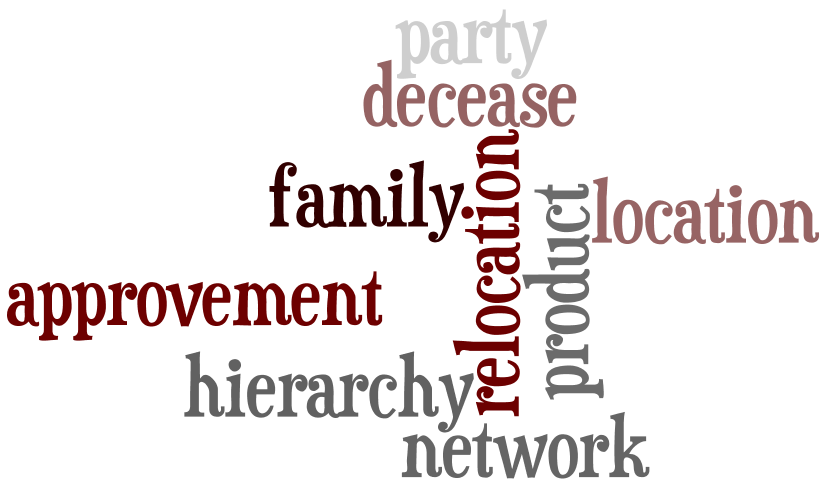
In MDM (Master Data Management) there is the term Multi-Domain MDM being how we manage respectively parties, products, locations and other entity types and handling master data within a Multi-Channel environment encompassing offline, online and social channels is a huge challenge within MDM today. Yet another multi view of MDM is handling different facets of master data being:

  • Mulit-Facet MDMEntities
  • Relations
  • Events

Entities

Handling entities is the core of master data management. Ensuring that master data are fit for multiple purposes most often by ensuring real world alignment is the basic goal of master data management. Entity resolution is at key discipline in doing that. In the party master data domain doing Customer Data Integration (CDI) is the good old activity aiming at compiling all the customer data silos in the enterprise into a golden copy with golden records. Product Information Management (PIM) is another ancestor in the MDM evolution history predominately focusing at the entities.

Relations

A possible distinction between Master Entity Management and Master Relation Management is discussed in the post Another Facet of MDM: Master Relationship Management.

As we get better and better solutions for handling entities the innovation shifts to handling the relationships between entities. These relations exists for example in Multi-Channel environments by linking entities in the old systems of record with the same real world entities in the new systems of engagement as told in the post Social MDM and Systems of Engagement.

Events

Getting the master data right the first time is crucial.

In product master data management getting to that stage is often done by managing a flow of events where the product data are completed and approved by a team of knowledge workers.

In party master data management a way of ensuring first time right is examined in the post instant Single Customer View. But that is only the start. Party master data has a life cycle with important events as:

Bookmark and Share