This Friday my blog post was called Follow Friday diversity. In my hope to reach for more equalized worldwide interaction I wonder if writing in English with roman (latin) characters is enough?
Take a look at the diversity in script systems around the world:
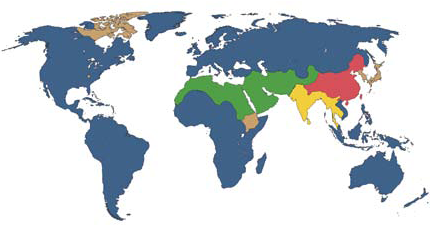
Alphabets
In an alphabet, each letter corresponds to a sound. These are also referred to as phonographic scripts. Examples of Alphabets: Roman (Latin); Cyrillic; Greek
Abjads
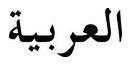 Abjads consist exclusively of consonants. Vowels are omitted from most words, because they are obvious for native speakers, and are simply inserted when speaking. In addition, Abjads are normally written from right to left. Examples of Abjads: Hebrew; Arabic
Abugidas
 Abugidas are characteristic for scripts in India and Ethiopia. In this style, only the consonants are normally written, and standard vowels are assumed. If a different vowel is required, it is indicated with a special mark. Abugidas form an intermediate level between alphabetic and syllabic scripts. Examples of Abugidas: Hindi (Devanagari); Singhalese
Syllabic Scripts
Like alphabets, syllabic scripts are another type of phonographic script. In a syllabic script, each character stands for a syllable. Examples of Syllabic Scripts: Japanese (Hiragana, Katakana); Cherokee
Symbol Scripts
 In symbolic scripts, each character is an ideogram standing for a complete word. Compound terms or concepts are composed of multiple symbols. Symbolic scripts are also called logographic scripts. Examples of Symbolic Scripts: Chinese; Japanese (Kanji)
Source: Worldmatch® Comparing International Data by Omikron Data Quality – full version here.












 Liliendahl on Data Quality