Adding Things to Product Data Lake

Product Data Lake went live last month. Nevertheless, we are already planning the next big things in this cloud service for sharing product data. One of them is exactly things. Let me explain.

Product data is usually data about a product model, for example a certain brand and model of a pair of jeans, a certain brand and model of a drilling machine or a certain brand and model of a refrigerator. Handling product data on the model level within business ecosystems is hard enough and the initial reason of being for Product Data Lake.

stepping_stones_oc

However, we are increasingly required to handle data about each instance of a product model. Some use cases I have come across are:

  • Serialization, which is numbering and tracking of each physical product. We know that from having a serial number on our laptops and another example is how medicine packs now will be required to be serialized to prevent fraud as described in the post Spectre vs James Bond and the Unique Product Identifier.
  • Asset management. Asset is kind of the fourth domain in Master Data Management (MDM) besides party, product and location as touched in the post Where is the Asset. Also Gartner, the analyst firm, usually in theory (and also soon in practice in their magic quadrants) classifies product and asset together as thing opposite to party. Anyway, in asset management you handle each physical instance of the product model.
  • Internet of Things (IoT) is, according to Wikipedia, the internetworking of physical devices, vehicles (also referred to as “connected devices” and “smart devices”), buildings and other items—embedded with electronics, software, sensors, actuators, and network connectivity that enable these objects to collect and exchange data.

Fulfilling the promise of IoT, and the connected term Industry 4.0, certainly requires common understood master data from the product model over serialization and asset management as reported in the post Data Quality 3.0 as a stepping-stone on the path to Industry 4.0.

Bookmark and Share

Approaches to Sharing Product Information in Business Ecosystems

One of the most promising aspects of digitalization is sharing information in business ecosystems. In the Master Data Management (MDM) realm, we will in my eyes see a dramatic increase in sharing product information between trading partners as touched in the post Data Quality 3.0 as a stepping-stone on the path to Industry 4.0.

Standardization (or standardisation)

A challenge in doing that is how we link the different ways of handling product information within each organization in business ecosystems. While everyone agrees that a common standard is the best answer we must on the other hand accept, that using a common standard for every kind of product and every piece of information needed is quite utopic. We haven’t even a common uniquely spelled term in English.

Also, we must foresee that one organization will mature in a different pace than another organisation in the same business ecosystem.

Product Data Lake

These observations are the reasons behind the launch of Product Data Lake. In Product Data Lake we encompass the use of (in prioritized order):

  • The same standard in the same version
  • The same standard in different versions
  • Different standards
  • No standards

In order to link the product information and the formats and structures at two trading partners, we support the following approaches:

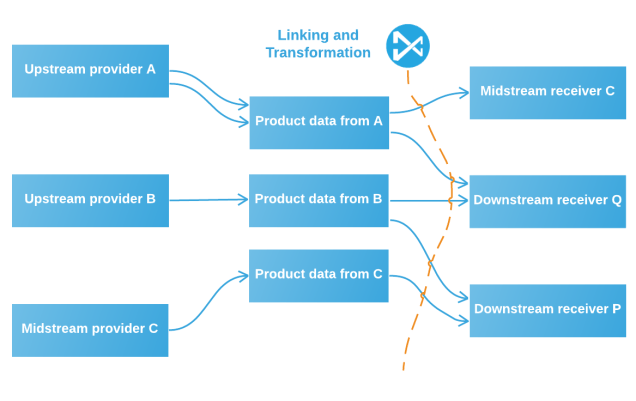
  • Automation based on product information tagged with a standard as explained in the post Connecting Product Information.
  • Ambassadorship, which is a role taken by a product information professional, who collaborates with the upstream and downstream trading partner in linking the product information. Read more about becoming a Product Data Lake ambassador here.
  • Upstream responsibility. Here the upstream trading partner makes the linking in Product Data Lake.
  • Downstream responsibility. Here the downstream trading partner makes the linking in Product Data Lake.

cross-company-data-governanceData Governance

Regardless of the mix of the above approaches, you will need a cross company data governance framework to control the standards used and the rules that applies to the exchange of product information with your trading partners. Product Data Lake have established a partnership with one of the most recommended authorities in data governance: Nicola Askham – the Data Governance Coach.

For a quick overview please have a look at the Cross Company Data Governance Framework.

Please request more information here.

Bookmark and Share

Sign Up is Open

Over the recent one and a half year many of the posts on this blog has been about Product Data Lake, a cloud service for sharing product data in the business ecosystems of manufacturers, distributors, retailers and end users of product information.

From my work as a data quality and Master Data Management (MDM) consultant, I have seen the need for a service to solve data quality issues, when it comes to product master data. My observation has been that the root cause of these issues are found in the way that trading partners exchange product information and digital assets.

It is the aim of Product Data Lake to ensure:

  • Completeness of product information by enabling trading partners to exchange product data in a uniform way
  • Timeliness of product information by connecting trading partners in a process driven way
  • Conformity of product information by encompassing various international standards for product information
  • Consistency of product information by allowing upstream trading partners and downstream trading partners to interact with in-house structure of product information
  • Accuracy of product information by ensuring transparency of product information across the supply chain.

You can learn more about how Product Data Lake works on the documentation site.

pdl-how-much-smallBecome a:

Sign Up is open on www.productdatalake.com

Bookmark and Share

Connecting Product Information

In our current work with the Product Data Lake cloud service, we are introducing a new way to connect product information that are stored at two different trading partners.

When doing that we deal with three kinds of product attributes:

  • Product identification attributes
  • Product classification attributes
  • Product features

Product identification attributes

The most common used notion for a product identification attribute today is GTIN (Global Trade Item Number). This numbering system has developed from the UPC (Universal Product Code) being most popular in North America and the EAN (International Article Number formerly European Article Number).

Besides this generally used system, there are heaps of industry and geographical specific product identification systems.

In principle, every product in a given product data store, should have a unique value in a product identification attribute.

When identifying products in practice attributes as a model number at a given manufacturer and a product description are used too.

Product classification attributes

A product classification attribute says something about what kind of product we are talking about. Thus, a range of products in a given product data store will have the same value in a product classification attribute.

As with product identification, there is no common used standard. Some popular cross-industry classification standards are UNSPSC (United Nations Products and Service Code®) and eCl@ss, but many other standards exists too as told in the post The World of Reference Data.

Besides the variety of standards a further complexity is that these standards a published in versions over time and even if two trading partners use the same standard they may not use the same version and they may have used various versions depending on when the product was on-boarded.

Product features

A product feature says something about a specific characteristic of a given product. Examples are general characteristics as height, weight and colour and specific characteristics within a given product classification as voltage for a power tool.

Again, there are competing standards for how to define, name and identify a given feature.

pdl-tagsThe Product Data Lake tagging approach

In the Product Data Lake we use a tagging system to typify product attributes. This tagging system helps with:

  • Linking products stored at two trading partners
  • Linking attributes used at two trading partners

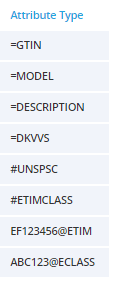
A product identification attribute can be tagged starting with = followed by the system and optionally the variant off the system used. Examples will be ‘=GTIN’ for a Global Trading Item Number and ‘=GTIN-EAN13’ for a 13 character EAN number. An industry geographical tag could be ‘=DKVVS’ for a Danish plumbing catalogue number (VVS nummer). ‘=MODEL’ is the tag of a model number and ‘=DESCRIPTION’ is the tag of the product description.

A product classification tag starts with a #. ‘#UNSPSC’ is for a United Nations Products and Service Code where ‘#UNSPSC-19’ indicates a given main version.

A product feature is tagged with the feature id, an @ and the feature (sometimes called property) standard. ‘EF123456@ETIM’ will be a specific feature in ETIM (an international standard for technical products). ‘ABC123@ECLASS’ is a reference to a property in eCl@ss.

Bookmark and Share

Ways of Sharing Product Data in Business Ecosystems

Sharing product data within business ecosystems of manufacturers, distributors, retailers and end users has grown dramatically during the last years driven by the increased use of e-commerce and other customer self-service sales approaches.

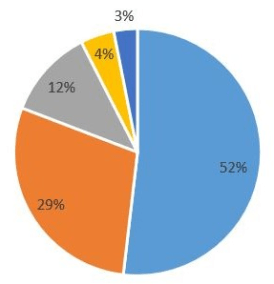
At Product Data Lake we recently had a survey about how companies shares product data today. The figures were as seen below:

our survey

The result shows that there are different approaches out there. Spreadsheets still rules the world though closely, in this survey, followed by external data portals. Direct system to system approaches are also present while supplier portals seems to be not that common.

At the Product Data Lake we aim to embrace those different approaches. Well, regarding use of spreadsheets and digital asset files via eMail our embracement is meant to be that of a constrictor snake. The Product Data Lake is the solution to end the hailstorms of spreadsheets with product data within cross company supply chains.

For external data portals, the Product Data Lake offers the concept of a data reservoir. A data reservoir in the Product Data Lake can be with an industry focus or with a special focus on certain data elements as for example sustainability data as described in the post Sustainability Data in PIM.

Direct systems to system exchange can be orchestrated through the Product Data Lake and supplier portals can served by the Product Data Lake. In that way existing investments in those approaches, that typically are implemented to serve basic data elements shared with your top trading partners, can be supplemented by a method that caters for exchange with all your trading partners and covering all data elements and digital assets.

Bookmark and Share

Ecommerce Su…ffers without Data Quality

Inadequate data quality is the enemy of any business. Proof of that for ecommerce too was revealed in a recent survey from the Danish E-commerce Association (FDIH). Over 7,000 respondents were asked if they would turn away from a web-shop, if the product information is incomplete or the product image is bad.

FDIH survey

52 % answered that they totally agree. 29 % more agreed, making it 81 % in all who would leave. 12 % was not sure. 4 % disagreed and 3 % totally disagreed.

The importance of the maintenance and publishing of adequate product information in order to support self-service sales approaches has been pondered on this blog many times as for example in the post Self-service Ready Product Data.

Having product Images of good quality is a part of that and add to that you often see missing product images as reported in the post Image Coming Soon.

By the way: The root cause of incomplete product information and images is lack of agile and process driven sharing of this in business ecosystems. The remedy to that is the Product Data Lake and we will be at the Danish E-Commerce Association event in Copenhagen the 13th October 2016. More information about this event here.

Bookmark and Share

Sustainability Data in PIM

The collection of product data to be handled within PIM (Product Information Management) systems are ever increasing. End customers want more and more data to support purchase decisions.

This theme was pondered in the post Self-Service Ready Product Data.

One new kind of product data to beware of in the future is information about sustainability measures related to a given product. This is information about the environmental impact and the social impact from producing and consuming a product.

As the founder of the Product Data Lake, a solution for exchanging product data in business ecosystems, I am very pleased that sustainability information will be included as an important kind of product data ready to be exchanged between trading partners.

EA
Earth Accounting

This is due to a cooperation with Earth Accounting. The Product Data Lake will be an integrated part of the information cooperative, where the Product Data Lake will facilitate forward looking manufacturers in providing their own sustainability measures along with all other kind of product data and where progressive distributors and retailers can receive and eventually publish sustainability data along with all other self-service ready product data.

Bookmark and Share

Reducing the Reverse Supply Chain by Improving the Forward Data Supply Chain

An increasing issue arisen in the customer self-service age – first and foremost as seen in e-commerce – is the increasing reverse supply chain. A reverse supply chain is the flow of products being returned down the supply chain because the end customer did not want or like the product.

There are several reasons for returned products. Bad product quality is an old known reason. Bad data quality is a new important reason. Bad data quality is when the end customer did not have the right data to support the purchase. The main root cause for this is incomplete data as missing specification, missing images and other digital assets as well as missing information about related products.

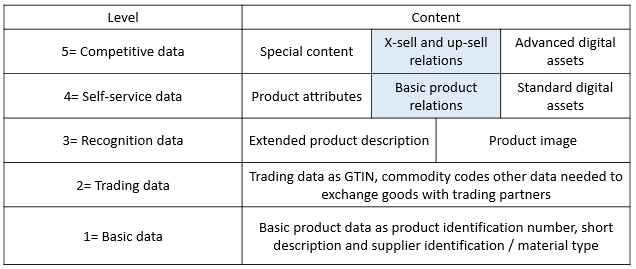
Some different kinds of product data was examined in the post Self-Service Ready Product Data. Data that supports customer self-service sales approaches are mainly those data that should be provided through the forward supply chain, meaning that they are originated at the manufacturer and then passed and possibly value added by distributors and retailers.

Increasing reverse supply chains is a huge problem both from a business standpoint due to increased costs and from a society standpoint due to increased environmental impact. To decrease the reverse supply chain we need better means to put comprehensive product information through the forward supply chain in a timely matter.

The Product Data Lake is a solution to do so, as the Product Data Lake ensures:

  • Completeness of product information by enabling trading partners to exchange product data in a uniform way
  • Timeliness of product information by connecting trading partners in a process driven way

Further more, the Product Data Lake ensures:

  • Conformity of product information by encompassing various international standards for product information
  • Consistency of product information by allowing upstream trading partners and downstream trading partners to interact with in-house structure of product information
  • Accuracy of product information by ensuring transparency of product information across the supply chain

Please find more information about the Product Data Lake here.pdl-diagram-new


Bookmark and Share

Related Products: The often Overlooked Facet of PIM

Related products

As examined in the post Self-service Ready Product Data, there are three main different kinds of information, which we deal with within Product Information Management (PIM). These are

  • Product attributes, also sometimes called product properties or product features. These are up to thousands of different data elements that describes a product. Some are very common for most products like height, length, weight and colour. Some are very specific to the product category. This challenge is actually the reason of being for dedicated PIM solutions.
  • Digital assets are documents like product images, installation guides, line drawings, data sheets and more advanced formats as videos. You may handle these digital assets in a dedicated Digital Asset Management (DAM) system or use facilities within a PIM solution or other kind of solutions for that.
  • Related products are the links between a product and other products like a product that have several different accessories that goes with the product or a product being a successor of another now decommissioned product. Spare parts for a given product is another kind of product relation. And then we have cross-sell and up-sell relations.

While PIM solutions usually have good capabilities for handling related products, it is my experience that many organizations does not utilize this very well.

One challenge is that related products can be sourced in various ways as told in the post Related Parties, Products and Locations. These ways are:

  • From the manufacturer of the product. This source is often good when it comes to product relationship types as accessory and replacement (succession) as well as spare part relations.
  • From the customer. We know this approach from the online sales trick prompting us with the message “People who bought A also bought B”.
  • From internal considerations. Facilitating up-sell can be done by enhancing product data with that kind of product relation.

Sourcing product relations from the manufacturer through the supply chain is a must for solutions that facilitates exchange of product data in business ecosystems. In the Product Data Lake we consequently handle the sharing of product attributes, digital assets and related products.

Bookmark and Share