Everyday Digital Transformation

Ben Rund of Informatica has a Youtube video running these days with the title/question: Enough Heard on Digital Transformation by Uber & AirBnB?

I share this sentiment with Ben. You don’t have to disrupt the whole world to take part in digital transformation and you don’t have to start something completely new. As an established enterprise you can transform your current business and combine the good things from the past with the new opportunities aroused from the digital evolution.

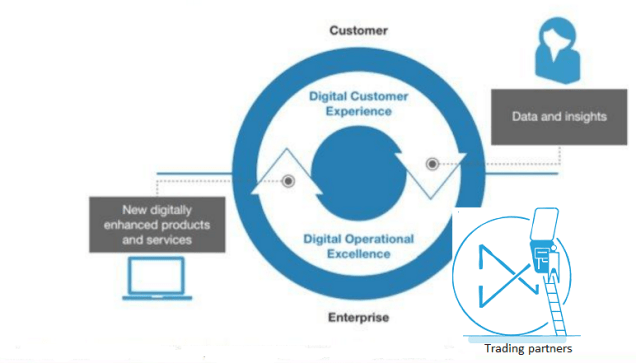
Forrester, the other analyst firm, some years ago devided digital transformation into a loop of:

  • Digital Customer Experience
  • Digital Operational Excellence

The below figure visualizes this landscape:

digital

What I would like to elaborate on related to this picture is the business ecosystem of your enterprise, which must be included in the everyday digital transformation.

Let’s take the example of product information management:

However, connect is better than collect. If you are dependent on receiving spreadsheets with product information from your trading partners or you let them put their spreadsheets into your supplier product data portal, you have an everyday digital transformation in front of you.

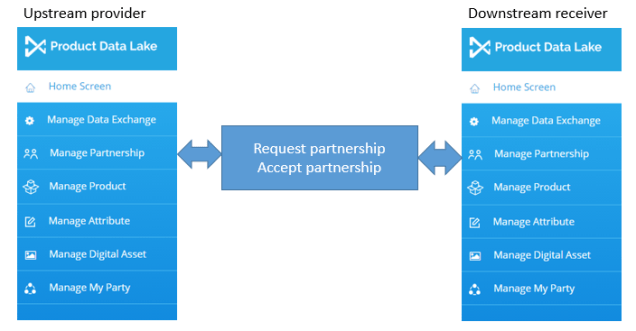
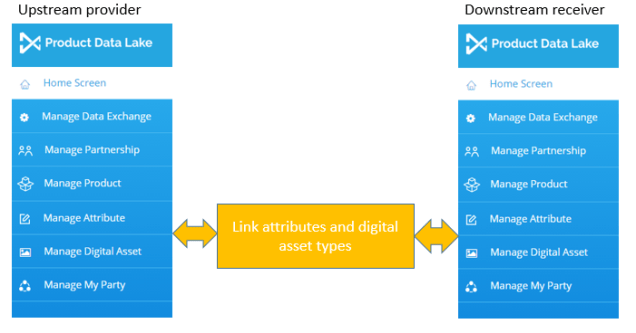
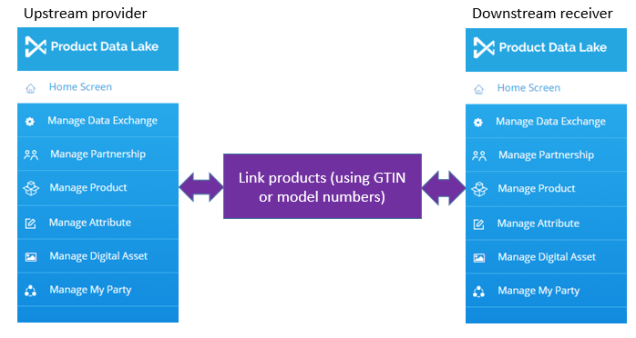
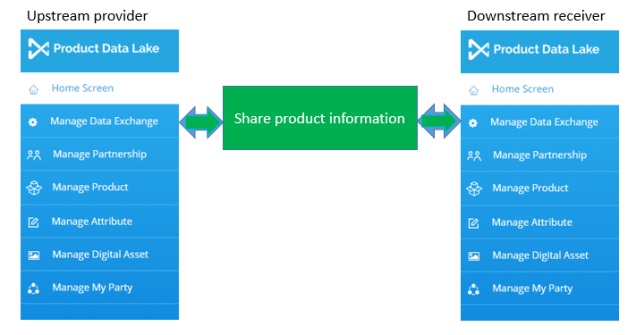
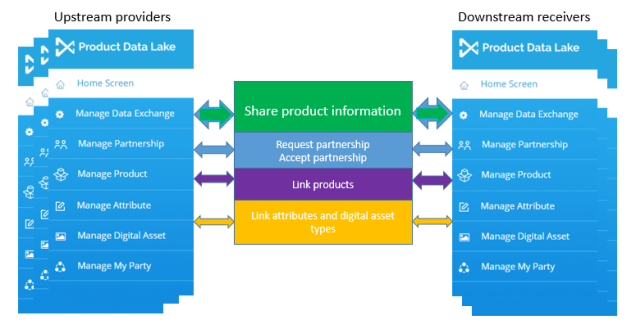
The solution for that is Product Data Lake.
digital2

Knowing what quality product data looks like

Recently Daniel O’Connor blogged about Three Keys to a Successful Product Data Project BEFORE You Start the Project. Number one key suggested by Daniel is to know what quality product data looks like. I agree.

Besides Daniel’s very valid points on this matter, I would like to bring data quality dimensions into the game. Looking at data quality from a completeness, timeliness, conformity, consistency and accuracy point of view will help crafting tangible measures and identifying the root causes of where current culture, processes and technology lack the capabilities of meeting the desired state of product data quality.

QualityHere is my take on how to use data quality dimensions for product data:


Completeness of product data is essential for self-service sales approaches. A recent study revealed that 81 % of e-shoppers would leave a webshop with incomplete product information. The root cause of lacking product data is often a not working cross company data supply chain as reported in the post The Cure against Dysfunctional Product Data Sharing.

Timeliness, or currency if you like, of product data is again an issue often related to challenges in cross company supply chains. You can learn more about this subject in the post How to avoid Stale Product Data.

Conformity of product data is first and foremost achieved by adhering to a public standard for product data. However, there are different international, national and industry standards to choose from. These standards also comes in versions that changes over time. Also your variety of product groups may be best served by different standards.

Consistency of product data has to be solved in two scopes. First consistency has to be solved internally within your organisation by consolidating diverse silos of product master data. This is often done using a Product Information Management (PIM) solution. Secondly you have to share your consistent product data with your flock of trading partners as explained in the post What a PIM-2-PIM Solution Looks Like.

Accuracy is usually best at the root, meaning where the product is manufactured. Then accuracy may be challenged when passed along in the cross company supply chain as examined in the post Chinese Whispers and Data Quality. Again, the remedy is about creating transparency in business ecosystems by using a modern data management approach as proposed in the post Data Lakes in Business Ecosystems.

My 2017 PIM Clairvoyance

When writing a blog post about predictions for next year a common way to start is to explain why your last year predictions in a way was true.

Well, my foreseeing for 2016 was called My 2016 MDM Clairvoyance. This included gut feelings about Master Data Management (MDM) including Product Information Management (PIM).

One hunch was about mergers. There is still two weeks left to see that coming true.

Bowl
Magic glass bowl

Another guess was about shortage of MDM people and more agile MDM implementations. Perhaps that was right.

The bet that certainly happened was about only one Gartner MDM magic quadrant. Though it is delayed – as reported in the post The Gartner Magic Quadrant for MDM 2016 – it will according to my sources land in 2016.

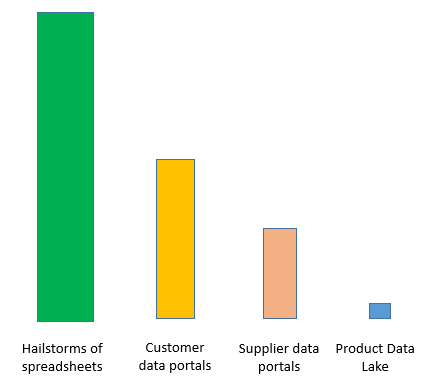
The burning issue for me in 2017 is how many companies that will abandon spreadsheets as the mean to exchange product information with trading partners and resist the temptation to set up a selfish supplier or customer product data portal? The potential numbers was examined in the post Alternatives to Product Data Lake.

Or put in another way: How many subscribers will we have at Product Data Lake by the end of 2017? My guess is 1111. In a year I will reveal if this number is expressed as a binary number, a decimal number or a hex number.

A Data Lake, Santa Style

Following up on last years post on Big Data Quality, Santa Style (and previous years of Santa style posts) it is time to see how Santa may utilize a data lake.

birthday presentsI imagine that handling product information must be a big pain point at the Santa Corporation. All the product information from suppliers of present items comes in using different standards and various languages. In the same way the wish lists from boys and girls comes in many languages and using many different wordings.

Forcing the same standard on all suppliers (and boys and girls) is quite utopic – even for Santa.

So using a data lake for product information seems to be a good choice, not at least if that data lake encompasses the whole business ecosystem around the Santa Corporation.

By joining Product Data Lake the Santa Corporation will put their required product portfolio and the needed attributes for the products into Product Data Lake in all the languages operated at Santa’s site.

The suppliers of toys, electronics, books, clothes and heaps of other nice things will by joining Product Data Lake in the same way put their products and the attributes offered into Product Data Lake.

In here, the products and attributes will be linked to the ones used by Santa. But this is only the beginning of a joyful ride. The products and attributes can also be linked to all the other trading partners on Product Data Lake, so the manufacturer will only have to upload this information once.

Ho ho ho. This year it is not only nice boys and girls that gets a present – and this year the right one -from Santa. Smart suppliers will get a big present too.

Social PIM, Take 2

My first blog post on Social PIM (Social Product Information Management) was over 4 years ago.

take-2Since then Product Data Lake has been launched. Product Data Lake resembles a social network as you connect with your trading partners from the real world in order to collaborate on getting complete and accurate product information from the manufacturer to the point-of-sales.

I would love to see you, my blog readers, become involved. The options are:

Black Friday Afterthoughts before Christmas

Black Friday & Christmas: 5 Retail Strategies for Providing a Wonderful Shopping Experience” is the title of a recent blog post by Antonia Renner on the Informatica blog.

This blog post revolves around how Master Data Management (MDM) and Product Information Management (PIM) can be the foundation of a better shopping experience and how to do this within driving digital transformation, being agile, and streamlining internal and external collaboration and workflows.

I agree with that. My only concern around the means mentioned relates to the section about how great customer experience starts with great supplier product data. The proposed approach for that is a self-service supplier data portal.

pdl-whyFrom what I have experienced, the concept of a supplier data portal for product data has limited chances of success. The problem for you as retailer or other form of downstream trading partner is your supplier. They will eventually have to deal with hundreds of supplier portals with different format and structure by the choice of their downstream trading partners, whereof you are just one. If you are a big one to them, it might work. Else probably not.
In the same way, your supplier could offer their customer data portal, build with their choice of format and structure. If they are a big one to you, you might go with that. Else, you probably would object to dealing with hundreds of different upstream data portals for you to go-to.

My Christmas present to you – suppliers, retailers, other supply chain nodes / PIM-MDM solution vendors – is a free trial / ambassadorship on Product Data Lake.

Product Data Lake is a cloud service for sharing product data in business ecosystems. Product Data Lake ensures:

  • Completeness of product information by enabling trading partners to exchange product data in a uniform way
  • Timeliness of product information by connecting trading partners in a process driven way
  • Conformity of product information by encompassing various international standards for product information
  • Consistency of product information by allowing upstream trading partners and downstream trading partners to interact with in-house structure of product information
  • Accuracy of product information by ensuring transparency of product information across the supply chain

It’s in your hands. See you on Product Data Lake.

Alternatives to Product Data Lake

Within Product Information Management (PIM) there is a growing awareness about that sharing product information between trading partners is a very important issue.

So, how do we do that? We could do that, on a global scale, by using:

  • 1,234,567,890 spreadsheets
  • 2,345,678 customer data portals
  • 901,234 supplier data portals

Spreadsheets is the most common mean to exchange product information between trading partners today. The typical scenario is that a receiver of product information, being a downstream distributor, retailer or large end user, will have a spreadsheet for each product group that is sent to be filled by each supplier each time a new range of products is to be on-boarded (and potentially each time you need a new piece of information). As a provider of product information, being a manufacturer or upstream distributor, you will receive a different spreadsheet to be filled from each trading partner each time you are to deliver a new range of products (and potentially each time they need a new piece of information).

Customer data portals is a concept a provider of product information may have, plan to have or dream about. The idea is that each downstream trading partner can go to your customer data portal, structured in your way and format, when they need product information from you. Your trading partner will then only have to deal with your customer data portal – and the 1,234 other customer data portals in their supplier range.

Supplier data portals is a concept a receiver of product information may have, plan to have or dream about. The idea is that each upstream trading partner can go to your supplier data portal, structured in your way and format, when they have to deliver product information to you. Your trading partner will then only have to deal with your supplier data portal – and the 567 other supplier data portals in their business-to-business customer range.

Product Data Lake is the sound alternative to the above options. Hailstorms of spreadsheets does not work. If everyone has either a passive customer data portal or a passive supplier data portal, no one will exchange anything. The solution is that you as a provider of product information will push your data in your structure and format into Product Data Lake each time you have a new product or a new piece of product information. As a receiver you will set up pull requests, that will give you data in your structure and format each time you have a new range of products, need a new piece of information or each time your trading partner has a new piece of information.

Learn more about how that works in Product Data Lake Documentation and Data Governance.

alternatives
Potential number of solutions / degree of dissatisfaction / total cost of ownership


A System of Engagement for Business Ecosystems

Master Data Management (MDM) is increasingly being about supporting systems of engagement in addition to the traditional role of supporting systems of record. This topic was first examined on this blog back in 2012 in the post called Social MDM and Systems of Engagement.

The best known systems of engagement are social networks where the leaders are Facebook for engagement with persons in the private sphere and LinkedIn for engagement with people working in or for one or several companies.

But what about engagement between companies? Though you can argue that all (soft) engagement is neither business-to-consumer (B2C) nor business-to-business (B2B) but human-to-human (H2H), there are some hard engagement going on between companies.

pdl-whyOne of the most important ones is exchange of product information between manufacturers, distributors, resellers and large end users of product information. And that is not going very well today. Either it is based on fluffy emailing of spreadsheets or using rigid data pools and portals. So there are definitely room for improvement here.

At Product Data Lake we have introduced a system of engagement for companies when it comes to the crucial task of exchanging product information between trading partners. Read more about that in the post What a PIM-2-PIM Solution Looks Like.

Shipping Product Information

When looking out of the windows from Product maersk-seen-from-pdl-in-sunshineData Lake global headquarters (well, that is also our home office) we see our neighbour, which is the global headquarters of Maersk, a major worldwide operating shipping company.

In all humbleness we do very parallel business. Maersk is good at moving goods. We are going to move data about the goods. Product data or product information if you like.

The reason of being for a shipping company is that it would be very ineffective for each manufacturer of goods, if they should arrange and carry out the transportation of their manufactured goods to each distributor around the world. Furthermore, it would be equally ineffective, if each distributor should arrange and carry out the transportation of their range of goods to each reseller or large end buyer.

Until now, this ineffectiveness has unfortunately been the case when it comes to exchanging data about the goods. Manufacturers are asked by their distributors to provide product information in a different way for each – most often meaning in a different spreadsheet. And the same craziness repeats itself when it comes to exchanging data between distributors, resellers and large end users of product information.

At Product Data Lake we have set sail to end this insanity and bring digitalization to shipping of product information. Learn more about how exactly we will arrange that journey on Product Data Lake Documentation and Data Governance.

Bookmark and Share