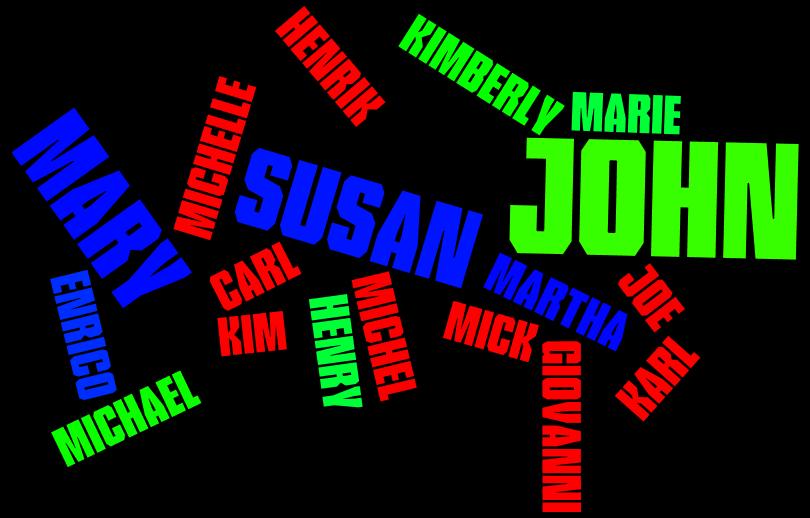
I use the term ”given name” here for the part of a person name that in most western cultures is called a ”first name”.
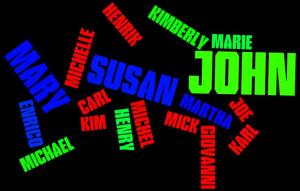 When working with automation of data quality, master data management and data matching you will encounter a lot of situations where you will like to mimic what we humans do, when we look at a given name. And when you have done this a few times you also learn the risks of doing so.
Here is some of the learning I have been through:
Gender
Most given names are either for males or for females. So most times you instinctively know if it is a male or a female when you look at a name. Probably you also know those given names in your culture that may be both. What often creates havoc is when you apply rules of one culture to data coming from a different culture. The subject was discussed on DataQualityPro here.
Salutation
In some cultures salutation is paramount – not at least in Germany. A correct salutation may depend on knowing the gender. The gender may be derived from the given name. But you should not use the given name itself in your greeting.
So writing to “Angela Merkel” will be “Sehr geehrte Frau Merkel” – translates to “Very honored Mrs. Merkel”.
If you have a small mistake as the name being “Angelo Merkel”, this will create a big mistake when writing “Sehr geehrter Herr Merkel” (Very honored Mr. Merkel) to her.
Age
In a recent post on the DataFlux Community of Experts Jim Harris wrote about how he received tons of direct mails assuming he was retired based on where he lives.
I have worked a bit with market segmentation and data (information) quality. I don’t know how it is with first names in the United States, but in Denmark you may have a good probability with estimating an age based on your given name. The statistical bureau provides statistics for each name and birth year. So combining that with the location based demographic you will get a better response rate in direct marketing.
Nicknames
Nicknames are used very different in various cultures. In Denmark we don’t use them that much and definitely very seldom in business transactions. If you meet a Dane called Jim his name is actually Jim. If you have a clever piece of software correcting/standardizing the name to be James, well, that’s not very clever.

55.580294
12.282991








 Liliendahl on Data Quality