Beyond Address Validation

The quality of contact master data is the number one data quality issue around.

Lately there has been a lot of momentum among data quality tool providers in offering services for getting at least the postal address in contact data right. The new services are improved by:

  • Being cloud based offering validation services that are implemented at data entry and based on fresh reference data.
  • Being international and thus providing address validation for customer and other party data embracing a globalized world.

Capturing an address that is aligned with the real world may have a significant effect on business outcomes as reported by the tool vendor WorldAddresses in a recent blog post.

However, a valid address based on address reference data only tells you if the address is valid, not if the addressee is (still) on the address, and you are not sure if the name and other master data elements are accurate and complete. Therefore you often need to combine address reference data with other big reference data sources as business directories and consumer/citizen reference sources.

Using business directories is not new at all. Big reference sources as the D&B WorldBase and many other directories have been around for many years and been a core element in many data quality initiatives with customer data in business-to-business (B2B) environments and with supplier master data.

Combining address reference data and business entity reference data makes things even better, also because business directories doesn’t always come with a valid address.
Using public available reference data when registering private consumers, employees and other citizen roles has until now been practiced in some industries and for special reasons. Therefore the big reference data and the services are out there and being used today in some business processes.

Mashing up address reference data, business entity reference data and consumer/citizen reference data is a big opportunity for many organizations in the quest for high quality contact master data, as most organizations actually interact with both companies and private persons if we look at the total mix of business processes.

The next big source is going to be exploiting social network profiles as well. As told in the post Social Master Data Management social media will be an additional source of knowledge about our business partners. Again, you won’t find the full truth here either. You have to mashup all the sources.

Bookmark and Share

Mashing Up Big Reference Data and Internal Master Data

Right now I’m working on a cloud service called instant Data Quality (iDQ™).

It is basically a very advanced search engine capable of being integrated into business processes in order to get data quality right the first time and at the same time reducing the time needed for looking up and entering contact data.

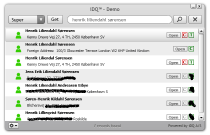
With iDQ™ you are able to look up what is known about a given address, company and individual person in external sources (I call these big reference data) and what is already known in internal master data.

From a data quality point of view this mashup helps with solving some of the core data quality issues almost every organization has to deal with, being:

  • Avoiding duplicates
  • Getting data as complete as possible
  • Ensuring maximal accuracy

The mashup is also a very good foundation for taking real-time decisions about master data survivorship.

The iDQ™ service helps with getting data quality right the first time. However, you also need Ongoing Data Maintenance in order to keep data at a high quality. Therefore iDQ™ is build for trigging into subscription services for external reference data.

At iDQ we are looking for partners world-wide who see the benefit of having such a cloud based master data service connected to providing business-to-business (B2B) and/or business-to-consumer (B2C) data services, data quality services and master data management solutions.

Here’s the contact data: http://instantdq.com/contact/

Bookmark and Share

Hierarchy Management in Social MDM

Hierarchy management is a core feature in master data management (MDM). When it comes to integrating social data and social network profiles into MDM, hierarchy management will be very important too.

Aggregated Level of Social MDM in B2C

The primarily privacy related challenges of social MDM not at least within business-to-consumer (B2C) have been a topic of a lot of blogging lately.  Examples are:

One way of overcoming the privacy considerations is linking to social data and social network profiles at an aggregate level.

Using aggregate level linking is already well known in direct marketing with the use of demographic stereotypes. These stereotypes are based on groups of consumers often defined by their address and/or their age. Combining this knowledge with product master data was examined in the post Customer Product Matrix Management.

Social MDM will add new dimensions to this way of using hierarchies in master data and linking the data across multiple channels without the need to uniquely identify a real world person in every aspect.

Contact Level Social MDM in B2B

As discussed in the post Business Contact Reference Data social network profiles has lot to offer within mastering business-to-business (B2B) contact data.

While access to external reference data at the account level has been around for many years by having available public and commercial (and even open) business directories, the problem of identifying and maintain correct and timely data about the contacts at these accounts has been huge.

Integrating with social networks can help here and social networks are actually also integrating more and more with the traditional business directories. LinkedIn has business directory links for larger companies today and lately I noticed a new professional social network called CompanyBook that is based on linking your profile to a (complete) business directory. By the way: The business directory data available in CompanyBook is surprisingly deep, for example revenue data is free for you to grab.

When it comes to contact data they are basically maintained out there by you. A service like LinkedIn is often described as a recruitment service. In my eyes it is a lot more than that. It is along with similar services a goldmine (within a minefield) for getting MDM within B2B done much better.

Bookmark and Share

Data Driven Data Quality

In a recent article Loraine Lawson examines how a vast majority of executives describes their business as “data driven” and how the changing world of data must change our approach to data quality.

As said in the article the world has changed since many data quality tools were created. One aspect is that “there’s a growing business hunger for external, third-party data, which can be used to improve data quality”.

Embedding third-party data into data quality improvement especially in the party master data domain has been a big part of my data quality work for many years.

Some of the interesting new scenarios are:

Ongoing Data Maintenance from Many Sources

As explained in the article on Wikipedia about data quality services as the US National Change of Address (NCOA) service and similar services around the world has been around for many years as a basic use of external data for data quality improvement.

Using updates from business directories like the Dun & Bradstreet WorldBase and other national or industry specific directories is another example.

In the post Business Contact Reference Data I have a prediction saying that professional social networks may be a new source of ongoing data maintenance in the business-to-business (B2B) realm.

Using social data in business-to-consumer (B2C) activities is another option though also haunted with complex privacy considerations.

Near-Real-Time Data Enrichment

Besides updating changes of basic master data from business directories these directories typically also contains a lot of other data of value for business processes and analytics.

Address directories may also hold further information like demographic stereotype profiles, geo codes and property data elements.

Appending phone numbers from phone books and checking national suppression lists for mailing and phoning preferences are other forms of data enrichment used a lot related to direct marketing.

Traditionally these services have been implemented by sending database extracts to a service provider and receiving enriched files for uploading back from the service provider.

Lately I have worked with a new breed of self service data enrichment tools placed in the cloud making it possible for end users to easily configure what to enrich from a palette of address, business entity and consumer/citizen related third-party data and executing the request as close to real-time as the volume makes it possible.

Such services also include the good old duplicate check now much better informed by including third-party reference data.

Instant Data Quality in Data Entry

As discussed in the post Avoiding Contact Data Entry Flaws third-party reference data as address directories, business directories and consumer/citizen directories placed in the cloud may be used very efficiently in data entry functionality in order to get data quality right the first time and at the same time reduce the time spend in data entry work.

Not at least in a globalized world where names of people reflect the diversity of almost any nation today, where business names becomes more and more creative and data entry is done at shared service centers manned with people from cultures with other address formatting rules, there is an increased need for data entry assistance based on external reference data.

When mashing up advanced search in third-party data and internal master when doing data entry you will solve most of the common data quality issues around avoiding duplicates and getting data as complete and timely as needed from day one.

Bookmark and Share

Business Contact Reference Data

When working with selling data quality software tools and services I have often used external sources for business contact data and not at least when working with data matching and party master data management implementations in business-to-business (B2B) environments I have seen uploads of these data in CRM sources.

A typical external source for B2B contact data will look like this:

Some of the issues with such data are:

  • Some of the contact data names may be the same real world individual as told in the post Echoes in the Database
  • People change jobs all the time. The external lists will typically have entries verified some time ago and when you upload to your own databases, data will quickly become useless do to data decay.
  • When working with large companies in customer and other business partner roles you often won’t interact with the top level people, but people in lower levels not reflected in such external sources.

The rise of social networks has presented new opportunities for overcoming these challenges as examined in a post (written some years ago) called Who is working where doing what?

However, I haven’t seen so many attempts yet to automate and include working with social network profiles in business processes. Surely there are technical issues and not at least privacy considerations in doing so as discussed in the post Sharing Social Master Data.

Right now we have a discussion going on in the LinkedIn Social MDM group about examples of connecting social network profiles and master data management. Please add your experiences in the group here – and join if you aren’t already a member.

Bookmark and Share

Pulling Data Quality from the Cloud

In a recent post here on the blog the benefits of instant data enrichment was discussed.

In the contact data capture context these are some examples:

  • Getting a standardized address at contact data entry makes it possible for you to easily link to sources with geo codes, property information and other location data.
  • Obtaining a company registration number or other legal entity identifier (LEI) at data entry makes it possible to enrich with a wealth of available data held in public and commercial sources.
  • Having a person’s name spelled according to available sources for the country in question helps a lot with typical data quality issues as uniqueness and consistency.

However, if you are doing business in many countries it is a daunting task to connect with the best of breed sources of big reference data. Add to that, that many enterprises are doing both business-to-business (B2B) and business-to-consumer (B2C) activities including interacting with small business owners. This means you have to link to the best sources available for addresses, companies and individuals.

A solution to this challenge is using Cloud Service Brokerage (CSB).

An example of a Cloud Service Brokerage suite for contact data quality is the instant Data Quality (iDQ™) service I’m working with right now.

This service can connect to big reference data cloud services from all over the world. Some services are open data services in the contact data realm, some are international commercial directories, some are the wealth of national reference data services for addresses, companies and individuals and even social network profiles are on the radar.

Bookmark and Share

At Least Two Versions of the Truth

Precisely one year ago I wrote a post called Single Company View examining the challenges of getting a single business partner view in business-to-business (B2B) party master data.

Yesterday Robert Hawker of Vodafone made a keynote at the MDM Summit Europe 2012 telling about supplier master data management.

One of the points was that sometimes you really want the exactly same real world entity to be two golden records in your master data hub, as there may be totally different business activities made with the same legal entity. The Vodafone example was:

  • Having an antenna placed on the top of a building owned by a certain company and thus paying a fee for that
  • Buying consultancy services from the same company

I have met such examples many times when doing data matching as told in the post Entity Revolution vs Entity Evolution.

However at one occasion, many years ago, I worked in a company where not having a single business partner view nearly became a small disaster.

Our company delivered software for membership administration and was at the same time a member of an employer organisation that also happened to be a customer.

A new director got the brilliant idea, that cancelling the membership of the employer organization was an obvious cost reduction.

The cancellation was sent. The employer organisation confirmed the cancellation adding, that they were very sorry that internal business rules at the same time forced them to not being a customer anymore.

Cancellation was cancelled of course and damage control was initiated.

Bookmark and Share

Updating a Social Business Directory

Business directories have been around for ages. In the old days it was paper based as in the yellow pages for a phone book. The yellow pages have since made it to be online searchable. We also know commercial business directories as the Dun & Bradstreet WorldBase as well as government operated national wide directories of companies and industry specific business directories.

Such business directories often takes a crucial role in master data quality work as sources for data enrichment in the quest for getting as close as possible to a single version of the truth when dealing with B2B customer master data, supplier master data and other business partner master data.

A classic core data model for Master Data in CRM systems, SCM solutions and Master Data hubs when doing B2B is that you have:

  • Accounts being the BUSINESS entities who are your customers, suppliers, prospects and all kind of other business partners
  • Contacts being the EMPLOYEEs working there and acting in the roles as decision makers, influencers, gate keepers, users and so on

Today we also have to think about social master data management, being exploiting reference data in social media as a supplementary source of external data.

As all social activity this exercise goes two ways:

  • Finding and monitoring your existing and wanted business partners in the social networks
  • Updating your own data

Most business entities in this world are actually one-man-bands. So are mine. Therefore I went to the LinkedIn company pages this morning and updated data about my company Liliendahl Limited: Unlimited Data Quality and Master Data Management consultancy for tool and service vendors.

Bookmark and Share

The Big ABC of Reference Data

Reference Data is a term often used either instead of Master Data or as related to Master Data. Reference data is those data defined and (initially) maintained outside a single organisation. Examples from the party master data realm are a country list, a list of states in a given country or postal code tables for countries around the world.

The trend is that organisations seek to benefit from having reference data in more depth than those often modest populated lists mentioned above.

In the party master data realm such reference data may be core data about:

  • Addresses being every single valid address typically within a given country.
  • Business entities being every single business entity occupying an address in a given country.
  • Consumers (or Citizens) being every single person living on an address in a given country.

There is often no single source of truth for such data. Some of the challenges I have met for each type of data are:

Addresses

The depth (or precision if you like) of an address is a common problem. If the depth of address data is at the level of building numbers on streets (thoroughfares) or blocks, you have issues as described in the blog post called Multi-Occupancy.

Address reference data of course have issues with the common data quality dimensions as:

  • Timeliness, because for example new addresses will exist in the real world but not yet in a given address directory.
  • Accuracy, as you are always amazed when comparing two official sources which should have the same elements, but haven’t.

Business Entities

Business directories have been accessible for many years and are often used when handling business-to-business (B2B) customer master data and supplier master data management. Some hurdles in doing this are:

  • Uniqueness, as your view of what a given business entity is occasionally don’t match the view in the business directory as discussed in the post 3 out of 10
  • Conformity, because for example an apparently simple exercise as assigning an industry vertical can be a complex matter as mentioned in the post What are they doing?

Consumers (or Citizens)

In business-to-consumer (B2C) or other activities involving citizens a huge challenge is identifying the individuals living on this planet as pondered in the post Create Table Homo Sapiens. Some troubles are:

  • Consistency isn’t easy, as governments around the world have found 240 (or so) different solutions to balancing privacy concerns and administrative effectiveness.
  • Completeness, as the rules and traditions not only between countries, but also within different industries, certain activities and various channels, are different.

Big Reference Data as a Service

Even though I have emphasized on some data quality dimensions for each type of data, all dimensions apply to all types of data.

For organisations operating multinational and/or multichannel exploiting the wealth and diversity of external reference data is a daunting task.

This is why I see reference data as a service embracing many sources as a good opportunity for getting data quality right the first time. There is more on this subject in the post Reference Data at Work in the Cloud.

Bookmark and Share

Small Business Owners

A challenge I encounter over and over again within Data Matching and customer Master Data Management is what to do with small business owners.

Examples of small business owners are:

  • Farmers
  • Healthcare professionals with an own clinic
  • Small family driven shop owners
  • Modest membership organisation administrators
  • Local hospitality providers as Basil Fawlty of Fawlty Towers
  • Independent Data Quality consultants as myself

When handling customer master data we often like to divide those into Business-to-consumer (B2C) or Business-to-business (B2B). We may have different source systems, different data models and different data owners and data stewards for each of the two divisions.

But small business owners usually belong to both divisions. In some transactions they act as private persons (B2C) and in some other transactions they act as a business contact (B2B). If you like to know your customer, have a single customer view , engage in social media and all that jazz, you must have a unique view of the person, the business and the household.

In several industries small business owners, the business and the household is a special target group with unique product requirements. This is true for industries as banking, insurance, telco, real estate, law.

So here are plenty of business cases for multi-domain Master Data Management embracing customer master data and product master data.

The capability to handle a single customer view of small business owners is in my experience very poorly fulfilled in Data Quality and Master Data Management solutions around. Here is certainly room for improvement and entrepreneurship.

Bookmark and Share