Neutron Star Collision and Data Quality

The scientific news of the day is the observed collision of two neutron stars resulting in gravitational waves, an extremely bright flash – and gold.

The connection between gravitational waves and Master Data Management (MDM) was celebrated here on the blog when those waves were detected for the first time as told in the post Gravitational Waves in the MDM World.

The ties to Product Information Management (PIM) was examined in the post Gravitational Collapse in the PIM Space.

Now we have seen a bright flash resembling what happens when two trading partners collide, as in makes business together encompassing sharing master data and product information. Seen from my telescope this improves data quality and thereby business outcome (gold, you know) as explained in the post Data Quality and Business Outcome.

Neutron Star Collide

To the Cloud and Beyond

Over at the Informatica blog Joe McKendrick recently wrote about When It’s Time to Give Data Warehouse a Digital Makeover.

In here Joe examines how data warehouses can be modernized to augment architectures supporting data lakes and Mater Data Management and the case for moving data warehouses to the cloud.

In my view, a lot of data management disciplines will eventually move to the cloud as one follows the other. By adding “beyond” I suggest, that cloud solutions will not only be something that is supported company by company. Eventually you will be able to get business outcome by sharing data management burdens within your business ecosystem.

My current venture called Product Data Lake is an example of such a solution. It modernizes the data warehouse thinking within product information sharing by using a data lake concept in the cloud ready-to-use by trading partners within business ecosystems:

  • If you are a provider of product information, typically as a manufacturer of goods, you can harvest your business outcome by using us for Product Data Push
  • If you are a receiver of product information, you can harvest your business outcome by using us for Product Data Pull

pdl-top

MDM, Reltio, Gartner and Business Outcome

A recent well commented blog post by Andrew White of Gartner, the analyst firm, debates What’s Happening in Master Data Management (MDM) Land?

The post is an answer to a much liked and commented LinkedIn status post by Ramon Chen, Chief Product Officer of Reltio.

In his post Andrew connects the classic dots: How does technology lead to business outcome? Especially the use of cloud solutions and the multi-tenant aspect is in the focus. Andrew asks: What do you see “out there”?

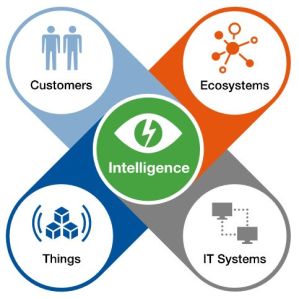
My view is that multi-tenant is not just about offering the same subscription based cloud solutions to a range of clients. It is about making clients sharing the same business ecosystem work in the same MDM realm. This is the platform described in Master Data Share.

Gartner Digital Platforms 2
Source: Gartner

Oh, and what does that have to do with business outcome? A lot. Organizations will not win the future the race by optimizing there inhouse MDM capabilities alone. With the rise of digitalization, they need to connect with and understand their customers, which I believe is something Reltio is good at. Furthermore, organisations need to be much better at working with their business partners in a modern way, including at the master data level. The business outcome of this is:

  • Having complete, accurate and timely data assets needed for understanding and connecting with customers. You will sell more.
  • Having a fast and seamless flow of data assets, not at least product information, to and from your trading partners. You will reduce costs.
  • Having a holistic view of internal and external data needed for decision making. You will mitigate risks.

Will You Successfully Defend Your Business against Invading Spreadsheets?

When we at Product Data Lake are exhibiting on trade shows (yes, we sadly are that old school, sometimes), we have a computer game called PDL Invaders. The game is built over the legendary computer game called Space Invaders. In our version, you use the PDL spaceship to shoot down invading spreadsheets and emails.

TFM16The purpose of the game is to emphasize one of the main reasons of being for Product Data Lake. We want to replace the use of spreadsheets for exchanging product information in cross company supply chains with our automated cloud service.

Spreadsheets is the most common tool to directly exchange product information between trading partners today. The typical scenario is that a receiver of product information, being a downstream distributor, retailer or large end user, will have a spreadsheet for each product group that is emailed to be filled by each supplier each time a new range of products is to be on-boarded (and potentially each time you need a new piece of information). As a provider of product information, being a manufacturer or upstream distributor, you will receive a different spreadsheet to be filled from each trading partner each time you are to deliver a new range of products (and potentially each time they need a new piece of information).

Customer data portals is a concept a provider of product information may have, plan to have or dream about. The idea is that each downstream trading partner can go to your customer data portal, structured in your way and format, when they need product information from you. Your trading partner will then only have to deal with your customer data portal – and the crowd of other customer data portals in their supplier range. Add to that, that spreadsheets is the “natural” tool to download data from such a portal.

Supplier data portals is a concept a receiver of product information may have, plan to have or dream about. The idea is that each upstream trading partner can go to your supplier data portal, structured in your way and format, when they have to deliver product information to you. Your trading partner will then only have to deal with your supplier data portal – and the heaps of other supplier data portals in their business-to-business customer range. Add to that, that spreadsheets is the “natural” tool to upload data to such a portal.

Product Data Lake is the sound alternative to the above options. Hailstorms of spreadsheets does not work.

Follow us on LinkedIn and get up to date information about when the PDL Invaders game will be close to you. Our company page is here.


When Excel is Stretched too Far

I guess we all have encountered examples on how Excel is used in an over-complicated way to solve business tasks that should have been solved with a tool much better suited for that kind of work.

My pet peeve is using Excel for exchanging product information between supply channel partners. This has been a main driver behind launching Product Data Lake.

What is your example about a too far stretched use of Excel?

Samsung 49 inch

Mantra for Retailers: Streamline Product Information to Delight Customers

In his third guest blog post here on this blog Rajneesh Kumar of Pimcore examines how this in-house PIM solution facilitates the way sales teams, online marketers, logistics departments and other units can work in perfect unison.

pimcore3

Managing retail is a complex business. It starts with keeping all the attributes of your product information consistent across all platforms. That’s because your customers are everywhere today. They check out your products online and in store. They express themselves on chat boxes, send emails asking straight questions, buy using desktops/tablets/mobiles, call customer care and use all the devices at their disposal interchangeably in doing so.

Ergo, your product information should better be accurate, high-quality, comprehensive, consistent and up-to-the-minute at all times, across all platforms. As your business expands, number of products increase, the chances of botching up only get higher.

In this sea of complexity, one of the key differentiators in your growth story can be the PIM solution you implement. Pimcore’s PIM can be an answer to your retail needs, here’s why:

Retailers’ Needs Answered with Ease:

In today’s changing consumer dynamics, where 72% of businesses have named improving customer experience as their top priority, a robust product information management system is vital for retailers.

It’s no secret that retailers are grappling with the ever-changing product information requirements. They know it very well their customers are deluged with choices. If they don’t give their customers a consistent experience across all digital touch-points irrespective of the time, date, location, phase in the customer life cycle, they stand to lose. With Pimcore’s PIM, integrating different systems, breaking down silos and managing data efficiently can put you on a trajectory of growth.

A PIM Solution that’s Simple yet Mature:

At the core, it’s all about managing the details about your products, like SKUs, specifications, core product data, digital assets, content, omni-channel data, metrics, and the works. And Pimcore does it like no other PIM software.

Be it the drag and drop approach, quick and easy data entry and management or a context sensitive navigation, it’s a breeze to maintain data assets on Pimcore. Its unrivaled interface too, makes it simple to manage data from multiple domains within one consolidated platform. Besides, Pimcore can be a great fit with CMS, DAM, and Commerce, which can immensely curb your time-to-market.

Unmatched Data Integration, Management and Delivery:

As a retailer, your business’s success will always hinge on your ability to integrate, manage and deliver properly. Pimcore’s data integration is unique in every sense. It has the capacity to integrate into just about any IT environment. This is due to its API driven approach and “connect anything” architecture, so whether it’s Oracle, SAP, Navision or anything else, you can look forward to a seamless integration.

Having rich product information in a flexible and agile data model, which is user-friendly, consistently organized, aggregated, classified, and ready for translation is one the biggest virtues of Pimcore.

Retailers can expect a lasting information infrastructure support, which will secure them for the future and ensure data integrity.

Pimcore Helps in Carving Impeccable Customer Journeys:

In retail, user’s perspective reigns supreme. Every possible trajectory of a customer’s journey must be thought through distinctly and mapped out. Everything that a customer is capable of doing, the touch-points they might engage through, all their possible actions, the way they see it must be taken into account. And Pimcore’s PIM can be of excellent help in doing this. It will act as a powerful link between your data and your customers in every step of their journey. It can subtly guide them, which will eventually lead them towards decision making.

Wrapping Up:

Customer centricity may be the driving force in today’s retail environment, but that doesn’t take away the importance of other stakeholders such as suppliers, sales teams, online marketers, logistics departments and other units. It’s pertinent that they all work in perfect unison, minus any silos, in order to contribute towards creating a great customer journey. Pimcore’s PIM can give you a leading edge in making it happen.

Rajneesh KumarA digital marketer and growth hacker, Rajneesh Kumar is currently marketing manager at Pimcore Global Services (PGS), an award-winning consolidated open source platform for product information management (PIM), web content management (CMS), digital asset management (DAM) and e-commerce. He is well versed with web analytic tools, paid media marketing and has hands on experience on seo techniques, organic promotion and content marketing.

MDM Will Go Cloud

How cloud is changing MDM (Master Data Management) is a subject examined in a very read worthy article by Julie Hunt published recently. The article is called How Does Technology Enable Effective MDM?

In here Julie says: “Adoption of cloud-based MDM or MDM-as-a-Service is on the rise, opening up new dimensions for how organizations take advantage of MDM and data governance.”

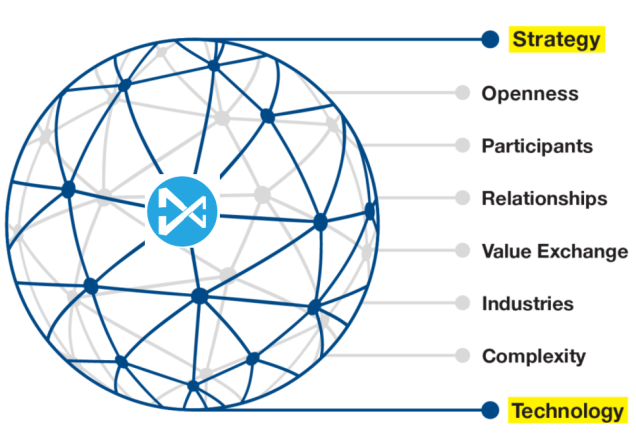
Julie’s article is part 3 of a six part series on the “New Age of Master Data Management”, so I may touch on a dimension that is covered in the upcoming articles. This dimension is how business ecosystems must be a part of your organizations MDM roadmap, and that dimension is, according to Gartner, the analyst firm, covering 8 underlying dimensions as told in the post From Business Ecosystem Strategy to PIM Technology.

Working with MDM in a business ecosystem context does require MDM in the cloud of some sort. Inhouse Mater Data Management and Product Information Management (PIM), which may be on premise or in the cloud or perhaps a hybrid, is only the beginning. Collaboration with business partners in a sophisticated environment will be controlled by a cloud solution.

More on this concept is explained in this piece about Master Data Share.

greatbeltbridge.jpg

From Business Ecosystem Strategy to PIM Technology

Recently Gartner, the analyst firm, published a paper with the title 8 Dimensions of Business Ecosystems.

Right now, I am working with the Product Data Lake service, that is aimed at supporting business ecosystems when it comes to sharing product information. Our take at business ecosystems seems to fit quite nicely into the 8-dimension model.

Business Ecosystem
Source: Gartner

Participants in supply chains must adapt a business ecosystem strategy when it comes to handling product information. An inhouse Product Information Management (PIM) system is only the beginning. This system must be an active part of a digital ecosystem as explained in the post Passive vs Active Product Information Exchange.

This digital ecosystem must be able to support different degrees of openness as public, private or hybrid and embrace engagement of diverse participants having various types of relationships. How this is achieved for product information sharing was touched in the post Product Data Management is Like an Ironman.

The value exchanged with product information was examined in the post Infonomics and Second Party Data. We do that by acknowledging the diversity of industries and complexity of multiple ecosystems as exemplified in the post Five Product Classification Standards.

As stated in the Gartner article: “Success will require a strategic integration of technology, information and business processes.”

Learn how this is achieved when it comes to Product Information Management (PIM) at Product Data Lake Documentation and Data Governance.

The Relation of PIM to Retail Success

This is the second guest blog post from Rajneesh Kumar. In here Rajneesh examines how PIM and MDM have become a crucial aspect of retail success.

Today, every product has a variety of information. And each piece of product information is vital to influencing buyers since every buyer does in-depth research before zeroing on any product. When you deal with tens of thousands of products and their different data types and attributes, a streamlined product data becomes even more critical to ensure a higher sale.

Just think about any online store, and you will get the idea what magic product information produces in the presentation layer of marketing and sales channels.

A product information contains many components and maintains huge catalogs, bringing together the attributes of products with merchandising elements such as images, videos, audios, descriptions, and bundles. These key product facts induce greater product salability across multiple platforms to your customers— while maintaining brand visibility and consistency. When these elements are represented elegantly at the customer-facing end, it can even impact the overall customer buying experience.

Retail

Another factor is time-to-market. Retail sector has become a fast-paced industry where every day 4Ps of products could be changed and refreshed. You need a process that works like a well-oiled machine to keep your customers updated and engaged— across the board. And, you can better engage with buyers when you have a:

  • Fully centralized system— Define, create, and sync master data of product information across multiple channels
  • Rock solid operational capability— Use master data in day-to-day operations without any delay
  • Analytical capability— Reports and insights to make faster, accurate decisions

Beside that, PIM addresses the dynamic nature of constructing and reconstructing compelling packages and offers in an environment that any user can work in, regardless of their programming skills. PIM platform makes product visualization—easier; workflow management— quicker; mass product updates— faster; and integration with content tools (WCM, DAM, eCommerce, etc.)—seamless.

A flexible PIM/MDM platform enables you to harmonize product information lifecycle, including appending, modifying/updating, deleting, validating and securing access to the product information. With a single source of reliable product information, it makes easy to enrich product information across all touchpoints such as website, mobile app, social, in-store point-of-sale, and physical store. Simply, PIM and MDM have become a crucial aspect of retail success.

As digital marketer and growth hacker, Rajneesh Kumar is currently marketing manager at Pimcore Global Services (PGS), an award-winning consolidated open source platform for product information management (PIM), web content management (CMS), digital asset management (DAM) and e-commerce.

Betting on the Next Gartner MDM Magic Quadrant

The Gartner Magic Quadrant for Master Data Management Solutions 2016 came out early in 2017 as reported in the post Who will become Future Leaders in the Gartner Multidomain MDM Magic Quadrant?

So, it may be about time to take some bets on the next one.

First question will naturally be if Gartner is able to get the report out this year? Last year it was scheduled for November 2016 but was two months late into the next year, maybe due to some struggling with the vendors, who also are clients at Gartner, based on the form of a single MDM quadrant opposite to earlier years multiple MDM quadrants for customer and product MDM.

The scheduled date on the Gartner website is 10/31/17, which to none US people reads at the 10th day in the 31st month in year 17.

MDM BrandsNext question is if there are new entries or vendors dropping off? Another market report from Information Difference had a somewhat different crowd as examined in the post Varying Views on the MDM Market 2017.

In the comments to this post readers have posted questions about Magnitude Software, TIBCO Software and Riversand Technologies. Are they in danger? And who might be new entries?

Finally, of course we can have a guess on who will be able to brag about being the leaders. Will Informatica and Orchestra Networks be followed by other ones? Riversand was close last year in that visionaries space. Stibo Systems moves in from the challengers room.

Feel free to have your bet, or set the odds, in the comments below.