The Database versus the Hub

In the LinkedIn Multi-Domain MDM group we have an ongoing discussion about why you need a master data hub when you already got some workflow, UI and a database.
I have been involved in several master data quality improvement programs without having the opportunity of storing the results in a genuine MDM solution, for example as described in the post Lean MDM. And of course this may very well result in a success story.

However there are some architectural reasons why many more organizations than those who are using a MDM hub today may find benefits in sooner or later having a Master Data hub.

Hierarchical Completeness

If we start with product master data the main issue with storing product master data is the diversity in the requirements for which attributes is needed and when they are needed dependent on the categorization of the products involved.

Typical you will have hundreds or thousands of different attributes where some are crucial for one kind of product and absolutely ridiculous for another kind of product.

Modeling a single product table with thousands of attributes is not a good database practice and pre-modeling tables for each thought categorization is very inflexible.

Setting up mandatory fields on database level for product master data tables is asking for data quality issues as you can’t miss either over-killing or under-killing.

Also product master data entities are seldom created in one single insertion, but is inserted and updated by several different employees each responsible for a set of attributes until it is ready to be approved as a whole.

A master data hub, not at least those born in the product domain, is built for those realities.

The party domain has hierarchical issues too. One example will be if a state/province is mandatory on an address, which is dependent on the country in question.

Single Business Partner View

I like the term “single business partner view” as a higher vision for the more common “single customer view”, as we have the same architectural requirements for supplier master data, employee master data and other master data concerning business partners as we have for the of course extremely important customer master data.

The uniqueness dimension of data quality has a really hard time in common database managers. Having duplicate customer, supplier and employee master data records is the most frequent data quality issue around.

In this sense, a duplicate party is not a record with accurately the same fields filled and with accurate the same values spelled accurately the same as a database will see it. A duplicate is one record reflecting the same real world entity as another record and a duplicate group is more records reflecting the same real world entity.

Even though some database managers have fuzzy capabilities they are still very inadequate in finding these duplicates based on including several attributes at one time and not at least finding duplicate groups.

Finding duplicates when inserting supposed new entities into your customer list and other party master data containers is only the first challenge concerning uniqueness. Next you have to solve the so called survivorship questions being what values will survive unavoidable differences.

Finally the results to be stored may have several constructing outcomes. Maybe a new insertion must be split into two entities belonging to two different hierarchy levels in your party master data universe.

A master data hub will have the capabilities to solve this complexity, some for customer master data only, some also for supplier master data combined with similar challenges with product master data and eventually also other party master data.

Domain Real World Awareness

Building hierarchies, filling incomplete attributes and consolidating duplicates and other forms of real world alignment is most often fulfilled by including external reference data.

There are many sources available for party master as address directories, business directories and citizen information dependent on countries in question.

With product master data global data synchronization involving common product identifiers and product classifications is becoming very important when doing business the lean way.

Master data hubs knows these sources of external reference data so you, once again, don’t have to reinvent the wheel.

Bookmark and Share

Single Customer Hierarchy View

One of the things I do over and over again as part of my work is data matching.

There is a clear tendency that the goal of the data matching efforts increasingly is a master data consolidation taking place before the launch of a master data management (MDM) solution. Such a goal makes the data matching requirements considerably more complex than if the goal is a one-shot deduplication before a direct marketing campaign.

Hierarchy Management

In the post Fuzzy Hierarchy Management I described how requirements for multiple purposes of use of customer master data makes the terms false positive and false negative fuzzy.

As I like to think of a customer as a party role there are essentially two kinds of hierarchies to be aware of:

  • The hierarchies the involved party is belonging to in the real world. This is for example an individual person seen as belonging to a household or a company belonging at a place in a company family tree.
  • The hierarchies of customer roles as seen in different business functions and by different departments. For example two billing entities may belong to the same account in a CRM system in one example, but in another example two CRM accounts have the same billing entity. 

The first type of hierarchy shouldn’t be seen differently between enterprises. You should reach the very same result in data matching regardless of what your organization is doing. It may however be true that your business rules and the regularity requirements applying to your industry and geography may narrow down the need for exploration.

In the latter case we must of course examine the purpose of use for the customer master data within the organization.

Single Customer View

It is in my experience much easier to solve the second case when the first case is solved. This approach was evaluated in the post Lean MDM.

The same approach also applies to continuous data quality prevention as part of a MDM solution. Aligning with the real world and it’s hierarchies as part of the data capture makes solving the customer roles as seen in different business functions and by different departments much easier.  The benefits of doing this is explained in the post instant Data Quality.

It is often said that a “single customer view” is an illusion. I guess it is. First of all the term “single customer view” is a vision, but a vision worth striving at. Secondly customers come in hierarchies. Managing and reflecting these hierarchies is a very important aspect of master data management. Therefore a “single customer view” often ends up as having a “single customer hierarchy view”.    

Bookmark and Share

The 20 Million Rupees Question

Here we go again. The same old question: “What is the definition of customer?”  Latest Informatica (a data quality, master data management and data integration firm) has hired David Loshin to find out – started in the blog post The Most Dangerous Question to Ask Data Professionals.

Shortly, my take is that this question in practice has two major implications for data quality and master data management but in theory, it should only have one:

  • The first one is real world alignment. In theory real world alignment is independent of the definition of a customer as it is about the party behind the customer.
  • The second is party roles. It’s actually here we can have an endless discussion.

In practice we of course mix things up as discussed in the post Entity Revolution vs Entity Evolution.

And Now for Something Completely Different

Instead of saying that “What is the definition of customer?”  is the million dollar question it’s probably more like the 20 million rupees question as most data management these days are taking place in India.

The amount of money involved is taken from the film Slumdog Millionaire where 20 million rupees is the top prize in the local “Who Wants to Be a Millionaire?” (Kaun Banega Crorepati), which by the way has the same jingle and graphics as all over the world.

And oh, how much is 20 million rupees? It’s near ½ million US dollars or 300.000 euro (with a dot as thousand separator). But a lot in buying power for a local customer. Exactly 2 crores (2,00,00,000 rupees).  

Party on.

Bookmark and Share

Troubled Bridge Over Water

In the recent blog post A pain in the… I described my summer holiday fun being a cycling tour round the Baltic coast.

You meet a lot of data quality issues on such a tour.

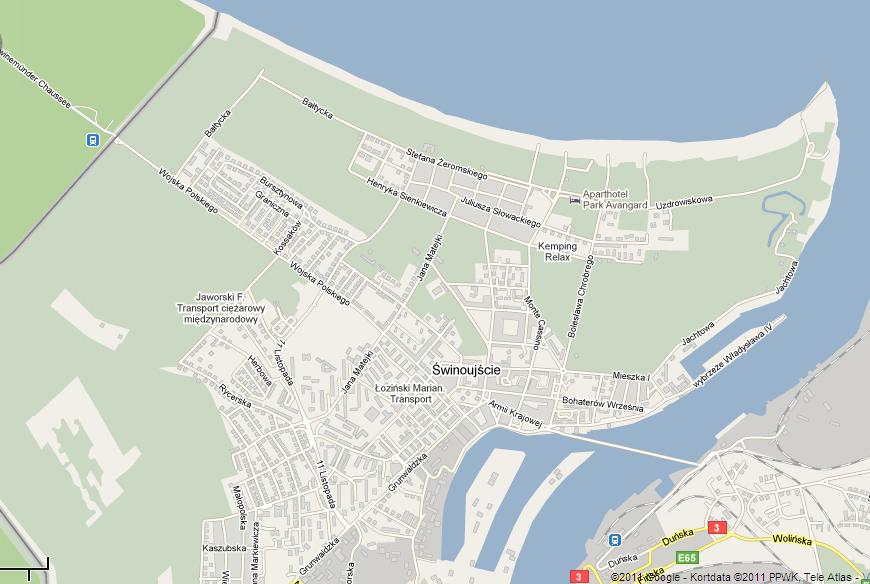
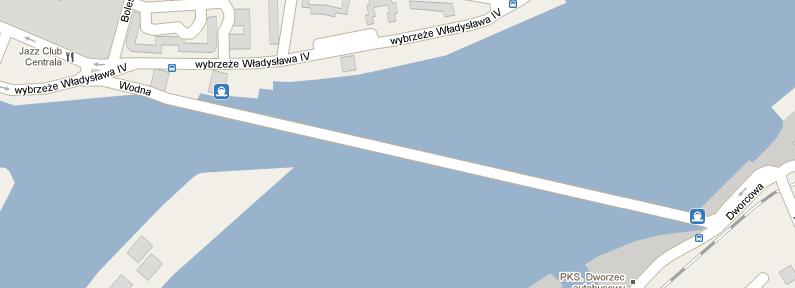
One experience was when we arrived in the Polish town Świnoujście. I planned the tour using Google Maps. According to the plan we would arrive in Świnoujście from the west, cross the bridge over the river Świna and reach the ferry to Sweden on the east bank close to the railway station.

Nice plan. Only thing: Opposite to what’s shown on Google Maps – and told in the route planner, there is no bridge across the river in the real world.

Fortunately there was a free ferry service across the river. So we did catch the once a day big ferry to Sweden in time.

PS: The road name on the bridge on Google Maps is by the way Wodna. Wodna is Polish for (something with) water.

Bookmark and Share

Party On

The most frequent data domain addressed in data quality improvement and master data management is parties.

Some of the issues related to parties that keeps on creating difficulties are:

  • Party roles
  • International diversity
  • Real world alignment

Party roles

Party data management is often coined as customer data management or customer data integration (CDI).

Indeed, customers are the lifeblood of any enterprise – also if we refer to those who benefit from our services as citizens, patients, clients or whatever term in use in different industries.

But the full information chain within any organization also includes many other party roles as explained in the post 360° Business Partner View. Some parties are suppliers, channel partners and employees. Some parties play more than one role at the same time.

The classic question “what is a customer?” is of course important to be answered in your master data management and data quality journey. But in my eyes there is lot of things to be solved in party data management that don’t need to wait for the answer to that question which anyway won’t be as simple as cutting the Gordian Knot as said in the post Where is the Business.

International diversity

As discussed in the post The Tower of Babel more and more organizations are met with multi-cultural issues in data quality improvement within party data management.

Whether and when an organization has to deal with international issues is of course dependent on whether and in what degree that organization is domestic or active internationally. Even though in some countries like Switzerland and Belgium having several official languages the multi-cultural topic is mandatory. Typically in large countries companies grows big before looking abroad while in smaller countries, like my home country Denmark, even many fairly small companies must address international issues with data quality.

However, as Karen Lopez recently pondered in the post Data Quality in The Wild, Some Where …, actually everyone, even in the United States, has some international data somewhere looking very strange if not addressed properly.

Real world alignment

I often say that real world alignment, sometimes as opposed to the common definition of data quality as being fit for purpose, is the short cut to getting data quality right related to party master data.

It is however not a straight forward short cut. There are multiple challenges connected with getting your business-to-business (B2B) records aligned with the real world as discussed in the post Single Company View.  When it comes to business-to-consumer (B2C) or government-to-citizen (G2C) I think the dear people who sometimes comments on this blog did a fine job on balancing mutating tables and intelligent design in the post Create Table Homo_Sapiens.

Bookmark and Share

Single Company View

Getting a single customer view in business-to-business (B2B) operations isn’t straight forward. Besides all the fuzz about agreeing on a common definition of a customer within each enterprise usually revolving around fitting multiple purposes of use, we also have complexities in real world alignment.

One Number Utopia

Back in the 80’s I worked as a secretary for the committee that prepared a single registry for companies in Denmark. This practice has been live for many years now.

But in most other countries there are several different public registries for companies resulting in multiple numbering systems.

Within the European Union there is a common registry embracing VAT numbers from all member states. The standard format is the two letter ISO country code followed by the different formatted VAT number in each country – some with both digits and letters.

The DUNS-number used by Dun & Bradstreet is the closest we get to a world-wide unique company numbering system.  

2-Tier Reality

The common structure of a company is that you have a legal entity occupying one or several addresses.

The French company numbering system is a good example of how this is modeled. You have two numbers:

  • SIREN is a 9-digit number for each legal entity (on the head quarter address).
  • SIRET is a 14-digit (9 + 5) number for each business location.

This model is good for companies with several locations but strange for single location companies.

Treacherous Family Trees (and Restaurants)

The need for hierarchy management is obvious when it comes to handling data about customers that belongs to a global enterprise.

Company family trees are useful but treacherous. A mother and a daughter may be very close connected with lots of shared services or it may be a strictly matter of ownership with no operational ties at all.

Take McDonald’s as a not perfectly simple (nor simply perfect) example. A McDonald’s restaurant is operated by a franchisee, an affiliate, or the corporation itself. I’m lovin’ modeling it.

Bookmark and Share

Holistic Accuracy

In community economics you have two terms called

  • Partitive accuracy and
  • Holistic accuracy

In short, partitive accuracy is the accuracy of a single measure being part of a model while holistic accuracy is the accuracy of the model structure and its use. More information here.

I find these terms being very useful in data quality and master data management as well.

The distinction between partitive accuracy and holistic accuracy resembles the distinction between data quality and information quality.

One problem with the term information quality is that it implies a certain context of use, which makes it hard to prepare data for having high data quality for multiple uses other than assuring the accuracy of the single data elements – being similar to the term partitive accuracy.

One clue for assuring better information quality is looking at the model structure of data – being similar to the term holistic accuracy. Here I am thinking beyond traditional data modeling, which is anchored in the technical world, and into how end users of master data hubs are able to build structures of data (with partitive accuracy) that fits the daily business use.

Examples of such holistic information capabilities in master data management will be building flexible product hierarchies and hierarchies of party master data that at the same time reflects hierarchies in the real world as households and company family trees and hierarchies of related accounts and addresses used within the enterprise.

While a single data element as an address component like a postal code may be partitive accurate, the holistic accuracy is seen as how data elements contribute to a holistic accuracy as a part of a data structure that fits multiple purposes of use.

Bookmark and Share

No Privacy Customer Onboarding

This post is a follow up on today’s #DataKnightsJam happening on twitter. Today’s subject was data quality and data privacy.

Diversity in data quality is a subject discussed a lot of times on this blog.

So I want to share a real life example of a good upstream get it right first time data sharing approach that might compromise privacy thresholds in other places.

The image to the right is the data entry form from a Swedish webshop used for customer self-registration. The main flow is that:

  • You type your national ID (personnummer in Swedish)
  • You press the following button
  • The system fetches your name and address data from the public citizen hub
  • The webshop gets an accurate, complete single customer view  

The webshop www.jula.se sells tools for home improvement.

Bookmark and Share

Pick Any Two

The project triangle expresses the dilemma about that you probably want your project to be good, fast and cheap, but in practice you are only able to prioritize two of these three desirable options, in short:

Good, fast, cheap – pick any two

The pick any two among three theme can be related to a lot of other activities thus stating three terms with only two combinations possible in real life.

So what could be the pick any two among three themes for data quality?

Of course the good, fast, cheap dilemma also goes for data quality projects. But as data quality management isn’t just a project but an ongoing program, what else?

I have one suggestion:

Fit for purpose, real world alignment, fix it as we go – pick any two

The term “fit for purpose” has become more or less synonymous with “high quality data” and thus here chosen to express the good angle of data quality.

Some data, especially those we call master data, is used for multiple purposes within an organization. Therefore some kind of real world alignment is often used as a fast track to improving data quality where you don’t spend time analyzing how data may fit multiple purposes at the same time in your organization. Real world alignment also may fulfill future requirements regardless of the current purposes of use.

Managing data both being fit for multiple purpose and aligned with the real world is not something you just do in a cheap way by fixing it as we go. You may pick any two options in these combinations:

  • Make some data fit for purpose by fixing it as the pains shows up.
  • Align data with the real world typically by exploiting external reference data as the prices go down.
  • Lay out a thorough plan for having fit for multiple-purpose data aligned with the real world.

Bookmark and Share

Customer Product Matrix Management

A customer/product matrix is a way of describing the relationships between customer types and product types/attributes.  

Example:

Note: Please find some data quality related product descriptions in the post Data Quality and World Food.

Filling out the matrix may be based on prejudices, gut feelings, assumptions, surveys, focus groups or data.

If we go for data we may do this by collecting available historical data related to sales and inquiries made by persons belonging to each customer type regarding products belonging to each product type.  

In doing that correctly we need two kinds of master data management and data quality assurance in place:

  • Customer Data Integration (CDI) for assigning the accurate customer type in the real world related to the uniquely identified person in transactions coming from all sources – here based on location master data.
  • Product Information Management (PIM) for categorizing the relevant fit for purpose product type.

This reminds me about multi-domain master data management. Customer master data (or shall we say party master data), product master data and location master data used to figure out how to do business. I like it – both the master data management part and the mentioned product types.  

Bookmark and Share