The Big ABC of Reference Data

Reference Data is a term often used either instead of Master Data or as related to Master Data. Reference data is those data defined and (initially) maintained outside a single organisation. Examples from the party master data realm are a country list, a list of states in a given country or postal code tables for countries around the world.

The trend is that organisations seek to benefit from having reference data in more depth than those often modest populated lists mentioned above.

In the party master data realm such reference data may be core data about:

  • Addresses being every single valid address typically within a given country.
  • Business entities being every single business entity occupying an address in a given country.
  • Consumers (or Citizens) being every single person living on an address in a given country.

There is often no single source of truth for such data. Some of the challenges I have met for each type of data are:

Addresses

The depth (or precision if you like) of an address is a common problem. If the depth of address data is at the level of building numbers on streets (thoroughfares) or blocks, you have issues as described in the blog post called Multi-Occupancy.

Address reference data of course have issues with the common data quality dimensions as:

  • Timeliness, because for example new addresses will exist in the real world but not yet in a given address directory.
  • Accuracy, as you are always amazed when comparing two official sources which should have the same elements, but haven’t.

Business Entities

Business directories have been accessible for many years and are often used when handling business-to-business (B2B) customer master data and supplier master data management. Some hurdles in doing this are:

  • Uniqueness, as your view of what a given business entity is occasionally don’t match the view in the business directory as discussed in the post 3 out of 10
  • Conformity, because for example an apparently simple exercise as assigning an industry vertical can be a complex matter as mentioned in the post What are they doing?

Consumers (or Citizens)

In business-to-consumer (B2C) or other activities involving citizens a huge challenge is identifying the individuals living on this planet as pondered in the post Create Table Homo Sapiens. Some troubles are:

  • Consistency isn’t easy, as governments around the world have found 240 (or so) different solutions to balancing privacy concerns and administrative effectiveness.
  • Completeness, as the rules and traditions not only between countries, but also within different industries, certain activities and various channels, are different.

Big Reference Data as a Service

Even though I have emphasized on some data quality dimensions for each type of data, all dimensions apply to all types of data.

For organisations operating multinational and/or multichannel exploiting the wealth and diversity of external reference data is a daunting task.

This is why I see reference data as a service embracing many sources as a good opportunity for getting data quality right the first time. There is more on this subject in the post Reference Data at Work in the Cloud.

Bookmark and Share

Citizen Master Data Management

Citizen Master Data Management in the public sector is the equivalence of Customer Master Data Management in the private sector.

Where are we?

As private organizations find different solutions to how to manage customer master data, governments around the world also have found their particular solution for managing citizen master data.

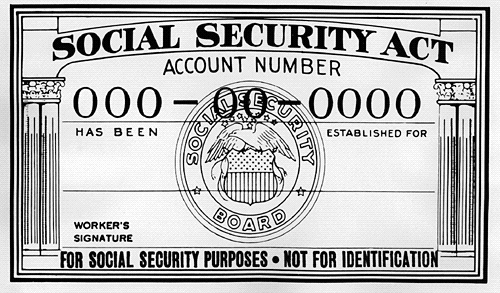
Most descriptions on data management are originated in the United States and so are also many examples and issues related to citizen master data management. One example is this blog post from IBM Initiate called The End of the Social Security Number?

As mentioned in the post there are different administrative practices around the world where governments may learn from experiences with alternative solutions in other countries.

During last year’s discussion in Canada about the census form I had the chance to write a guest blog post on a Canadian blog about How Denmark does it.

The way of the world does change. One example is the program in India called Aadhaar aiming at providing a unique national ID for the over one billion people living in India.

When to register?

The question about when a citizen has to be included in a citizen master data registry of course depends on the purpose of the registry. If the single purpose for example is driving license administration it will depend on when a citizen may obtain a driving license and that will exclude citizens under a certain age depending on the rules in place. The same applies to an electoral roll.

In my country we have an all-purpose citizen master data hub, which today means that a new born is registered and provided a unique Citizen ID within seconds.

Similar considerations apply to immigration and cross boarder employment.

What to store?

Citizen master data registries typically hold attributes as an identifier, name and address and status information.

As new technologies matures governments of course considers if such technologies may be feasible and may add benefits as part of the master data stored about citizens.

Using biometrics is a controversial topic here. The pros and cons were discussed, based on the cancelled program in the United Kingdom, in the post Citizen ID and Biometrics.

Who will share?

Privacy considerations are paramount in most discussions around citizen master data hubs.

Even if you have an all-purpose citizen registry there will be laws limiting how public sector may exploit data identified with the registry and the identifier in use.

On the other hand, in some countries even private sector organizations may benefit from such a master data hub.

An example from Sweden is shown here in the post No Privacy Customer Onboarding.

Bookmark and Share

A Business Rule and a Missing Master Data Hub

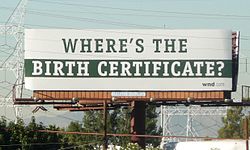
It seems that the United States of America has a problem with the business rule saying you have to be born in the country to become president and a missing citizen master data hub telling about who’s born in the country.

This is an aspect of a previous blog post called Did They Put a Man on the Moon.

Bookmark and Share

Do You Have an Official SnoopBook Account?

I have earlier written about how Facebook resembles a typical Business-to-Consumer customer table in the post Out of Facebook.

Like any customer table the Facebook member table will suffer from a number of different data quality issues like:

  • Some individuals are signed up more than once using different profiles.
  • Some individuals who created a profile are not among us anymore.
  • Some profiles are not an individual person, but a company or other form of establishment.

One type of the latter one seems to be government and other authorities who want to snoop into your daily whereabouts in order to see if you are paying the taxes you should and not receiving welfare services you shouldn’t.

Recently I read a story about a British woman who got jailed on such an account. Link here.

It was not said if the authorities used a special account for the investigation or it was the civil servants personal accounts that were used.

This morning I read an article (in Danish) about the Danish tax authority’s activities in this field. They have realized that they illegally have used personal accounts for such activities, but have stopped that now. However, they will now create an account for the organization to be used for snooping.         

Bookmark and Share

No Privacy Customer Onboarding

This post is a follow up on today’s #DataKnightsJam happening on twitter. Today’s subject was data quality and data privacy.

Diversity in data quality is a subject discussed a lot of times on this blog.

So I want to share a real life example of a good upstream get it right first time data sharing approach that might compromise privacy thresholds in other places.

The image to the right is the data entry form from a Swedish webshop used for customer self-registration. The main flow is that:

  • You type your national ID (personnummer in Swedish)
  • You press the following button
  • The system fetches your name and address data from the public citizen hub
  • The webshop gets an accurate, complete single customer view  

The webshop www.jula.se sells tools for home improvement.

Bookmark and Share

Right the First Time

Since I have just relocated (and we have just passed the new year resolution point) I have become a member of the nearby fitness club.

Guess what: They got my name, address and birthday absolutely right the first time.

Now, this could have been because the young lady at the counter is a magnificent data entry person. But I think that her main competency actually rightfully is being a splendid fitness instructor.

What she did was that she asked for my citizen ID card and took the data from there. A little less privacy yes, but surely a lot better for data quality – or data fitness (credit Frank Harland) you might say.

Bookmark and Share

Out of Facebook

Some while ago it was announced that Facebook signed up member number 500,000,000.

If you are working with customer data management you will know that this doesn’t mean that 500,000,000 distinct individuals are using Facebook. Like any customer table the Facebook member table will suffer from a number of different data quality issues like:

  • Some individuals are signed up more than once using different profiles.
  • Some profiles are not an individual person, but a company or other form of establishment.
  • Some individuals who created a profile are not among us anymore.

Nevertheless the Facebook member table is a formidable collection of external reference data representing the real world objects that many companies are trying to master when doing business-2- consumer activities.

For those companies who are doing business-2-business activities a similar representation of real world objects will be the +70,000,000 profiles on LinkedIn plus profiles in other social business networks around the world which may act as external reference data for the business contacts in the master data hubs, CRM systems and so on.

Customer Master Data sources will expand to embrace:

  • Traditional data entry from field work like a sales representative entering prospect and customer master data as part of Sales Force Automation.
  • Data feed and data integration with traditional external reference data like using a business directory. Such integration will increasingly take place in the cloud and the trend of governments releasing public sector data will add tremendously to this activity.
  • Self registration by prospects and customers via webforms.
  • Social media master data captured during social CRM and probably harvested in more and more structured ways as a new wave of exploiting external reference data.

Doing “Social Master Data Management” will become an integrated part of customer master data management offering both opportunities for approaching a “single version of the truth” and some challenges in doing so.

Of course privacy is a big issue. Norms vary between countries, so do the legal rules. Norms vary between individuals and by the individuals as a private person and a business contact. Norms vary between industries and from company to company.

But the fact that 500,000,000 profiles has been created on Facebook in a very few years by people from all over world shows that people are willing to share and that much information can be collected in the cloud. However no one wants to be spammed by sharing and indeed there have been some controversies around how data in Facebook is handled. 

Anyway I have no doubt that we will see less data entering clerks entering the same information in each company’s separate customer tables and that we increasingly will share our own master data attributes in the cloud.

Bookmark and Share

Citizen ID within seconds

Here is a picture of my grandson Jonas taken minutes after his was born. He has a ribbon around his wrist showing his citizen ID which has just been assigned. There is even a barcode with it on the ribbon.

Now, I have mixed feelings about that. It is indeed very impersonal. But as a data quality professional I do realize that this is a way of solving a problem at the root. Duplicate master data in healthcare is a serious problem as Dylan Jones reported last year when he had a son in this article from DataQualityPro.

A unique citizen ID (National identification number) assigned in seconds after a birth have a lot of advantages. As said it is a foundation for data quality in healthcare from the very start of a life. Later when you get your first job you hand the citizen ID to your employer and tax is collected automatically. When the rest of the money is in the bank you are uniquely identified there. When you turn 18 you are seamlessly put on the electoral roll. Later your marriage is merely a relation in a government database between your citizen ID and the citizen ID of your beloved one.

Oh joy, Master Data Management at the very best.


Bookmark and Share

Aadhar (or Aadhaar)

The solution to the single most frequent data quality problem being party master data duplicates is actually very simple. Every person (and every legal entity) gets an unique identifier which is used everywhere by everyone.

Now India jumps the bandwagon and starts assigning a unique ID to the 1.2 billion people living in India. As I understand it the project has just been named Aadhar (or Aadhaar). Google translate tells me this word (आधार) means base or root – please correct if anyone knows better.

In Denmark we have had such an identifier (one for citizens and one for companies) for many years. It is not used by everyone everywhere – so you still are able to make money being a data quality professional specializing in data matching.

The main reason that the unique citizen identifier is not used all over is of course privacy considerations. As for the unique company identifier the reason is that data quality often are defined as fit for immediate purpose of use.

Bookmark and Share

Ongoing Data Maintenance

Getting the right data entry at the root is important and it is agreed by most (if not all) data quality professionals that this is a superior approach opposite to doing cleansing operations downstream.

The problem hence is that most data erodes as time is passing. What was right at the time of capture will at some point in time not be right anymore.

Therefore data entry ideally must not only be a snapshot of correct information but should also include raw data elements that make the data easily maintainable.

An obvious example: If I tell you that I am 49 years old that may be just that piece of information you needed for completing a business process. But if you asked me about my birth date you will have the age information also upon a bit of calculation plus you based on that raw data will know when I turn 50 (all too soon) and your organization will know my age if we should do business again later.

Birth dates are stable personal data. Gender is pretty much too. But most other data changes over time. Names changes in many cultures in case of marriage and maybe divorce and people may change names when discovering bad numerology. People move or a street name may be changed.

There is a great deal of privacy concerns around identifying individual persons and the norms are different between countries. In Scandinavia we are used to be identified by our unique citizen ID but also here within debatable limitations. But you are offered solutions for maintaining raw data that will make valid and timely B2C information in what precision asked for when needed.

Otherwise it is broadly accepted everywhere to identify a business entity. Public sector registrations are a basic source of identifying ID’s having various uniqueness and completeness around the world. Private providers have developed proprietary ID systems like the Duns-Number from D&B. All in all such solutions are good sources for an ongoing maintenance of your B2B master data assets.

Addresses belonging to business or consumer/citizen entities – or just being addresses – are contained as external reference data covering more and more spots on the Earth. Ongoing development in open government data helps with availability and completeness and these data are often deployed in the cloud. Right now it is much about visual presenting on maps, but no doubt about that more services will follow.

Getting data right at entry and being able to maintain the real world alignment is the challenge if you don’t look at your data asset as a throw-away commodity.

Figure 1: one year old prime information

PS: If you forgot to maintain your data: Before dumping Data Cleansing might be a sustainable alternative.

Bookmark and Share