The other day Shamanth Shankar of Riversand Technologies published a blog post called The Beautiful and the Geek: From Mascara to Managing Data.
In this post Shamanth, exemplified with mascara products, discusses how PIM (Product Information Management) as an enterprise solution helps with effective data management, cutting down new product introduction timelines, multi-channel content management, adhering to regulations and facilitating advanced data analytics.
I agree with all the goodness gained from an enterprise PIM solution for these matters. PIM is the new bacon.
However, in the end Shamanth mentions PIM vendor portals: “The Vendor portal automates the product onboarding process and significantly cuts down operating costs by allowing Vendors to upload complete and curated product data, in bulk, into the system.”
 I am sorry to say that I think that using a PIM vendor (or supplier) portal is like lipstick on a pig.
The concept looks tempting by first glance. But it is a flawed concept. The problem is that it is hostile to your trading partners. Your upstream trading partner may have hundreds of downstream trading partners and if every one of these offers their vendor (supplier) portal, they will have to learn and update into hundreds of different portals.
All these portals will have a different look and feel coming from many different PIM solution providers.
The opposite concept, having suppliers providing their customer product data portals, has the same flaw, just the other way around.
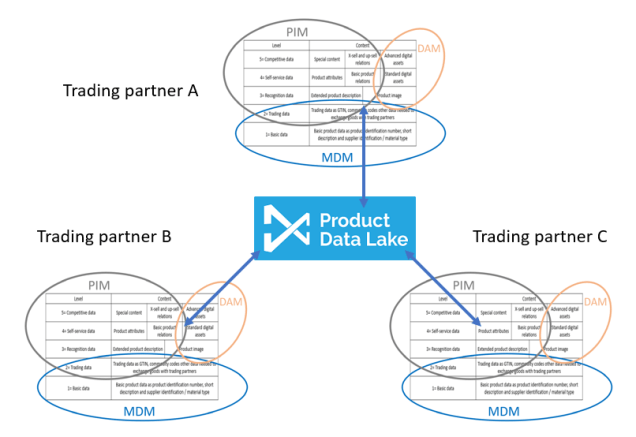
The best solution is having a PIM vendor neutral hub sitting in the product information exchange zone. This is the idea behind Product Data Lake.
 The analyst firm Ventana Research recently made a report called
  Finding a product has in many use cases the characteristic of that we know some pieces of information and want to find a product that match those pieces of information, but often expressed in a different way. This fit very well with the way graph technology works by having a given set of root nodes from where we traverse through edges and nodes (also called vertices) until we end at reachable nodes of the wanted type.

 Internet of Things (IoT)
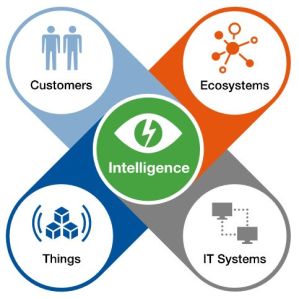 The top right kind of platform is the ecosystem one. This kind of platform will facilitate how you interact with business partners.
 The Competition and The Neutral Hub

 Liliendahl on Data Quality