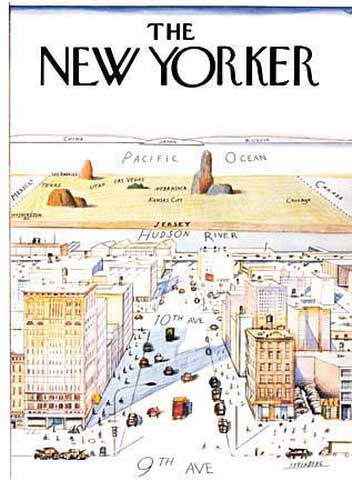
 There is a famous poster called The New Yorker. This poster perfectly illustrates the centricity we often have about the town, region or country we live in.
The same phenomenon is often seen in data management.
I mentioned United States centricity as a minor criticism in my recent book review about the excellent book “Master Data Management and Data Governance”.
An example from the book is this statement:
“It is important to differentiate between U.S. domestic addresses and international addresses. This distinction is important for U.S.-centric MDM solutions because U.S. domestic addresses are normally better defined and therefore can be processed in a more automatic fashion, while international addresses require more manual intervention.”
The same fact could be expressed by saying:
“It is important to differentiate between Danish domestic addresses and international addresses. This distinction is important for Danish-centric MDM solutions because Danish domestic addresses are normally better defined and therefore can be processed in a more automatic fashion, while international addresses require more manual intervention.”
Only, the better formatted address in the first case is the messy address in the last case, and the better formatted address in the last case is the messy address in the first case.
If your MDM scope is country-centric it is sensible to concentrate on automation related to that country.
If your MDM scope is international there are two options:
- The easy way: The one size fits all option. This is a moderate investment, but also, it only yields moderate results in terms of automation and data quality.
- The hard way: You have to implement specialized automation and investigate best external reference data for each country. I made a Danish-centric post on that last year here.