Real World Alignment

I am currently involved in a data management program dealing with multi-entity (multi-domain) master data management described here.

Besides covering several different data domains as business partners, products, locations and timetables the data also serves multiple purposes of use. The client is within public transit so the subject areas are called terms as production planning (scheduling), operation monitoring, fare collection and use of service.

A key principle is that the same data should only be stored once, but in a way that makes it serve as high quality information in the different contexts. Doing that is often balancing between the two ways data may be of high quality:

  • Either they are fit for their intended uses
  • Or they correctly represent the real-world construct to which they refer

Some of the balancing has been:

Customer Identification

For some intended uses you don’t have to know the precise identity of a passenger. For some other intended uses you must know the identity. The latter cases at my client include giving discounts based on age and transport need like when attending educational activity. Also when fighting fraud it helps knowing the identity. So the data governance policy (and a business rule) is that customers for most products must provide a national identification number.

Like it or not: Having the ID makes a lot of things easier. Uniqueness isn’t a big challenge like in many other master data programs. It is also a straight forward process when you like to enrich your data. An example here is accurately geocoding where your customer live, which is rather essential when you provide transportation services.

What geocode?

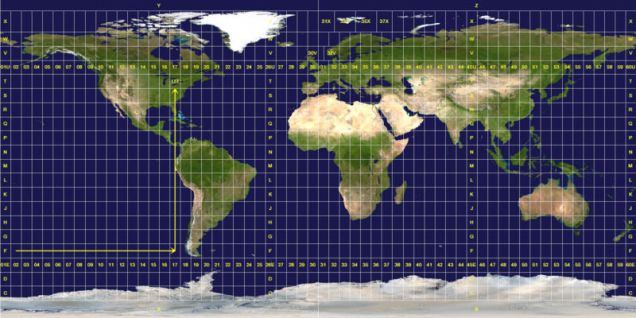
You may use a range of different coordinate systems to express a position as explained here on Wikipedia. Some systems refers to a round globe (and yes, the real world, the earth, is round), but it is a lot easier to use a system like the one called UTM where you easily may calculate the distance between two points directly in meters assuming the real world is as flat as your computer screen.


Bookmark and Share

Relational Data Quality

Most of the work related to data quality improvement I do is done with data in relational databases and is aimed at creating new relations between data. Examples (from party master data) are:

  • Make a relation between a postal address in a customer table and a real world address (represented in an official address dictionary).
  • Make a relation between a business entity in a vendor table and a real world business (represented in a business directory most often derived from an official business register).
  • Make a relation between a consumer in one prospect table and a consumer in another prospect table because they are considered to represent the same real world person.

When striving for multi-purpose data quality it is often necessary to reflect further relations from the real world like:

  • Make a relation in a database reflecting that two (or more) persons belongs to the same household (on the same real world address)
  • Make a relation in the database reflecting that two (or more) companies have the same (ultimate) mother.

Having these relations done right is fundamental for any further data quality improvement endeavors and all the exciting business intelligence stuff. In doing that you may continue to have more or less fruitful discussions on say the classic question: What is a customer?

But in my eyes, in relation to data quality, it doesn’t matter if that discussion ends with that a given row in your database is a customer, an old customer, a prospect or something else. Building the relations may even help you realize what that someone really is. Could be a sporadic lead is recognized as belonging to the same household as a good customer. Could be a vendor is recognized as being a daughter company of a hot prospect. Could be someone is recognized as being fake. And you may even have some business intelligence that based on the relations may report a given row as a customer role in one context and another role in another context.

Having the right element to the left

Name, address and place are core attributes in almost any database. You may atomize these attributes into smaller slices, but in doing that: Mind the sequence.

When working with data matching and party master data management some of the frequent exposed issues are:

Person name

Often a person name is split into first name and last name, but even when assigning these labels you are on slippery ground. Examples:

  • In some cultures like in east Asia the family name is written first and the given name is written last.
  • Some notations indicate that the given name isn’t the first element:
    • “DUPONT Michel” is a custom French way of telling, that the family name is the first element
    • “Smith, John” is an universal way of telling, that the family name is the first element

Besides that we have issues with middle names and other three part naming and having salutation, education and job titles mixed up in name fields.

Street address

Most of the world is divided into two “street address” cultures:

  • In the Americas you write the house number in front of street name if you are north of Rio Grande being US and CA, but you write the house number after the street name if you are south of Rio Grande being MeXico, BRazil, ARgentina and almost any other country.
  • In Europe you write the house number in front of street name if you are on the British Isles or in France, but you write the house number after the street name if you are in almost any other country.
  • The rest of the world is also divided in writing street addresses.

Besides that we have other ways of writing addresses like the block style in Japan.

Place

Most countries have a postal code system – even Ireland will have that soon.

Despite the fact that a city name in most cases can be obtained by looking up the postal code we often do store the city name anyway – for those cases that we can’t.

And if the postal code and the city name is in one string: Oh yes, in some cultures you write the city name in front of the postal code and in other cultures you do it the opposite way. And oh no: It doesn’t necessary follow the sequence of the house number and street name.

In a blog post written a while ago we also had a look into postal address hierarchy, granularity, precision and history.

Bookmark and Share

Create Table Homo_Sapiens

Create Table is a basic statement in the SQL language which is the most widespread computer language used when structuring data in databases.

The most common entity in databases around must be rows representing real world human beings (Homo Sapiens) and the different groups we form. Tables for that could have the name Homo_Sapiens but is usually called Customer, Member, Citizen, Patient, Contact and so on.

The most common data quality issues around is related to accuracy, validity, timeliness, completeness and not at least uniqueness with the data we hold about people.

In databases tables are supposed to have a unique primary key. There are two basic types of primary keys:

  • Surrogate keys are typically numbers with no relation (and binding) to the real world. They are made invisible to the users of the applications operating on the database.
  • Natural keys are derived from existing codes or other data identifying an entity in the real world or made for that purpose. They are visible to users and part of electronic, written and verbal communication.

As surrogate keys obviously don’t help with real world uniqueness and there are no common global natural key for all human beings on the earth we have a challenge in creating a good primary key for a Homo Sapiens table.

Inside a given country we have different forms of citizen ID’s (national identification number) with very varying terms of use between the countries. But even in Scandinavia where I live and we have widespread use of unique citizen ID’s most tables that could have the name Homo_Sapiens cannot use a Citizen ID as (unique) primary key for several reasons as well as that data is not present in a lot of situations.

Most often we name the tables holding data about human beings by the role people will act in within the purpose of use for the data we collect. For example Customer Table. A customer may be an individual but also a household or a business entity. A human being may be a private consumer but also an employee at a business making a purchase or a business owner making both private purchases and business purchases.

Every business activity always comes down to interacting with individual persons. But as our data is collected for the different roles that individual may have acted in, we have a need for viewing these data related to single human beings. The methods for facilitating this have different flavours as:

  • Deduplication is the classic term used for describing processes where records are linked, merged or purged in order to make a golden copy having only one (parent) database row for each individual person (and other legal entities). This is usually done by matching data elements in internal tables with names and addresses within a given organisation.
  • Identity Resolution is about the same but  – if a distinction is considered to exist – uses a wider range of data, rules and functionality to relate collected data rows to real world entities. In my eyes exploiting external reference data will add considerable efficiency in the years to come within deduplication / identity resolution.
  • Master Data Hierarchy Management again have the same goal of establishing a golden copy of collected data by emphasising on reflecting the complex structure of relationships in the real world as well as the related history.

Next time I am involved in a data modelling exercise I will propose a Homo_Sapiens table. Wonder about the odds for buy in from other business and technical delegates.

Bookmark and Share

Diversity in City Names

The metro area I live in is called Copenhagen – in English. The local Danish name is København. When I go across the bridge to Sweden the road signs points back at the Swedish variant of the name being Köpenhamn. When the new bridge from Germany to east Denmark is finished the road signs on the German side will point at Kopenhagen. A flight from Paris has the destination Copenhague. From Rome it is Copenaghen. The Latin name is Hafnia.

These language variants of city (and other) names is a challenge in data matching.

If a human is doing the matching the match may be done because that person knows about the language variations. This is a strength in human processing. But it is also a weakness in human processing if another person don’t know about the variations and thereby the matching will be inconsistent by not repeating the same results.

Computerized match processing may handle the challenge in different ways, including:

  • The data model may reflect the real world by having places described by multiple names in given languages.
  • Some data matching solutions use synonym listing for this challenge.
  • Probabilistic learning is another way. The computer finds a similarity between two sets of data describing an entity but with a varying place name. A human may confirm the connection and the varying place names then will be included in the next automated match.

As globalization moves forward data matching solutions has to deal with diversity in data. A solution may have made wonders yesterday with domestic data but will be useless tomorrow with international data.

Bookmark and Share

Postal Address Hierarchy, Granularity, Precision and History

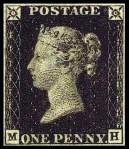
Penny_blackIn my last blog post the term “single version of the truth” was discussed. Some prerequisites for having raw data stored in one version that meets all known purposes are that:

  • They are kept with the granularity needed for all purposes
  • They have the most advanced precisions with all purposes
  • They reflect all time states asked for regarding all purposes

In the following I will go through some challenges with postal addresses. Don’t take this as an attempt to list all challenges in the world around this subject – it is only what I have been up to.

Countries

The country is the highest level in the address hierarchy. A source of truth may be a list of ISO 2 character country codes. But there are other lists and between these lists there a different perceptions of the fact that even countries are internally in hierarchies. Some examples related to the Olympic contest as my last blog post was part of are:

  • York (the old one) is placed in England – or is it Great Britain – or is it United Kingdom?
  • Referring to United States of America may or may not include Puerto Rico, US Virgin Islands, Guam, Samoa and Northern Mariana Islands.
  • The Kingdom of Denmark is not Denmark but Denmark, Faroe Islands and Greenland.

An example of a very slow changing dimension in here is that US Virgin Islands was part of the Kingdom of Denmark until 1917.

I had a great deal of fun with country codes and names when setting up a data matching solution around the D&B WorldBase and the world picture kept in there opposite to what is contained in other data samples.

States

Some countries have states, some countries have provinces and some other countries don’t have states or provinces. In some countries the state is a mandatory part of a postal address like in the US. In other countries having states the state is not a part of a printed address like in Germany, but you may have other purposes for storing the data anyway.

Postal codes and districts

Often local postal code systems are translated to the term ZIP-code – but ZIP code is actually the name of the US system.

The granularity of postal code systems differs a lot around the world. The UK postal codes are very specific while a postal code in other countries may refer to a large city. In most countries the postal code system is a hierarchy of numbers. The UK system is different. The Irish is very different – no postal codes until now.

In many countries companies are assigned a postal code of their own. The same goes for post office box addresses. In France the name of the referring district is followed by the word CEDEX for these addresses. So, be careful when matching or grouping city names in French addresses. Paris not Cedex is the centre of the universe in that country.

Locations, streets, blocks, house names, whatever

A lot of different hierarchies in various levels exist around the world – and the custom sequence also varies. This is a too complex and comprehensive subject for a blog post. So I will only emphasis a few selected subjects:

  • Vanity addressing is a phenonemen not at least in the UK where keeping up appearances rules. Here you may have to include a lie in the single version of truth.
  • Coding rules in my home country Denmark as we have a way of assigning a unique code to every real world entity. It helps with automated taxation. So a main road in central Copenhagen may be known to people as “H.C. Andersens Boulevard” but is stored in any mature database as “1010148”.
  • When matching party entities don’t make a false negative with an entity having a visit (geographical) address versus an entity having a mail address.

Entrances

Entrance – most often referred to as house number – is where addressing meets geocoding. Here you by using geocodes can point to an exact value identifying an address. When comparing with other addresses you just have to make sure whether you are talking latitude/longitude in a round world or WGS84 x-y coordinates or other geographic coordinate systems in a flat world and whether we are pointing at the centre of the building, at the door, at the spot where a public road is reachable or it is interpolated values.

Units

Larger buildings, high rising buildings and skyscrapers are usually not one address but is an entrance having multiple family apartments and/or multiple business addresses. These may be presented in many formats and in many depths including floors, sides, door numbers, you name it.

Large business entities may occupy a range of entrances.

Some entrances may in first impression look like a single address occupied by a nuclear family, but are in fact a nursing home or a campus occupied by a number of named individuals living on the same address.

Data models

The postal (geographical and mailing) address elements are in many data models just some of the attributes in a party entity. By separating the postal address elements in a specific entity with granulated attributes you will be more aligned with the real world and thereby have a better chance of fulfilling all purposes with the raw data. One of the most obvious advantages will be history tracking as business’ and consumers/citizens relocates from time to time.

Bookmark and Share

Process of consolidating Master Data

stormp1

In my previous blog post “Multi-Purpose Data Quality” we examined a business challenge where we have multiple purposes with party master data.

The comments suggested some form of consolidation should be done with the data.

How do we do that?

I have made a PowerPoint show “Example process of consolidating master data” with a suggested way of doing that.

The process uses the party master data types explained here.

The next questions in solving our business challenge will include:

  • Is it necessary to have master data in optimal shape real time – or is it OK to make periodic consolidation?
  • How do we design processes for maintaining the master data when:
    • New members and customers are inserted?
    • We update existing members and customers?
    • External reference data changes?   
  • What changes must be made with the existing applications handling the member database and the eShop?

Also the question of what style of Master Data Hub is suitable is indeed very common in these kinds of implementations.

Bookmark and Share

So, how about SOHO homes

This post is the 3rd in a series of challenges in Data Matching with Party Master Data hierarchies.

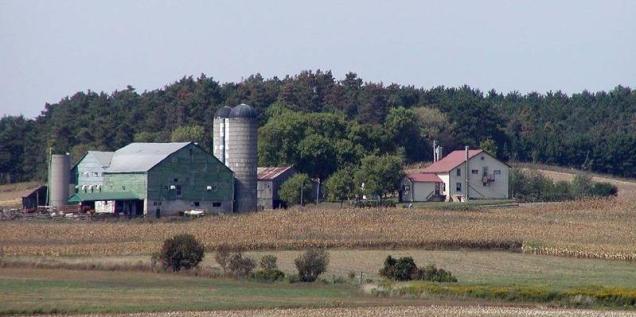
80 % of all business entities are one-man-bands operated from so called SOHO’s (Small-Office-Home-Office). The home part is very often seen as a business is sharing a private residence address with a household.

farm

Examples are:

  • Farmers
  • Healthcare professionals
  • Small shops
  • Small membership organisation administrations
  • Fawlty Towers
  • Independent Data Quality consultants

Here we have a 3 layer relationship:

  • An ADDRESS occupied by a HOUSEHOLD and a BUSINESS (if not several)
  • The HOUSEHOLD consists of one or several CONSUMERS
  • The BUSINESS(s) has an EMPLOYEE being the Business Owner / Representative

One of the CONSUMERs and the EMPLOYEE is the same real world individual.

(About party master data entity types please have a look here.)

This very, very common construction creates some challenges in Data Matching and Master Data hierarchy building such as:

  • If you focus on B2B (Business-to-Business) you want to include the Business and Owner in that role, but not the same individual in the consumer role.
  • If you focus on B2C (Business-to-Consumer) you want to include the consumer role of that individual, but not the business (owner) role.
  • If you do both B2B and B2C you may want to assign either a B2B or a B2C category, and that’s tricky with those individuals
  • In several industries business owners, the business and the household is a special target group with unique product requirements. This is true for industries as banking, insurance, telco, real estate, law.

In my previous post on B2B (E2E) and B2C hierarchies methods for solving this is fuzzy matching, exploiting external reference data and other investigations – and so it is with this challenge as well. This makes Data Matching and Master Data hierarchy building a very exciting profession were you need both business and technology skills – and a real world perspective – to go all the way.

Bookmark and Share

Household Householding

When doing B2C (business-to-consumer) activities often you really want to do B2H (business-to-household). But sometimes you also actually want B2C, having a dialogue with the individual customer. So yet again we have a Party Master Data hierarchy, here households each consisting of one or several consumers (typically a nuclear family). In Data Model language there is a parent-child relationship between households and consumers.

The classic reason for wanting to identify households is that it’s a waste of money sending several printed catalogues and other offline mailings to the same household. But a lot of other good reasons based on a shared household budget exist too.

Data captured about consumers could look like this (name, address, city):

  • Margaret Smith, 1 Main Street, Anytown
  • Margaret & John Smith, 1 Main Str, Anytown
  • John Smith, 1 Main Street, Anytown
  • Peggy Smith, 1 Main Street, Anytown
  • Mr. J. Smith, 1 Main Street, Anytown

Here it seems fair to assume that we have:

  • A HOUSEHOLD being the Smith family consisting of
  • A CONSUMER being Margaret nicknamed Peggy
  • And a CONSUMER being John

(About party master data entity types please have a look here.)

But this is an easy example compared to what you see when working with names and addresses. Among complications I have seen are:

  • Households consisting of individuals with separate family names
  • Multi adult generation households and other kinds of households
  • Not having unique addresses may cause forming not existing households
  • Some addresses are not for traditional households, but are nursing homes, campus residence halls and the like
  • The time dimension: un-synchronous relocation capture, marriage (couples), divorce (split)

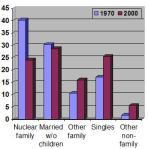
Families_USIn other words: The real world is not that simple and the picture of how households are forming does change.

Available composable methods for maintaining household information are:

  • Ask your customers. An obvious choice but not easy to keep on going – your ROI may not be positive.
  • Fuzzy Data Matching. The higher percent of all citizens in a given region you have in your database the better your matching may be aligned with the real world.
  • Exploiting external reference data. Having knowledge about public address data helps a lot. Such data may tell you about uniqueness of addresses and the attributes of the buildings there. Availability differs around the world, but the trend in open government data may help.

This is the second post in a series around hierarchies in Party Master Data and how this must be handled in data matching. Previous post was about B2B (E2E) data. Next post planned is about SOHO’s.

Bookmark and Share