To the Cloud and Beyond

Over at the Informatica blog Joe McKendrick recently wrote about When It’s Time to Give Data Warehouse a Digital Makeover.

In here Joe examines how data warehouses can be modernized to augment architectures supporting data lakes and Mater Data Management and the case for moving data warehouses to the cloud.

In my view, a lot of data management disciplines will eventually move to the cloud as one follows the other. By adding “beyond” I suggest, that cloud solutions will not only be something that is supported company by company. Eventually you will be able to get business outcome by sharing data management burdens within your business ecosystem.

My current venture called Product Data Lake is an example of such a solution. It modernizes the data warehouse thinking within product information sharing by using a data lake concept in the cloud ready-to-use by trading partners within business ecosystems:

  • If you are a provider of product information, typically as a manufacturer of goods, you can harvest your business outcome by using us for Product Data Push
  • If you are a receiver of product information, you can harvest your business outcome by using us for Product Data Pull

pdl-top

MDM, Reltio, Gartner and Business Outcome

A recent well commented blog post by Andrew White of Gartner, the analyst firm, debates What’s Happening in Master Data Management (MDM) Land?

The post is an answer to a much liked and commented LinkedIn status post by Ramon Chen, Chief Product Officer of Reltio.

In his post Andrew connects the classic dots: How does technology lead to business outcome? Especially the use of cloud solutions and the multi-tenant aspect is in the focus. Andrew asks: What do you see “out there”?

My view is that multi-tenant is not just about offering the same subscription based cloud solutions to a range of clients. It is about making clients sharing the same business ecosystem work in the same MDM realm. This is the platform described in Master Data Share.

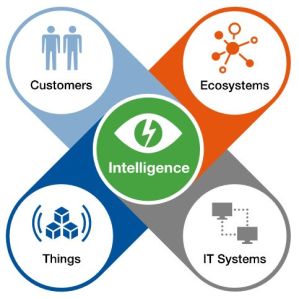
Gartner Digital Platforms 2
Source: Gartner

Oh, and what does that have to do with business outcome? A lot. Organizations will not win the future the race by optimizing there inhouse MDM capabilities alone. With the rise of digitalization, they need to connect with and understand their customers, which I believe is something Reltio is good at. Furthermore, organisations need to be much better at working with their business partners in a modern way, including at the master data level. The business outcome of this is:

  • Having complete, accurate and timely data assets needed for understanding and connecting with customers. You will sell more.
  • Having a fast and seamless flow of data assets, not at least product information, to and from your trading partners. You will reduce costs.
  • Having a holistic view of internal and external data needed for decision making. You will mitigate risks.

Merchants vs Manufacturers in the Information Age

Merchants sells the goods produced by manufacturers. In that game merchants and manufacturers are basically allies. Then of course the merchant’s profit may depend on the margin he can get between the manufacturers price to him and the merchant’s price to his customer. In that game, merchants and manufacturers are kind of enemies.

When it comes to providing product information to the end customers, merchants and manufacturers are allies too. The more complete product information placed in front of the end customer, the better. This is increasingly important today with more and more goods sold in self-service scenarios as in ecommerce.

standoffBut again, there seems to be an enemy angle here too. Who should have the burden of lifting product information as the manufacturers have it to the way it is presented at the point-of-sales provided by the merchant? Often this seems to be stalled in a standoff as described in the post Passive vs Active Product Information Exchange.

At Product Data Lake we offer merchants and manufacturers an honorable way out of this standoff:

MDM Will Go Cloud

How cloud is changing MDM (Master Data Management) is a subject examined in a very read worthy article by Julie Hunt published recently. The article is called How Does Technology Enable Effective MDM?

In here Julie says: “Adoption of cloud-based MDM or MDM-as-a-Service is on the rise, opening up new dimensions for how organizations take advantage of MDM and data governance.”

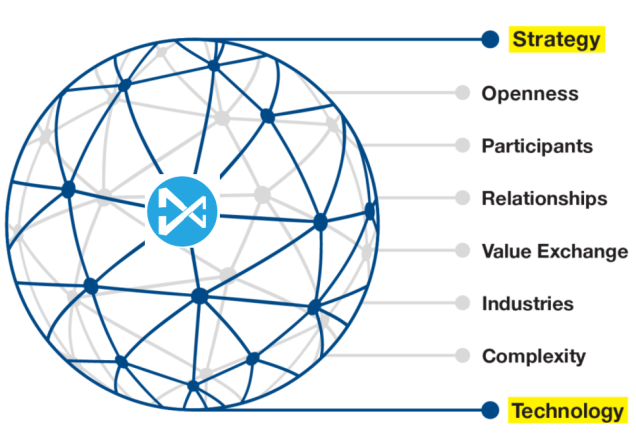
Julie’s article is part 3 of a six part series on the “New Age of Master Data Management”, so I may touch on a dimension that is covered in the upcoming articles. This dimension is how business ecosystems must be a part of your organizations MDM roadmap, and that dimension is, according to Gartner, the analyst firm, covering 8 underlying dimensions as told in the post From Business Ecosystem Strategy to PIM Technology.

Working with MDM in a business ecosystem context does require MDM in the cloud of some sort. Inhouse Mater Data Management and Product Information Management (PIM), which may be on premise or in the cloud or perhaps a hybrid, is only the beginning. Collaboration with business partners in a sophisticated environment will be controlled by a cloud solution.

More on this concept is explained in this piece about Master Data Share.

greatbeltbridge.jpg

From Business Ecosystem Strategy to PIM Technology

Recently Gartner, the analyst firm, published a paper with the title 8 Dimensions of Business Ecosystems.

Right now, I am working with the Product Data Lake service, that is aimed at supporting business ecosystems when it comes to sharing product information. Our take at business ecosystems seems to fit quite nicely into the 8-dimension model.

Business Ecosystem
Source: Gartner

Participants in supply chains must adapt a business ecosystem strategy when it comes to handling product information. An inhouse Product Information Management (PIM) system is only the beginning. This system must be an active part of a digital ecosystem as explained in the post Passive vs Active Product Information Exchange.

This digital ecosystem must be able to support different degrees of openness as public, private or hybrid and embrace engagement of diverse participants having various types of relationships. How this is achieved for product information sharing was touched in the post Product Data Management is Like an Ironman.

The value exchanged with product information was examined in the post Infonomics and Second Party Data. We do that by acknowledging the diversity of industries and complexity of multiple ecosystems as exemplified in the post Five Product Classification Standards.

As stated in the Gartner article: “Success will require a strategic integration of technology, information and business processes.”

Learn how this is achieved when it comes to Product Information Management (PIM) at Product Data Lake Documentation and Data Governance.

Supplier 360 + Product 360 = The Buy Side Oval

Having a 360 degree of something is a recurring subject within Master Data Management (MDM). “Customer 360” is probably the most used term. “Product 360” is promoted from time to time too and occasionally we also stumble upon “Supplier 360” (or “Vendor 360”).

Product 360 was recently examined by Simon Walker of Gartner, the analyst firm, in the post Creating the 360-Degree view of Product.

Supplier 360, as in having a single golden supplier/vendor record to connect all databases, was touched by Grant Watling of HICX Solutions a while ago in the post All Aboard! Six steps to supplier onboarding.

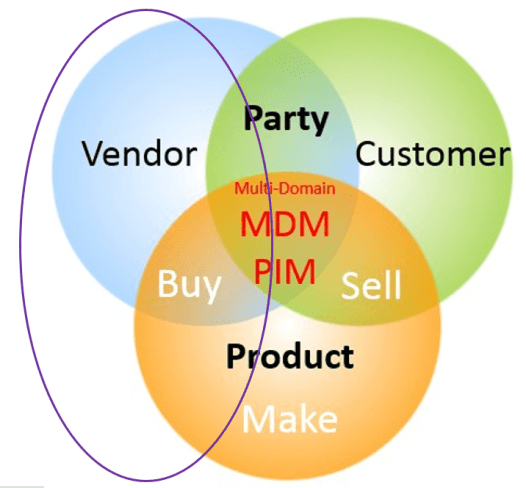
The Buy Side Oval is a combination of Product 360 and Supplier 360

Buy Side MDM 

Within (Multi-Domain) Master Data Management (MDM) and Product Information Management (PIM) we must be able to provide solutions that enables the buy side to effectively and consistently handle the core entities involved.

The solution to that is not having a supplier product data portal as discussed in the post PIM Supplier Portals: Are They Good or Bad? A key part lies outside your in-house platform in the business ecosystem where you and your suppliers all are participants and can be achieved as told in the post Master Data, Product Information, Digital Assets and Digital Ecosystems.

Master Data, Product Information, Digital Assets and Digital Ecosystems

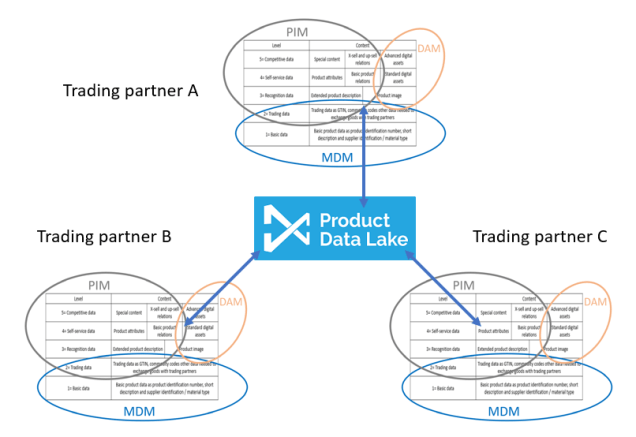
When it comes to mastering product data there are these three kinds of data and supporting managing disciplines and solutions:

  • Master data and the supporting Master Data Management (MDM) discipline and a choice of MDM solutions for the technology part
  • Product information and the supporting Product Information Management (PIM) discipline and a choice of PIM solutions for the technology part
  • Digital assets and the supporting Digital Asset Management (DAM) discipline and a choice of DAM solutions for the technology part

What these disciplines are and how the available solutions relate was examined in the post How MDM, PIM and DAM Sticks Together. This post includes a model for that proposed by Simon Walker of Gartner (the analyst firm).

The right mix for your company depends on your business model and you will also have the choice of using a best of breed technology solution for your focus, that being MDM, PIM or DAM, as well as there are choices for a same branded solution, and in some cases also actually integrated solution, that supports MDM, PIM and DAM.

When selecting a (product) data management platform today you also must consider how this platform supports taking part in digital ecosystems, here meaning how you share product data with your trading partners in business ecosystems.

For the digital platform part supporting interacting with master data, product information and digital assets with your trading partners, who might have another focus than you, the solution is Product Data Lake.

MDM PIM DAM PDL

GDPR Data Portability and Master Data Sharing

PortabilityOne of the controversial principles in the upcoming EU GDPR enforcement is the concept of data portability as required in article 20.

In legal lingo data portability means: “Where the data subject has provided the personal data and the processing is based on consent or on a contract, the data subject shall have the right to transmit those personal data and any other information provided by the data subject and retained by an automated processing system, into another one, in an electronic format which is commonly used, without hindrance from the controller from whom the personal data are withdrawn.”

In other words, if you are processing personal data provided by a (prospective) customer or other kind of end user of your products and services, you must be able to hand these data over to your competitor.

I am sure, this is a new way of handling party master data to almost every business. However, sharing master data with your competitor is not new when it comes to product master data as examined in the post Toilet Seats and Data Quality.

Sharing party master data with your competitor will be yet a Sunny Side of GDPR.

MDM / PIM Platform Vendors Need to Grow Up Too

Participating in digital ecosystems is the way forward for enterprises who wants to be tomorrow’s winners through digital transformation.

Some figures from Gartner, the analyst firm, tells this about digital transformation:

  • 79% of top performing companies indicate that they participate in a digital ecosystem
  • 49% of typical companies indicate the same
  • 24% of trailing companies does it

These figures were lately examined by Bryan Kirschner of Apigee (now part of Google) in a Cio.com article called Ecosystems: when digital transformation grows up.

Master Data Share
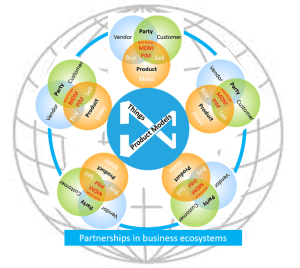
Master Data Share for Business Ecosystems

As a Master Data Management (MDM) and/or Product Information Management (PIM) platform vendor you should support your current and prospective clients with means to participate in digital ecosystems.

Current offerings from MDM and PIM platforms vendors have become quite mature in supporting inhouse (enterprise wide) handling of master data and product information. Next step is supporting sharing within business ecosystems. A concept for that is introduced in Master Data Share.

Obstacles to Product Information Sharing

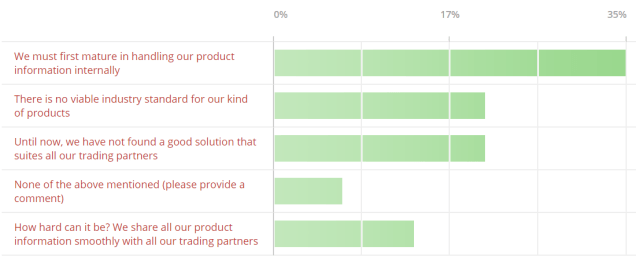
In a recent poll on this blog we had this question about how to share product information with trading partners:

As a manufacturer: What is Your Toughest Product Information Sharing Issue?

The result turned out as seen below:

Survey final

Product information flow in supply chains will typically start with that manufacturers shares the detailed hard facts about products to the benefit of downstream partners as examined in the post Using Internal and External Product Information to Win.

This survey points to that the main reason why this does that take place is that manufacturers need to mature in handling and consolidating product information internally, before they are confident in sharing the detailed data elements (in an automated way) with their downstream partners. This subject was elaborated in the post Product Information Sharing Issue No 1: We Need to Mature Internally.

Another obstacle is the lack of a common standard for product information in the business ecosystem where the manufacturer is a part as further examined in the post Product Information Sharing Issue No 2: No Viable Standard.

Issue no 3 is the apparent absence of a good solution for sharing product information with trading partners that suites the whole business ecosystem. I guess it is needless to say to regular readers of this blog that, besides being able to support issue no 1 and issue no 2, that solution is Product Data Lake.