360° Share of Wallet View

I have found this definition of Share of Wallet on Wikipedia:

Share of Wallet is the percentage (“share”) of a customer’s expenses (“of wallet”) for a product that goes to the firm selling the product. Different firms fight over the share they have of a customer’s wallet, all trying to get as much as possible. Typically, these different firms don’t sell the same but rather ancillary or complementary product.

Measuring your share of given wallets – and your performance in increasing it – is a multi-domain master data management exercise as you have to master both a 360° view of customers and a 360° view of products.

With customer master data you are forced to handle uniqueness (consolidate duplicates) of customers and handle hierarchies of customers, which is further explained in the post 360° Business Partner View.

With product master data you are not only forced to categorize your own products and handle hierarchies  within, but you also need to adapt to external categorizations in order to getting access to external data available for spending probably on a high level for a segment of customers but sometimes even possible down to the single customer.

Location master data may be important here for geographical segmentations and identification.

My educated guess is that companies will increasing rely on having better data quality and master data management processes and infrastructure in order to measure precise shares of wallets and thereby gain advantages in a stiff competition rather than relying on gut feelings and best guesses.

Bookmark and Share

Linked Data Quality

The concept of linked data within the semantic web is in my eyes a huge opportunity for getting data and information quality improvement done.

The premises for that is described on the page Data Quality 3.0.

Until now data quality has been largely defined as: Fit for purpose of use.

The problem however is that most data – not at least master data – have multiple uses.

My thesis is that there is a breakeven point when including more and more purposes where it will be less cumbersome to reflect the real world object rather than trying to align fitness for all known purposes.

If we look at the different types of master data and what possibilities that may arise from linked data, this is what initially comes to my mind:

Location master data

Location data has been some of the data types that have been used the most already on the web. Linking a hotel, a company, a house for sale and so on to a map is an immediate visual feature appealing to most people. Many databases around however have poor location data as for example inadequate postal addresses. The demand for making these data “mappable” will increase to near unavoidable, but fortunately the services for doing so with linked data will help.

Hopefully increased open government data will help solve the data supply issue here.

Party master data

Linking party master data to external data sources is not new at all, but unfortunately not as widespread as it could be. The main obstacle until now has been smooth integration into business processes.

Having linked data describing real world entities on the web will make this game a whole lot easier.

Actually I’m working on implementations in this field right now.

Product master data

Traditionally the external data sources available for describing product master data has been few – and hard to find. But surely, at lot of data is already out there waiting to be found, categorized, matched and linked.

Bookmark and Share

Same Same But Different

The two most common master data types are:

  • Party master data (customers, prospects, suppliers and other business partners)
  • Product master data

When working with data quality within master data management you may of course encounter some similarities between these two master data types, but you will certainly also meet a range differences.  

The basic activities as standardization, consolidation and hierarchy building are the same.

Some of the differences I have learned are:

Multi-cultural issues:

  • Party master data is often stored in a single global format but should be transformed to embrace multi-cultural diversities.
  • Product master data may have multi-cultural issues but should be transformed into a single global format (of course embracing multi-language hierarchies and so).

External reference data available:

  • For party master data the possibilities for real world alignment with external data sources are plenty.
  • For product master data the possibilities for real world alignment with external data sources are few.

Industry specific requirements:

  • Requirements for party master data quality are pretty much the same across industries with few variations as B2B (corporate customers) or B2C (private customers) or both being the most prominent.
  • Requirements for product master data quality vary tremendously across different industries.

Your say:

What are your examples of (similarities and) differences between party master data quality and product master data quality?

Bookmark and Share

Real World Alignment

I am currently involved in a data management program dealing with multi-entity (multi-domain) master data management described here.

Besides covering several different data domains as business partners, products, locations and timetables the data also serves multiple purposes of use. The client is within public transit so the subject areas are called terms as production planning (scheduling), operation monitoring, fare collection and use of service.

A key principle is that the same data should only be stored once, but in a way that makes it serve as high quality information in the different contexts. Doing that is often balancing between the two ways data may be of high quality:

  • Either they are fit for their intended uses
  • Or they correctly represent the real-world construct to which they refer

Some of the balancing has been:

Customer Identification

For some intended uses you don’t have to know the precise identity of a passenger. For some other intended uses you must know the identity. The latter cases at my client include giving discounts based on age and transport need like when attending educational activity. Also when fighting fraud it helps knowing the identity. So the data governance policy (and a business rule) is that customers for most products must provide a national identification number.

Like it or not: Having the ID makes a lot of things easier. Uniqueness isn’t a big challenge like in many other master data programs. It is also a straight forward process when you like to enrich your data. An example here is accurately geocoding where your customer live, which is rather essential when you provide transportation services.

What geocode?

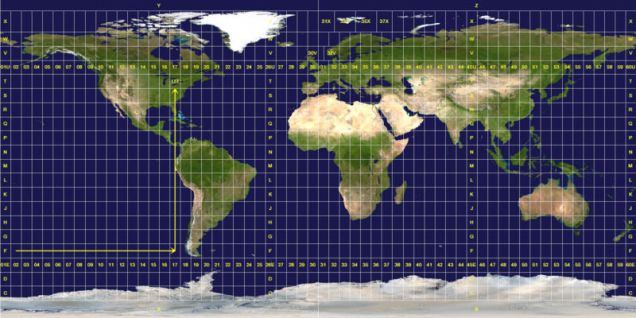
You may use a range of different coordinate systems to express a position as explained here on Wikipedia. Some systems refers to a round globe (and yes, the real world, the earth, is round), but it is a lot easier to use a system like the one called UTM where you easily may calculate the distance between two points directly in meters assuming the real world is as flat as your computer screen.


Bookmark and Share

Multi-Entity Master Data Quality

Master Data is the core entities that describe the ongoing activities in an organization being:

  • Business partners (who)
  • Products (what)
  • Locations (where)
  • Timetables (when)

Many Master Data Management and Data Quality initiatives is in first place only focused on a single entity type, but sooner or later you are faced with dealing with all entity types and the data quality issues that arises from combining data from each entity type.

In my experience business partner data quality issues are in many ways similar cross all different industry verticals while product master data challenges may be different in many ways when comparing companies in various industry verticals. The importance of location data quality is very different, so are the questions about timetable data quality.

A journey in a multi-entity master data world

My latest experience in multi-entity master data quality comes from public transportation.

The most frequent business partner role here is of course the passengers. By the way (so to speak): A passenger may be a direct customer but the payer may also be someone else. But it doesn’t really change anything with the need for data quality whether the passenger is defined as a customer or not, you will regardless of that have to solve problems with uniqueness and real world alignment.

The product sold to a passenger is in the first place a travel document like a single ticket or an electronic card holding a season pass. But the service worth something for the passenger is a ride from point A to point B, which in many cases is delivered as a trip consisting of a series of rides from point A via point C (and D…) to point B. Having consistent hierarchies in reference data is a must when making data fit for multiple purposes of use in disciplines as fare collection, scheduling and so on.

Locations are mainly stop points including those at the start and end of the rides. These are identified both by a name and by geocoding – either as latitude and longitude on a round globe or by coordinates in a flat representation suitable for a map (on a screen). The distance between stops is important for grouping stops in areas suitable for interchange, e.g. bus stops on each side of a road or bus stops and platforms at a rail station. Working with the precision dimension of data quality is a key to accuracy here.

Timetables changes over time. It is essential to keep track of timetable validity in offline flyers, websites with passenger information, back office systems and on-board bus computers. Timeliness is as ever vital here.

Matching transactions made by drivers and passengers in numerous on-board computers, by employees in back office systems and coming from external sources with the various master data entities that describes the transaction correctly is paramount in an effective daily operation and the foundation for exploiting the data in order to make the right decisions for future services.

Bookmark and Share

Matchback and Master Data Management

The term matchback is used by marketers for the process of determining which marketing activity that triggered a given purchase. In these times where multichannel marketing and sale is embraced by more and more companies, doing matchback is becoming more and more complicated.

The core functionality in matchback is the good old data matching, like: Does the name and address in a catalogue sending match (with a certain similarity) the name and address of a new buyer? But you also have to ask questions as: Is this buyer in fact a new buyer or did he buy before – in this channel or in another channel? Was this buyer also included in a concurrent email campaign? If private: Is the new buyer in the same household as an old buyer? If business: Does the new buyer belong to the same company family tree as the old buyer? Was the contact actually a contact at an old business customer?

Answering these questions will be a totally mess if you don’t have a solid party master data management program in place. You need to:

  • Store (or at least reference) all party entities from all channels in one single so called golden copy
  • Identify the same real world entities
  • Build the hierarchies necessary for current and possible future uses of data

Doing matchback is only one of many activities setting the requirements for party master data management program within an enterprise. And by the way: When that is up and running next thing you need is to manage your product master data the same way in order to make further analysis’s – and probably you also need to have a better structure and data quality with your location master data.

I keep my notes about Master Data Management here.

Bookmark and Share

Master Data meets the Customer

In the old days Master Data was predominately created, maintained and used by the staff in the organisation having these data. This is in many cases not the fact anymore. Besides exchanging data with partners in doing business, today the customer – and prospect – has become an important person to be considered when doing Data Governance and implementing technology around Master Data.

In the online world the customer works with your Master Data when:

  • The customer creates and maintains name, address and communication information by using registration functions
  • The customer searches for and reads product information on web shops and information sites

Having the prospects and customers helping with the name and address (party) data is apparently great news for lowering costs in the organisation. But in the long run you got yourself another silo with data and your Data Quality issues has become yet more challenging.

First thing to do is to optimise your registration forms. An important thing to consider here is that online is worldwide (unless you restrict your site to visitors from a single country). When doing business online with multi national customers then take care that the sequence, formats and labels are useful to everyone and that mandatory checks and other validations are in line with rules for the country in question.

External reference data may be used for lookup and validation integrated in the registration forms.

The concept of “one version of the truth” is a core element in most Master Data Management solutions. Doing deduplication within online registration have privacy considerations. When asking for personal data you can’t prompt “Possible duplicate found” and then present the data about someone else. Here you need more than one data quality firewall.

Many organisations are not just either offline or online but are operating in both worlds. To maintain the 360 degree view on customer in this situation you need strong data matching techniques capable of working with offline and online captured data. As the business case for online registration is very much about reducing staff involvement, this is about using technology and keeping human interaction to a minimum.

Search and navigationWhen a prospect comes to your site and tries to find information about your products, the first thing to do is very often using the search function. From deduplication of names and addresses we know that spelling is difficult and that sometimes we use other synonyms than used in the Master Data descriptions. Add to that the multi-cultural aspect. The solution here is that you use the same fuzzy search techniques that we use for data matching. This is a kind of reuse. I like that.

Bookmark and Share