Happy Uniqueness

When making the baseline for customer data in a new master data management hub you often involve heavy data matching in order to de-duplicate the current stock of customer master data, so you so to speak start with a cleansed duplicate free set of data.

I have been involved in such a process many times, and the result has never been free of duplicates. For two reasons:

  • Even with the best data matching tool and the best external reference data available you obviously can’t settle all real world alignments with the confidence needed and manual verification is costly and slowly.
  • In order to make data fit for the business purposes duplicates are required for a lot of good reasons.

Being able to store the full story from the result of the data matching efforts is what makes me, and the database, most happy.

The notion of a “golden record” is often not in fact a single record but a hierarchical structure that reflects both the real world entity as far as we can get and the instances of this real world entity in a form that are suitable for different business processes.

Some of the tricky constructions that exist in the real world and are usual suspects for multiple instances of the same real world entity are described in the blog posts:

The reasons for having business rules leading to multiple versions of the truth are discussed in the posts:

I’m looking forward to yet a party master data hub migration next week under the above conditions.

Bookmark and Share

Survival of the Fit Enough

When working with data quality and master data management at the same time you are constantly met with the challenge that data quality is most often defined as data being fit for the purpose of use, but master data management is about using the same data for multiple purposes at the same time.

Finding the right solution to such a challenge within an organization isn’t easy, because it despite all good intentions is difficult to find someone in the business with an overall answer to that kind of problems as explained in the blog post by David Loshin called Communications Gap? Or is there a Gap between Chasms?

An often used principle for overcoming these issues may (based on Darwin) be seen as “survival of the fittest”. You negotiate some survivorship rules between “competing” data providers and consumers and then the data being the fittest measured by these rules wins. All other data gets the KISS of death. Most such survivorship rules are indeed simple often based on a single dimension as timeliness, completeness or provenance.

Recently the phrase “survival of the fittest” in evolution theory has been suggested to be changed to “survival of the fit enough” because it seems that many times specimens haven’t competed but instead found a way into empty alternate spaces.

It seems that master data management and related data quality is going that way too. Data that is fit enough will survive in the master data hub in alternate spaces where the single source of truth exists in perfect symbioses with multiple realities.

Bookmark and Share

Storing a Single Version of the Truth

An ever recurring subject in the data quality and master data management (MDM) realms is whether we can establish a single version of the truth.

The most prominent example is whether an enterprise can implement and maintain a single version of the truth about business partners being customers, prospects, suppliers and so on.

In the quest for establishing that (fully reachable or not) single version of the truth we use identity resolution techniques as data matching and we are exploiting ever increasing sources of external reference data.

However I am often met with the challenge that despite what is possible in aiming for that (fully reachable or not) single version of the truth, I am often limited by the practical possibilities for storing it.

In storing party master data (and other kind of data) we may consider these three different ways:

Flat files

This “Keep It Simple, Stupid” way of storing data has been on an ongoing retreat – however still common, as well as new inventions of big flat file structures of data are emerging.

Also many external sources of reference data is still flat file like and the overwhelming choice of exchanging reference and master data is doing it by flat files.

Despite lots of work around solutions for storing the complex links of the real world in flat files we basically ends up with using very simplified representations of the real world (and the truth derived) in those flat files.  

Relational databases

Most Customer Relationship Management (CRM) systems are based on a relational data model, however mostly quite basic regarding master data structures making it not straight forward to reflect the most common hierarchical structures of the real world as company family trees, contacts working for several accounts and individuals forming a household.  

Master Data Management hubs are of course built for storing exactly these hierarchical kinds of structures. Common challenges here are that there often is no point in doing that as long as the surrounding applications can’t follow and that you often may restrict your use to a simplified model anyway like an industry model.   

Neural networks

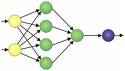
The relations between parties in the real world are in fact not truly hierarchical. That is why we look into the inspiration from the network of biological neurons.

Doing that has been an option I have heard about for many years but still waits to meet as a concrete choice when delivering a single version of the truth.   

Bookmark and Share

Entity Revolution vs Entity Evolution

Entity resolution is the discipline of uniquely identifying your master data records, typically being those holding data about customers, products and locations. Entity resolution is closely related to the concept of a single version of the truth.

Questions to be asked during entity resolution are like these ones:

  • Is a given customer master data record representing a real world person or organization?
  • Is a person acting as a private customer and a small business owner going to be seen as the same?
  • Is a product coming from supplier A going to identified as the same as the same product coming from supplier B?
  • Is the geocode for the center of a parcel the same place as the geocode of where the parcel is bordering a public road?

We may come a long way in automating entity resolution by using advanced data matching and exploiting rich sources of external reference data and we may be able to handle the complex structures of the real world by using sophisticated hierarchy management and hereby make an entity revolution in our databases.

But I am often faced with the fact that most organizations don’t want an entity revolution. There are always plenty of good reasons why different frequent business processes don’t require full entity resolution and will only be complicated by having it (unless drastic reengineered). The tangible immediate negative business impact of an entity revolution trumps the softer positive improvement in business insight from such a revolution.

Therefore we are mostly making entity evolutions balancing the current business requirements with the distant ideal of a single version of the truth.

Bookmark and Share

Bilateral Master Data Management

There is an issue I have come over and over again when creating a master data hub, making a golden copy, establishing a single version of the truth or whatever we like the name to be. The issue is about the scope of data sources.

Basically you take (practically) all the master data sources from within your organization and consolidate these data. Often you match with external sources as business directories and so. But what you often miss is the master data operated by your partners. These are partners like:

  • Your suppliers of products, be that raw materials or finished products for resale
  • Your sales agents and distributors
  • Your service providers as direct marketing agencies and factoring partners

These partners are part of your business processes and they often create and consume master data which are only shared with you in a limited way via some form of interface.

I know that even handling master data from within most organizations is a complex issue. Integrating with external reference data doesn’t add simplicity. But without embracing the master data life at your partners, the hub isn’t complete; the copy is only made of plated gold and the single version of the truth isn’t the only truth.

My guess is that many master data programs in the future will extend to embrace internal (private) data, as well as external (public) data and bilateral data as described on the page about Data Quality 3.0.

Bookmark and Share

Golden Copy Musings

In a recent blog post by Jim Harris called Data Quality is not an Act, it is a Habit the term “golden mean” was mentioned.   

As I commented, mentioning the “golden mean” made me think about the terms “golden copy” and “golden record” which are often used terms in data quality improvement and master data management.

In using these terms I think we mostly are aiming on achieving extreme uniqueness. But we should rather go for symmetry, proportion, and harmony.

The golden copy subject is very timely for me as I this weekend is overseeing the execution of the automated processes that create a baseline for a golden copy of party master data at a franchise operator for a major brand in car rental.

In car rental you are dealing with many different party types. You have companies as customers and prospects and you have individuals being contacts at the companies, employees using the cars rented by the companies and individuals being private renters. A real world person may have several of these roles. Besides that we have cases of mixed identities.

During a series of workshops we have worked with defining the rules for merge and survivorship in the golden copy. Though we may be able to go for extreme uniqueness in identifying real world companies and persons this may not necessary serve the business needs and, like it or not, be capable of being related back into the core systems used in daily business.

Therefore this golden copy is based on a beautiful golden mean exposing symmetry, proportion, and harmony.

Bookmark and Share

Big Trouble with Big Names

An often seen issue in party master data management is handling information about your most active customers, suppliers and other roles of interest. These are often big companies with many faces.

I remember meeting that problem way back in the 80’s when I was designing a solution for the Danish Maritime Authorities.  

In relation to a ship there are three different main roles:

  • The owner of the ship, who has some legal rights and obligations
  • The operator of ship, who has responsibilities regarding the seaworthiness of the ship
  • The employer, who has responsibilities regarding the seamen onboard the ship

Sometimes these roles don’t belong to the same company (or person) for a given ship. That real world reality was modeled all right. But even if it practically is the same company, then the roles are materialized very different for each role. I remember this was certainly the case with the biggest ship-owner in Denmark (and also by far the biggest company in Denmark) being the A.P. Moller – Maersk Group.

We really didn’t make a golden record for that golden company in my time on the project.

Bookmark and Share

Quality Data Integration

As late as yesterday I was involved in yet a data quality issue that wasn’t caused by that the truth wasn’t known, but caused by that that truth wasn’t known in all the different databases within an enterprise and of course exactly not (thanks Murphy) by that application that needed that information due to a new requirement. Yep, the column was there alright, but it wasn’t updated, because until yesterday it didn’t need to be.

The data architecture in most enterprises isn’t perfect at all. Through the information technology history of that enterprise many different systems has been deployed ranging from core operational applications, data warehouses and lately also web frontends.

It’s not that we don’t know about how master data management can help, how service oriented architecture (principles) is a must and how important it is to document the data flows within the enterprise. But gee, even for a modest sized organization this is huge and even if we strived to do it right, when we succeeded, the real world has moved.

Well, back to business. What do we do? I think we will:

  • Make a quick fix that solves the business problem to the delight of the business users
  • Perhaps prioritize up that sustainable technical solution we planned some while ago

Have a nice day everyone. I think it is going to be just fine.

Bookmark and Share

Relational Data Quality

Most of the work related to data quality improvement I do is done with data in relational databases and is aimed at creating new relations between data. Examples (from party master data) are:

  • Make a relation between a postal address in a customer table and a real world address (represented in an official address dictionary).
  • Make a relation between a business entity in a vendor table and a real world business (represented in a business directory most often derived from an official business register).
  • Make a relation between a consumer in one prospect table and a consumer in another prospect table because they are considered to represent the same real world person.

When striving for multi-purpose data quality it is often necessary to reflect further relations from the real world like:

  • Make a relation in a database reflecting that two (or more) persons belongs to the same household (on the same real world address)
  • Make a relation in the database reflecting that two (or more) companies have the same (ultimate) mother.

Having these relations done right is fundamental for any further data quality improvement endeavors and all the exciting business intelligence stuff. In doing that you may continue to have more or less fruitful discussions on say the classic question: What is a customer?

But in my eyes, in relation to data quality, it doesn’t matter if that discussion ends with that a given row in your database is a customer, an old customer, a prospect or something else. Building the relations may even help you realize what that someone really is. Could be a sporadic lead is recognized as belonging to the same household as a good customer. Could be a vendor is recognized as being a daughter company of a hot prospect. Could be someone is recognized as being fake. And you may even have some business intelligence that based on the relations may report a given row as a customer role in one context and another role in another context.

Matchback and Master Data Management

The term matchback is used by marketers for the process of determining which marketing activity that triggered a given purchase. In these times where multichannel marketing and sale is embraced by more and more companies, doing matchback is becoming more and more complicated.

The core functionality in matchback is the good old data matching, like: Does the name and address in a catalogue sending match (with a certain similarity) the name and address of a new buyer? But you also have to ask questions as: Is this buyer in fact a new buyer or did he buy before – in this channel or in another channel? Was this buyer also included in a concurrent email campaign? If private: Is the new buyer in the same household as an old buyer? If business: Does the new buyer belong to the same company family tree as the old buyer? Was the contact actually a contact at an old business customer?

Answering these questions will be a totally mess if you don’t have a solid party master data management program in place. You need to:

  • Store (or at least reference) all party entities from all channels in one single so called golden copy
  • Identify the same real world entities
  • Build the hierarchies necessary for current and possible future uses of data

Doing matchback is only one of many activities setting the requirements for party master data management program within an enterprise. And by the way: When that is up and running next thing you need is to manage your product master data the same way in order to make further analysis’s – and probably you also need to have a better structure and data quality with your location master data.

I keep my notes about Master Data Management here.

Bookmark and Share