This post is the 3rd in a series of challenges in Data Matching with Party Master Data hierarchies.
80 % of all business entities are one-man-bands operated from so called SOHO’s (Small-Office-Home-Office). The home part is very often seen as a business is sharing a private residence address with a household.

Examples are:
- Farmers
- Healthcare professionals
- Small shops
- Small membership organisation administrations
- Fawlty Towers
- Independent Data Quality consultants
Here we have a 3 layer relationship:
- An ADDRESS occupied by a HOUSEHOLD and a BUSINESS (if not several)
- The HOUSEHOLD consists of one or several CONSUMERS
- The BUSINESS(s) has an EMPLOYEE being the Business Owner / Representative
One of the CONSUMERs and the EMPLOYEE is the same real world individual.
(About party master data entity types please have a look here.)
This very, very common construction creates some challenges in Data Matching and Master Data hierarchy building such as:
- If you focus on B2B (Business-to-Business) you want to include the Business and Owner in that role, but not the same individual in the consumer role.
- If you focus on B2C (Business-to-Consumer) you want to include the consumer role of that individual, but not the business (owner) role.
- If you do both B2B and B2C you may want to assign either a B2B or a B2C category, and that’s tricky with those individuals
- In several industries business owners, the business and the household is a special target group with unique product requirements. This is true for industries as banking, insurance, telco, real estate, law.
In my previous post on B2B (E2E) and B2C hierarchies methods for solving this is fuzzy matching, exploiting external reference data and other investigations – and so it is with this challenge as well. This makes Data Matching and Master Data hierarchy building a very exciting profession were you need both business and technology skills – and a real world perspective – to go all the way.

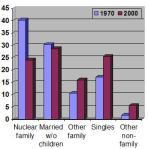 In other words: The real world is not that simple and the picture of how households are forming does change.
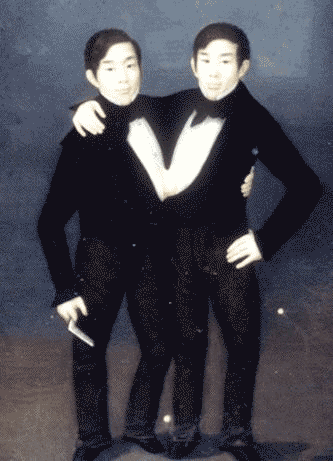 John Smith is the ultimate Anglo common name, but if your favorite external business directory tells you that the 2 companies has the same mother and are modest size organizations, the possibility of John Smith being the same person having the same role at the same time in 2 companies is very high.
 When a prospect comes to your site and tries to find information about your products, the first thing to do is very often using the search function. From deduplication of names and addresses we know that spelling is difficult and that sometimes we use other synonyms than used in the Master Data descriptions. Add to that the
  A recurring event every Friday on Twitter is the #FollowFriday with the acronym #FF, where people on Twitter tweets about who to follow.
 This piece by Mehmet Orun called “
 During many years of providing solutions for business directory match and tuning these as well as handling such match services from colleagues in the business I have very, very seldom seen a 100% match – even 90% matches are very rare.
