Good-Bye to the old CRM data model

Today I stumbled upon a blog post called Good-Bye to the “Job” by David Houle, a futurist, strategist and speaker.

In the post it is said: “In the Industrial Age, machines replaced manual or blue-collar labor. In the Information Age, computers replaced office or white-collar workers”.

The post is about that today we can’t expect to occupy one life-long job at a single employer.  We must increasingly create our own job.

My cyberspace friend Phil Simon also wrote about his advanced journey into this space recently in the post Diversifying Yourself Into a Platform Business.

The subject is close to me as I currently have approximately five different occupations as seen in my LinkedIn profile.

A professional angle to this subject is also how that development will turn some traditional data models upside down.

A Customer Relationship Management (CRM) system for business-to-business (B2B) environments has a basic data model with accounts having a number of contacts attached where the account is the parent and the contacts are the children in data modeling language.

Most systems and business processes have trouble when following a contact from account (company) to account (company) when the contact gets a new job or when the same real world individual is a contact at two or more accounts (companies) at the same time.

I have seen this problem many times and also failed to recognize it myself from time to time as told in the post A New Year Resolution.

My guess is that CRM systems in the B2B realm will turn to a more contact oriented view over time and this will probably be along with that CRM systems will rely more on Master Data Management (MDM) hubs in order to effectively reflect a fast, but not equally, changing world, as the development in the way we have jobs doesn’t happen at the same time at all places.  

Bookmark and Share

Proactive Data Governance at Work

Data governance is 80 % about people and processes and 20 % (if not less) about technology is a common statement in the data management realm.

This blog post is about the 20 % (or less) technology part of data governance.

The term proactive data governance is often used to describe if a given technology platform is able to support data governance in a good way.

So, what is proactive data governance technology?

Obviously it must be the opposite of reactive data governance technology which must be something about discovering completeness issues like in data profiling and fixing uniqueness issues like in data matching.

Proactive data governance technology must be implemented in data entry and other data capture functionality. The purpose of the technology is to assist people responsible for data capture in getting the data quality right from the start.

If we look at master data management (MDM) platforms we have two possible ways of getting data into the master data hub:

  • Data entry directly in the master data hub
  • Data integration by data feed from other systems as CRM, SCM and ERP solutions and from external partners

In the first case the proactive data governance technology is a part of the MDM platform often implemented as workflows with assistance, checks, controls and permission management. We see this most often related to product information management (PIM) and in business-to-business (B2B) customer master data management. Here the insertion of a master data entity like a product, a supplier or B2B customer involves many different employees each with responsibilities for a set of attributes.

The second case is most often seen in customer data integration (CDI) involving business-to-consumer (B2C) records, but certainly also applies to enriching product master data, supplier master data and B2B customer master data. Here the proactive data governance technology is implemented in the data import functionality or even in the systems of entry best done as Service Oriented Architecture (SOA) components that are hooked into the master data hub as well.

It is a matter of taste if we call such technology proactive data governance support or upstream data quality. From what I have seen so far, it does work.

Bookmark and Share

Big Master Data

Right now I am overseeing the processing of yet a master data file with millions of records. In this case it is product master data also with customer master data kind of attributes, as we are working with a big pile of author names and related book titles.

The Big Buzz

Having such high numbers of master data records isn’t new at all and compared to the size of data collections we usually are talking about when using the trendy buzzword BigData, it’s nothing.

Data collections that qualify as big will usually be files with transactions.

However master data collections are increasing in volume and most transactions have keys referencing descriptions of the master entities involved in the transactions.

The growth of master data collections are also seen in collections of external reference data.

For example the Dun & Bradstreet Worldbase holding business entities from around the world has lately grown quickly from 100 million entities to near 200 millions entities. Most of the growth has been due to better coverage outside North America and Western Europe, with the BRIC countries coming in fast. A smaller world resulting in bigger data.

Also one of the BRICS, India, is on the way with a huge project for uniquely identifying and holding information about every citizen – that’s over a billion. The project is called Aadhaar.

When we extend such external registries also to social networking services by doing Social MDM, we are dealing with very fast growing number of profiles in Facebook, LinkedIn and other services.

Extreme Master Data

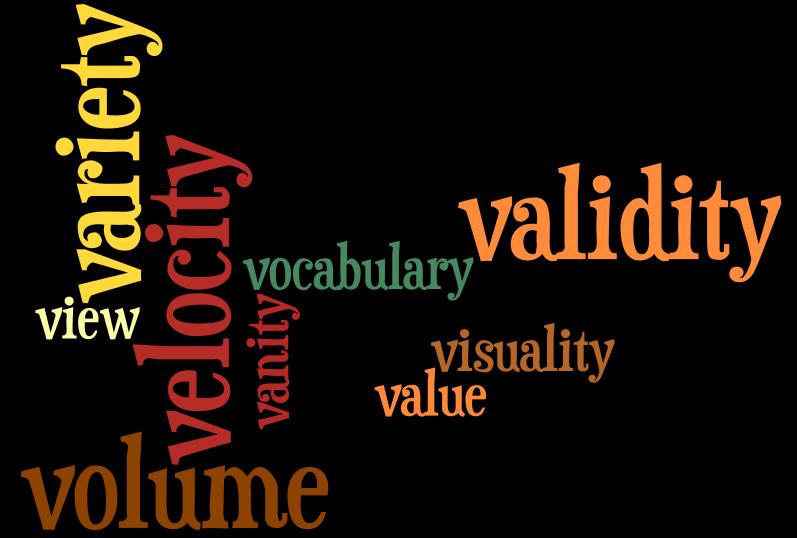
Gartner, the analyst firm, has a concept called “extreme data” that rightly points out, that it is not only about volume this “big data” thing; it is also about velocity and variety.

This is certainly true also for master data management (MDM) challenges.

Master data are exchanged between organizations more and more often in higher and higher volumes. Data quality focuses and maturity may probably not be the same within the exchanging parties. The velocity and volume makes it hard to rely on people centric solutions in these situations.

Add to that increasing variety in master data. The variety may be international variety as the world gets smaller and we have collections of master data embracing many languages and cultures. We also add more and more attributes each day as for example governments are releasing more data along with the open data trend and we generally include more and more attributes in order to make better and more informed decisions.

Variety is also an aspect of Multi-Domain MDM, a subject that according to Gartner (the analyst firm once again) is one of the Three Trends That Will Shape the Master Data Management Market.

Bookmark and Share

More Social Master Data Management

Yesterday my American cyberspace friend Jim Harris was so kind to send an invitation for Google+ – the new social network service you must hook into. Thanks Jim, now I had to fill in yet a profile, upload the same picture as always and start networking from scratch once again 🙂

As many people I have several profiles in different social network services as Twitter, Facebook and LinkedIn. As I’m doing business also with German speaking countries I also use XING as alternative to LinkedIn as told in the post LinkedIn and the other Thing.

In a comment to that post my Austria based French connection Olivier Mathurin noted: “Disconnected duplicated siloed professional profiles, mmm…”

In a post on this blog called Social Master Data Management made one year ago it is discussed how social CRM will add new sources from social networks to the external reference data sources we already know from old time CRM.

With all the different faces everyone are wearing in the social media realm this isn’t going to be easy and one may consider if social master data management is a wrong path giving the individual nature and built-in privacy in social networking services.    

Well, Gartner (the analyst firm) says that increasing links between MDM and social networks is one of the Three Trends That Will Shape the Master Data Management Market.

So, acknowledging that Gartner predictions are self-fulfilling, you better get moving into LinkedIn, Xing, Viadeo, Twitter, Facebook, (forget MySpace), Google+  and what’s next.

Bookmark and Share

Hors Catégorie

Right now the yearly paramount in cycling sport Le Tour de France is going on and today is probably the hardest stage in the race with three extraordinary climbs. In cycling races the climbs are categorized on a scale from 4 (the easiest) to 1 (the hardest) depending on the length and steepness. And then there are climbs beyond category, being longer and steeper than usually, like the three climbs today. The description in French for such extreme climbs is “hors catégorie“.

Within master data management categorization is an important activity.

We categorize our customer master data for example depending on what kind of party we dealing with like in the list here called Party Master Data Types that I usually use within customer data integration (CDI). Another way of categorizing is by geography as the data quality challenges may vary depending on where the party in question resides.

In product information management (PIM) categorization of products is one of the most basic activities. Also here the categorization is important for establishing the data quality requirements as they may be very different between various categories as told in the post Hierarchical Completeness.

But there are always some master data records that are beyond categorization in order to fulfill else accepted requirements for data quality as I experienced in the post Big Trouble with Big Names.

Bookmark and Share

Managing Client On-Boarding Data

This year I will be joining FIMA: Europe’s Premier Financial Reference Data Management Conference for Data Management Professionals. The conference is held in London from 8th to 10th November.

I will present “Diversities In Using External Registries In A Globalised World” and take part in the panel discussion “Overcoming Key Challenges In Managing Client On-Boarding Data: Opportunities & Efficiency Ideas”.

As said in the panel discussion introduction: The industry clearly needs to normalise (or is it normalize?) regional differences and establish global standards.

The concept of using external reference data in order to improve data quality within master data management has been a favorite topic of mine for long.

I’m not saying that external reference data is a single source of truth. Clearly external reference data may have data quality issues as exemplified in my previous blog post called Troubled Bridge Over Water.

However I think there is a clear trend in encompassing external sources, increasingly found in the cloud, to make a shortcut in keeping up with data quality. I call this Data Quality 3.0.

The Achilles Heel though has always been how to smoothly integrate external data into data entry functionality and other data capture processes and not to forget, how to ensure ongoing maintenance in order to avoid else inevitable erosion of data quality.

Lately I have worked with a concept called instant Data Quality. The idea is to make simple yet powerful functionality that helps with hooking up with many external sources at the same time when on-boarding clients and making continuous maintenance possible.

One aspect of such a concept is how to exploit the different opportunities available in each country as public administrative practices and privacy norms varies a lot over the world.

I’m looking forward to present and discuss these challenges and getting a lot of feedback.

Bookmark and Share

Mutating Platforms or Intelligent Design

How do we go from single-domain master data management to multi-domain master data management? Will it be through evolution of single-domain solutions or will it require a complete new intelligent design?

The MDM journey

My previous blog post was a book review of “Master Data Management in Practice” by Dalton Servo and Mark Allen – or the full title of the book is in fact “Master Data Management in Practice: Achieving True Customer MDM”.

The customer domain has until now been the most frequent and proven domain for master data management and as said in the book, the domain where most organizations starts the MDM journey in particular by doing what is usually called Customer Data Integration (CDI).

However some organizations do start with Product Information Management (PIM). This is mainly due to the magic numbers being the fact that some organizations have a higher number of products than customers in the database.

Sooner or later most organizations will continue the MDM journey by embracing more domains.

Achieving Multi-Domain MDM

John Owens made a blog post yesterday called “Data Quality: Dead Crows Kill Customers! Dead Crows also Kill Suppliers!” The post explains how some data structures are similar between sales and purchasing. For example a customer and a supplier are very similar as a party.

Customer Data Integration (CDI) has a central entity being the customer, which is a party. Product Information Management (PIM) has an important entity being a supplier, which is a party. The data structures and the workflows needed to Create, Read, Update and perhaps Delete these entities are very similar, not at least in business-to-business (B2B) environments.

So, when you are going from PIM to CDI, you don’t have to start from scratch, not at least in a B2B environment.

The trend in the master data management technology market is that many vendors are working their way from being a single domain vendor to being a multi-domain vendor – and some are promoting their new intelligent design embracing all domains from day one.

Some other vendors are breeding several platforms (often based on acquisition) from different domains into one brand, and some vendors are developing from a single domain into new domains.

Each strategy has its pros and cons. It seems there will be plenty of philosophies to choose from when organizations are going the select the platform(s) to support the multi-domain MDM journey.

Bookmark and Share

Book Review: Cervo and Allen on MDM in Practice

Master Data Management is becoming increasingly popular and so are writing books about Master Data Management.

Last month Dalton Cervo and Mark Allen published their contribution to the book selection. The book is called “Master Data Management in Practice: Achieving True Customer MDM”.

As disclosed in the first part of the title, the book emphasizes on the practical aspects of implementing and maintaining Master Data Management and as disclosed in the second part of the title, the book focuses on customer MDM, which, until now, is the most frequent and proven domain in MDM.  

In my opinion the book has succeeded very well in keeping a practical view on MDM. And I think that limiting the focus to customer MDM supports the understanding of the issues discussed in a good way, though, as the authors also recognizes in the final part, that multi-domain MDM is becoming a trend.   

Mastering customer master data is a huge subject area. In my eyes this book addresses all the important topics with a good balance, both in the sense of embracing business and technology angels with equal weight and not presenting the issues in a too simple way or in a too complex way.  

I like how the authors are addressing the ROI question by saying: “Attempts to try to calculate and project ROI will be swag at best and probably miss the central point that MDM is really an evolving business practice that is necessary to better manage your data, and not a specific project with a specific expectation and time-based outcome that can be calculated up front”.

In the final summary the authors say: “The journey through MDM is a constantly learning, churning and maturing experience. Hopefully, we have contributed with enough insight to make your job easier”. Yep, Dalton and Mark, you have done that.

Bookmark and Share

Party On

The most frequent data domain addressed in data quality improvement and master data management is parties.

Some of the issues related to parties that keeps on creating difficulties are:

  • Party roles
  • International diversity
  • Real world alignment

Party roles

Party data management is often coined as customer data management or customer data integration (CDI).

Indeed, customers are the lifeblood of any enterprise – also if we refer to those who benefit from our services as citizens, patients, clients or whatever term in use in different industries.

But the full information chain within any organization also includes many other party roles as explained in the post 360° Business Partner View. Some parties are suppliers, channel partners and employees. Some parties play more than one role at the same time.

The classic question “what is a customer?” is of course important to be answered in your master data management and data quality journey. But in my eyes there is lot of things to be solved in party data management that don’t need to wait for the answer to that question which anyway won’t be as simple as cutting the Gordian Knot as said in the post Where is the Business.

International diversity

As discussed in the post The Tower of Babel more and more organizations are met with multi-cultural issues in data quality improvement within party data management.

Whether and when an organization has to deal with international issues is of course dependent on whether and in what degree that organization is domestic or active internationally. Even though in some countries like Switzerland and Belgium having several official languages the multi-cultural topic is mandatory. Typically in large countries companies grows big before looking abroad while in smaller countries, like my home country Denmark, even many fairly small companies must address international issues with data quality.

However, as Karen Lopez recently pondered in the post Data Quality in The Wild, Some Where …, actually everyone, even in the United States, has some international data somewhere looking very strange if not addressed properly.

Real world alignment

I often say that real world alignment, sometimes as opposed to the common definition of data quality as being fit for purpose, is the short cut to getting data quality right related to party master data.

It is however not a straight forward short cut. There are multiple challenges connected with getting your business-to-business (B2B) records aligned with the real world as discussed in the post Single Company View.  When it comes to business-to-consumer (B2C) or government-to-citizen (G2C) I think the dear people who sometimes comments on this blog did a fine job on balancing mutating tables and intelligent design in the post Create Table Homo_Sapiens.

Bookmark and Share

A Sudden Change: South Sudan

This tenth Data Quality World Tour blog post is about South Sudan, a new country born today the 9th July 2011.

Reference data

The term “reference data” is often used to describe small collections of data that are basically maintained outside an enterprise and being common to all organizations. A list of countries is a good example of what is reference data.

Sometimes the terms “reference data” and “master data” are used interchangeable. I started a discussion on that subject on the mdm community some time ago.

One problem with reference data as a country list is if you are able to keep such a list updated. A country list doesn’t change every day, but sometimes it actually does like today with South Sudan as a new country.  

Suddenly changing dimensions

If you have master data entities linking to reference data like a country list it is not that simple when the reference data changes. If you have a customer placed in what is South Sudan today that entity should rightfully link to Sudan regarding yesterday’s transactions, but you may also have changed the name of Sudan to North Sudan which is the continuing part of the former Sudan. 

We call that kind of challenge “slowly changing dimensions” but it actually looks like “suddenly changing dimensions” when we have to figure out who belongs to where at a certain time.

Previous Data Quality World Tour blog posts: