Business Directory Musings

This coming Sunday I have worked professionally within Information Technology for 30 years. As I will be on a (well deserved!) vacation in Andalusia on Sunday, I’ll better post my thoughts today.

I have had a lot of different positions and worked in a lot of different domains. The single subject I have worked with the most is business directories.

My first job was at the Danish Tax Authorities and one of the assignments was being a secretary to the committee working for a joint registration of companies in Denmark. Besides I learned a lot about working in political driven organizations and about aligning business and technology I feel good about having been part of the start of building a public sector master data directory. Such directories are both essential for an effective public administration and can be used as external reference data in private enterprises as a valuable mean to improve data quality with business partner master data.

Later I have been working a lot with improving data quality through matching solutions around business directories. This goes from the Dun & Bradstreet WorldBase holding nearly 170 million business entities from all over the world, over databases like the EuroContactPool to national databases either holding all businesses (available) in a single country or given industry segments.

I guess I also will be spending some additional years from now with integrating business directory information into business processes as smooth as possible and preferable along with a range of other kind of external reference data.

One of the new sources building up in the cloud in the realm of business directories is master data references in social networks. The LinkedIn Companies feature is a prominent example. Of course such directories have some data quality issues. This is seen in looking at the companies where I currently work:

  • DM Partner A/S seems OK
  • Omikron Data Quality has 90 employees according to the company profile (filled out by yours truly). Then it’s strange that there are only 25 profiles in the network. But that’s because most employees are in Germany where the competing network called Xing is stronger.
  • Trapeze Group Europe has not been updated with a recent merger and not all profiles has changed their profile accordingly yet. But I’m sure that will be done as time goes by.

I have no doubt though that including information from social networks will become a part of integrating business partner master data in my future.

Bookmark and Share

Social Master Data Management

The term ”Social CRM” has been around for a while. Like traditional CRM (Customer Relationship Management) is heavily dependent on proper MDM (Master Data Management) we will also see that enterprise wide social CRM will be dependent on a proper social MDM element in order to be a success.

The challenge in social MDM will be that we are not going to replace some data sources for MDM, but we are actually going to add some more sources and handle the integration of these sources with the sources for traditional CRM and MDM and other new sources coming from the cloud.

Customer Master Data sources will expand to embrace:

  • Traditional data entry from field work like a sales representative entering prospect and customer master data as part of Sales Force Automation.
  • Data feed and data integration with external reference data like using a business directory. Such integration will increasingly take place in the cloud and the trend of governments releasing public sector data will add tremendously to this activity.
  • Self registration by prospects and customers via webforms.
  • Social media master data captured during social CRM and probably harvested in more and more structured ways.

Social media master data are found as profiles in services as Facebook mainly for business-to–consumer activities, LinkedIn mainly for business-to-business activities and Twitter somewhere in between. These are only some prominent examples of such services. Where LinkedIn may be dominant for professional use in English speaking countries and countries where English is widely spoken as Scandinavia and the Netherlands other regions are far less penetrated by LinkedIn. For example for German speaking countries the similar network service called Xing is much more crowded. So, when embracing global business you will have to acknowledge the diversity found in social network services.

A good way to integrate all these sources in business processes is using mashup’s. An example will be a mashup for entering customer data. If you are entering a business entity you may want to know:

  • What is already known in internal databases about that entity – either via a centralized MDM hub or throughout disparate databases?
  • Is the visit address correct according to public sector data?
  • How is the business account related to other business entities learned from a business directory?
  • Do we recognize the business contact in social networks – maybe we did have contact before in another relation?

If you are entering a consumer entity you may want to know:

  • Does that person already exist in our internal databases – as an individual and as a household?
  • What do we know about the residence address from public sector data?
  • Can we obtain additional data from phone book directories, nixie lists and what else being available, affordable and legal in the country in question?
  • How do we connect in social media?

Of course privacy is a big issue. Norms vary between countries, so do the legal rules. Norms vary between individuals and by the individuals as a private person and a business contact. Norms vary between industries and from company to company.

If aligning people, processes and technology didn’t matter before, it will when dealing with social master data management.

Bookmark and Share

Did They Put a Man on the Moon?

Recently I have been reading some blog posts circling around having a national ID for citizens in the United States including a post from Steve Sarsfield and another post from Jeffrey Huth of Initiate.

In Denmark where I live we have had such a national ID for about half a century. So if you are a vendor with a great solution for data matching and master data management in healthcare and wants to approach a Danish prospect in healthcare (which are mainly public sector here), they will tell you, that the solutions looks really nice, but they don’t have that problem. You can’t stay many seconds as a patient in a Danish hospital before you are asked to provide your national ID. And if you came in inside your mother you will be given an ID for life within seconds after you are born.

The same national ID is the basis when we have elections. Some weeks before the authorities will push the button and every person with the right status and age gets a ballot. Therefore we are in disbelief when we every fourth year are following when United States elects a president and we learn about all the mess in voter registration.

Is that happening in the nation that put a man on the moon in 1969?. Or did they? Was it after all a studio recording?

Bookmark and Share

Mixed Identities

A frequent challenge when building a customer master data hub is dealing with incoming records from operational systems where the data in one record belongs to several real world entities.

One situation may be that that a name contains two (or more) real world names. This situation was discussed in the post Splitting names.

Another situation may be that:

  • The name belongs to real world entity X
  • The address belongs to real world entity Y
  • The national identification number belongs to real world entity Z

Fortunately most cases only have 2 different real world representations like X and Y or Y and Z.

An example I have encountered often is when a company delivers a service through another organization. Then you may have:

  • The name of the 3rd party organization in the name column(s)
  • The address of the (private) end user in the address columns

Or as I remember seen once:

  • The name of the (private) end user in the name column(s)
  • The address of the (private) end user in the address columns
  • The company national identification number of the 3rd party organization in the national ID column

Of course the root cause solution to this will be a better (and perhaps more complex) way of gathering master data in the operational systems. But most companies have old and not so easy changeable systems running core business activities. Swapping to new systems in a rush isn’t something just done either. Also data gathering may take place outside your company making the data governance much more political.

A solution downstream at the data matching gates of the master data hub may be to facilitate complex hierarchy building.

Oftentimes the solution will be that the single customer view in the master data hub will be challenged from the start as the data in some perception is fit for the intended purpose of use.

Bookmark and Share

LinkedIn and the other Thing

I have a profile in two different business oriented social networking services: LinkedIn and XING.

I have far more connections in LinkedIn than in XING.

My connections in LinkedIn are mainly from English speaking countries (US, UK, IE, IN, AU) and from Scandinavia (DK, NO, SE) where I live and where English is widely spoken not at least by people in white-collar.

The connections I have with people in XING are almost only with people from Germany.

This picture matches very well how these two tools are positioned.

The US based LinkedIn is strong in “English speaking” countries with most profiles per capita in:

  • Denmark, Netherlands and USA followed by
  • Norway, Sweden, United Kingdom and Australia

(I have some figures from last year when LinkedIn passed 50 million profiles).

XING is strong in Germany, where XING was founded, and through acquisitions also in Spain and Turkey.

Now, it’s not that you can’t operate LinkedIn in German and Spanish; you can. Also you can operate XING in English.

It’s about meeting your connections where they are.

Bookmark and Share

Real World Alignment

I am currently involved in a data management program dealing with multi-entity (multi-domain) master data management described here.

Besides covering several different data domains as business partners, products, locations and timetables the data also serves multiple purposes of use. The client is within public transit so the subject areas are called terms as production planning (scheduling), operation monitoring, fare collection and use of service.

A key principle is that the same data should only be stored once, but in a way that makes it serve as high quality information in the different contexts. Doing that is often balancing between the two ways data may be of high quality:

  • Either they are fit for their intended uses
  • Or they correctly represent the real-world construct to which they refer

Some of the balancing has been:

Customer Identification

For some intended uses you don’t have to know the precise identity of a passenger. For some other intended uses you must know the identity. The latter cases at my client include giving discounts based on age and transport need like when attending educational activity. Also when fighting fraud it helps knowing the identity. So the data governance policy (and a business rule) is that customers for most products must provide a national identification number.

Like it or not: Having the ID makes a lot of things easier. Uniqueness isn’t a big challenge like in many other master data programs. It is also a straight forward process when you like to enrich your data. An example here is accurately geocoding where your customer live, which is rather essential when you provide transportation services.

What geocode?

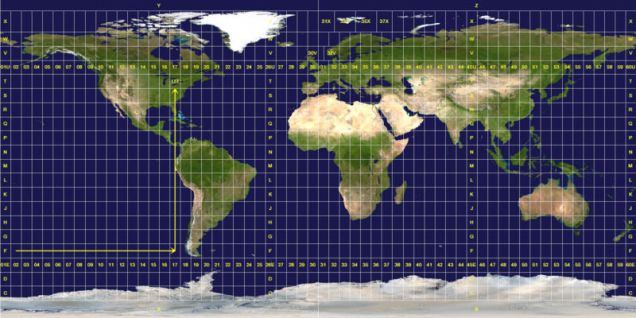
You may use a range of different coordinate systems to express a position as explained here on Wikipedia. Some systems refers to a round globe (and yes, the real world, the earth, is round), but it is a lot easier to use a system like the one called UTM where you easily may calculate the distance between two points directly in meters assuming the real world is as flat as your computer screen.


Bookmark and Share

Citizen ID within seconds

Here is a picture of my grandson Jonas taken minutes after his was born. He has a ribbon around his wrist showing his citizen ID which has just been assigned. There is even a barcode with it on the ribbon.

Now, I have mixed feelings about that. It is indeed very impersonal. But as a data quality professional I do realize that this is a way of solving a problem at the root. Duplicate master data in healthcare is a serious problem as Dylan Jones reported last year when he had a son in this article from DataQualityPro.

A unique citizen ID (National identification number) assigned in seconds after a birth have a lot of advantages. As said it is a foundation for data quality in healthcare from the very start of a life. Later when you get your first job you hand the citizen ID to your employer and tax is collected automatically. When the rest of the money is in the bank you are uniquely identified there. When you turn 18 you are seamlessly put on the electoral roll. Later your marriage is merely a relation in a government database between your citizen ID and the citizen ID of your beloved one.

Oh joy, Master Data Management at the very best.


Bookmark and Share

Multi-Entity Master Data Quality

Master Data is the core entities that describe the ongoing activities in an organization being:

  • Business partners (who)
  • Products (what)
  • Locations (where)
  • Timetables (when)

Many Master Data Management and Data Quality initiatives is in first place only focused on a single entity type, but sooner or later you are faced with dealing with all entity types and the data quality issues that arises from combining data from each entity type.

In my experience business partner data quality issues are in many ways similar cross all different industry verticals while product master data challenges may be different in many ways when comparing companies in various industry verticals. The importance of location data quality is very different, so are the questions about timetable data quality.

A journey in a multi-entity master data world

My latest experience in multi-entity master data quality comes from public transportation.

The most frequent business partner role here is of course the passengers. By the way (so to speak): A passenger may be a direct customer but the payer may also be someone else. But it doesn’t really change anything with the need for data quality whether the passenger is defined as a customer or not, you will regardless of that have to solve problems with uniqueness and real world alignment.

The product sold to a passenger is in the first place a travel document like a single ticket or an electronic card holding a season pass. But the service worth something for the passenger is a ride from point A to point B, which in many cases is delivered as a trip consisting of a series of rides from point A via point C (and D…) to point B. Having consistent hierarchies in reference data is a must when making data fit for multiple purposes of use in disciplines as fare collection, scheduling and so on.

Locations are mainly stop points including those at the start and end of the rides. These are identified both by a name and by geocoding – either as latitude and longitude on a round globe or by coordinates in a flat representation suitable for a map (on a screen). The distance between stops is important for grouping stops in areas suitable for interchange, e.g. bus stops on each side of a road or bus stops and platforms at a rail station. Working with the precision dimension of data quality is a key to accuracy here.

Timetables changes over time. It is essential to keep track of timetable validity in offline flyers, websites with passenger information, back office systems and on-board bus computers. Timeliness is as ever vital here.

Matching transactions made by drivers and passengers in numerous on-board computers, by employees in back office systems and coming from external sources with the various master data entities that describes the transaction correctly is paramount in an effective daily operation and the foundation for exploiting the data in order to make the right decisions for future services.

Bookmark and Share

Relational Data Quality

Most of the work related to data quality improvement I do is done with data in relational databases and is aimed at creating new relations between data. Examples (from party master data) are:

  • Make a relation between a postal address in a customer table and a real world address (represented in an official address dictionary).
  • Make a relation between a business entity in a vendor table and a real world business (represented in a business directory most often derived from an official business register).
  • Make a relation between a consumer in one prospect table and a consumer in another prospect table because they are considered to represent the same real world person.

When striving for multi-purpose data quality it is often necessary to reflect further relations from the real world like:

  • Make a relation in a database reflecting that two (or more) persons belongs to the same household (on the same real world address)
  • Make a relation in the database reflecting that two (or more) companies have the same (ultimate) mother.

Having these relations done right is fundamental for any further data quality improvement endeavors and all the exciting business intelligence stuff. In doing that you may continue to have more or less fruitful discussions on say the classic question: What is a customer?

But in my eyes, in relation to data quality, it doesn’t matter if that discussion ends with that a given row in your database is a customer, an old customer, a prospect or something else. Building the relations may even help you realize what that someone really is. Could be a sporadic lead is recognized as belonging to the same household as a good customer. Could be a vendor is recognized as being a daughter company of a hot prospect. Could be someone is recognized as being fake. And you may even have some business intelligence that based on the relations may report a given row as a customer role in one context and another role in another context.