As Bill Shakespeare Wrote …

This post is a follow up on the post Foreign Affairs and the post Fuzzy Matching and Information Quality over at the Mastering Data Management blog.

The fuzzy post and comments including mine circles around how the relation between “Bill” and “William” must be handled in data matching.

While “Bill” and “William” may be used interchangeable in modern Anglo-Saxon data, it may be a mistake in time (anachronism) to use them interchangeable related to the grand old playwright.

Also it may be a mistake in place to use them interchangeable in other cultures.

For example in my home country Denmark “Bill” and “William” are two different names. Globalization has been going on for a long time as far more people are baptized (or given the name otherwise) William than the original Danish form Wilhelm. There are only 286 people with the name Wilhelm today opposite to 7,355 with the name William including 800 new during the last year. And then there are 353 different people with the name Bill.

But the same use of nicknames has not been localized here yet.

So with Danish data matching “Bill Nielsen” and “William Nielsen” is almost certainly a false positive.

It’s not that it’s a big problem; the risk of making the mistake is very low. The problem is rather that focus should be on different more pressing issues with specific challenges (and possibilities) related to data from each culture and country.

Bookmark and Share

What is Identity Resolution?

We are continuously struggling with defining what it is we are doing like defining: What is data quality? What is Master Data? Lately I’ve been involved in discussions around: What is Identity Resolution? A current discussion on this topic is rolling in the Data Matching LinkedIn group.
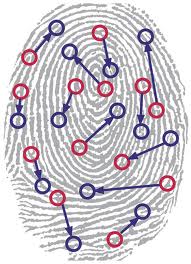
This discussion has roots in one of my blog posts called Entity Revolution vs Entity Evolution. Jeffrey Huth of IBM Initiate followed up with the post Entity Resolution & MDM: Interchangeable? In January Phillip Howard of Bloor made a post called There’s identity resolution and then there’s identity resolution (followed up by a correction post the other day called My bad).

It is a “same same but different” discussion. Traditional data matching (or record linkage) as seen in a data quality tool and master data management solution is the bright view: Being about finding duplicates and making a “single business partner view” (or “single party view” or “single customer view”). Identity resolution is the dark view: Preventing fraud and catching criminals, terrorists and other villains.

The Gartner Hype Cycle describes the dark view as ”Entity Resolution and Analysis”. This discipline is approaching the expectation peak and will, according to Gartner, be absorbed by other disciplines as no one can tell the difference I guess.

Certainly there are poles. In an article from 2006 called Identity Resolution and Data Integration David Loshin said: There is a big difference between trying to determine if the same person is being mailed two catalogs instead of one and determining if the individual boarding the plane is on the terrorist list.

But there is also a grey zone.

From a business perspective for example the prevention of misuse of a restricted campaign offer is a bit of both sides. Here you want to avoid that an existing customer is using an offer only meant for new customers. How does that apply to members of the same household or the same company family tree? Or you want to avoid someone using an introduction offer twice by typing her name and address a bit different.

From a technical perspective I have an example from working with a newspaper in a big fraud scam described in the post Big Time ROI in Identity Resolution. Here I had no trouble using a traditional deduplication tool in discovering non-obvious relationships. Also the relationships discovered in traditional data matching ends up quite nicely in hierarchy management as part of master data management as described in the post Fuzzy Hierarchy Management.

And then there is the use of the words identity (resolution) versus entity (resolution).

My feeling is that we could use identity resolution for describing all kind of matching and linking with party master data and entity resolution could be used for describing all kind of matching and linking with all master data entity types as seen in multi-domain master data management. But that’s just my words.

Bookmark and Share

Fuzzy Hierarchy Management

When evaluating results from automated data matching your goal is typically to find false positives and false negatives being entities that are matched, but shouldn’t be (false positives) and entities that are not matched, but should have been (false negatives).

However the fuzziness often used in the data matching process also apply to the evaluation of the results as many dubious results isn’t a question about if the matched database rows are reflecting the same real world entity but more a question about if the matched (or not matched) database rows are reflecting different members of a real world hierarchy.

Example 1:

John Smith on 1 Main Street in Anytown
Mary & John Smith on 1 Main Str in Anytown

Example 2:

Anytown Municipality, Technical Dept
Municipality of Anytown

Example 3:

Acme Corporation, Anytown
Acme Corporation, Anywhere

All three examples above may be considered a false positive if matched and a false negative if not matched.

You may say that it depends on the purpose of use, which is true.

But if we are talking master data management we may probably encompass multiple requirements where we simultaneously need the match and don’t want the match, which is why we need to be able to resolve and store the results from fuzzy data matching into hierarchies.

Bookmark and Share

The Letter Ø

This blog is written in English. Therefore the letters used are normally restricted to A to Z.  

The English alphabet is one of many alphabets using Latin (or Roman) letters. Other alphabets like the Russian uses Cyrillic letters. Then there are other script systems in the world which besides alphabets are abjads, abugidas, syllabic scripts and symbol scripts. Learn more about these in the post Script Systems.

My last surname is “Sørensen”. This word contains the lower case letter “ø” which is “Ø” in upper case. This letter is part of two alphabets: The Danish/Norwegian and the Faroese. Sometimes data has to be transformed into the English alphabet. Then the letter “ø” may be transformed to either “o” or “oe”. So my last surname will be either “Sorensen” or “Soerensen” in the English alphabet.

The town part of my address is “København”. The word “København” is what we call an endonym, which is the local word for place or a person. The opposite of endonym is exonym. The English exonym for “København” is “Copenhagen” which of course only has letters from the English alphabet. The Swedish exonym for “København” is “Köpenhamn”. Here we have a variant of “Ø” being “Ö”. The letter “Ö” exists in a lot of alphabets as Swedish, German, Hungarian and Turkish.

Usually “Ø” is transformed to “Ö” between Danish/Norwegian and these alphabets. The other way we usually accept the letter “Ö” in Danish/Norwegian master data.

These issues are of course a problem area in data quality, data matching and master data management. And with the complexity only between alphabets using Latin characters there is of course much more land to cover when including Cyrillic and Greek letters and then the other scripts systems with their hierarchical elements.

Bookmark and Share

The Art in Data Matching

I’ve just investigated a suspicious customer data match:

A Company on Kunstlaan no 99 in Brussel

was matched with high confidence with:

The Company on Avenue des Arts no 99 in Bruxelles

At first glance it perhaps didn’t look as a confident match, but I guess the computer is right.

The diverse facts are:

  • Brussels is the Belgian capital
  • Belgium has two languages: French and Flemish (a variant of Dutch)
  • Some parts of the country is French, some parts is Flemish and the capital is both
  • Brussels is Bruxelles in French and Brussel in Flemish
  • Kunst is Flemish meaning Art (as in Dutch, German and Scandinavian too)
  • Laan is Flemish meaning Avenue (same origin as Lane I guess)
  • Avenue des Arts is French meaning Avenue of Art (French is easy)

Technically the computer in this case did as follows:

  • Compared the names like “A Company” and “The Company” and found a close edit distance between the two names.
  • Remembered from some earlier occasions that “Kunstlaan” and “Avenue des Arts” was accepted as a match.
  • Remembered from numerous earlier occasions that “Brussel”(or “Brüssel) and “Bruxelles” was accepted as a match.

It may also have been told beforehand that “Kunstlaan” and “Avenue des Art” are two names of the same street in some Belgian address reference data which I guess is a must when doing heavy data matching on the Belgian market.

In this case it was a global match environment not equipped with worldwide address reference data, so luckily the probabilistic learning element in the computer program saved the day.

Bookmark and Share

Survival of the Fit Enough

When working with data quality and master data management at the same time you are constantly met with the challenge that data quality is most often defined as data being fit for the purpose of use, but master data management is about using the same data for multiple purposes at the same time.

Finding the right solution to such a challenge within an organization isn’t easy, because it despite all good intentions is difficult to find someone in the business with an overall answer to that kind of problems as explained in the blog post by David Loshin called Communications Gap? Or is there a Gap between Chasms?

An often used principle for overcoming these issues may (based on Darwin) be seen as “survival of the fittest”. You negotiate some survivorship rules between “competing” data providers and consumers and then the data being the fittest measured by these rules wins. All other data gets the KISS of death. Most such survivorship rules are indeed simple often based on a single dimension as timeliness, completeness or provenance.

Recently the phrase “survival of the fittest” in evolution theory has been suggested to be changed to “survival of the fit enough” because it seems that many times specimens haven’t competed but instead found a way into empty alternate spaces.

It seems that master data management and related data quality is going that way too. Data that is fit enough will survive in the master data hub in alternate spaces where the single source of truth exists in perfect symbioses with multiple realities.

Bookmark and Share

Lots of Product Names

In master data management the two most prominent domains are:

  • Parties and
  • Products

In the quest for finding representations of parties actually being the same real world party and finding representations of products actually being the same real world product we typically execute fuzzy data matching of:

  • Party names as person names and company names
  • Product descriptions

However I have often seen party names being an integral part of matching products.

Some examples:

Manufacturer Names:

A product is most often being regarded as distinct not only based on the description but also based on the manufacturer. So besides being sharp on matching product descriptions for light bulbs you must also consider if for example the following manufacturer company names are the same or not:

  • Koninklijke Philips Electronics N.V.
  • Phillips
  • Philips Electronic

Author Names:

A book is a product. The title of the book is the description. But also the author’s person name counts. So how do we collect the entire works made by the author:

  • Hans Christian Andersen
  • Andersen, Hans Christian
  • H. C. Andersen

as all three representations are superb bad data?

Bear Names:

A certain kind of teddy bears has a product description like “Plush magenta teddy bear”. But each bear may have a pet name like “Lots-O’-Huggin’ Bear” or just short “Lotso” as seen in the film “Toy Story 3”. And seriously: In real business I have worked with building a bear data model and the related data matching.

PS: For those who have seen Toy Story 3: Is that Lotso one or two real world entities?  

Bookmark and Share

Citizen ID and Biometrics

As I have stated earlier on this blog: The solution to the single most frequent data quality problem being party master data duplicates is actually very simple: Every person (and every legal entity) gets a unique identifier which is used everywhere by everyone.

Some countries, like Denmark where I live, has a unique Citizen ID (National identification number). Some countries are on the way like India with the Aadhaar project. But some of the countries with the largest economies in the world like United Kingdom, Germany and United States don’t seem to getting it in the near future.

I think United Kingdom was close lately, but as I understand it the project was cancelled. As seen in a tweet from a discussion on twitter today the main obstacles were privacy considerations and costs:

A considerable cost in the suggested project in United Kingdom, and also as I have seen in discussions for a US project, may be that an implementation today should also include biometric technology.

The question is however if that is necessary.

If we look at the systems in force today for example in Scandinavia they were implemented +40 years ago, and the Swedish citizen ID was actually implemented without digitalization in 1947. There are discussions going on about biometrics also as this is inevitable for issuing passports anyway. In the mean time the systems however continues to make a lot of data quality prevention and party master data management a lot easier than else around the world without having biometrics as a component.

No doubt about that biometrics will solve some problems related to fraud and so. But these are rare exceptions. So the cost/benefit analysis for enhancing an existing system with biometrics seems to be negative.

I guess the alleged need for biometric may have something to do with privacy considerations in a strange way: Privacy considerations are often overruled by the requirements for fighting terrorism – and here you need biometrics in identity resolution.

Bookmark and Share

A Prince and a Princess

Even though I’m not a royalist I’m afraid this will be the second hypocritical blog post within a year with a royal introduction.  The first one was about Royal Exceptions.

The big news on all channels today in Denmark (and Australia) is that (Australian born) Crown Princess Mary has given birth to twins; a boy and a girl then being a prince and a princess or as we say in blunt data quality language: A male and a female.  

The gender of individuals has always been a prominent element in party master data management and not at least in data matching.

Right now we are having a discussion in the LinkedIn Data Matching group concerning Data Quality of Gender / Sex Codes and the Impacts on Identity Data Matching.

So far we have covered issues as:

  • Trustworthiness for assigned gender codes
  • Scoring mechanisms in matching including gender codes
  • Diversity impact in assigning/verifying gender from names
  • Using gender codes for salutation

Please join the discussion and if you are not already a member of the LinkedIn Data Matching group: Join the group here.

Bookmark and Share

Matching Down Under

As a data matching geek I always love reading about how others have made the great but fearful journey into the data matching world.

This week Wayne Colless of the Australian Attorney-General’s Department kindly made a document about data matching public on the DataQualityPro site. The full title is “Improving the Integrity of Identity Data – Data Matching Better Practice Guidelines, 2009”. Link here.

As Wayne explains in a discussion in the LinkedIn Data Matching group: Australia has no national unique identifier for individuals (such as the US SSN or the number recorded on national ID cards used in many other countries) that can be used, so the matching has to involve only non-unique values such as name, address and dates of birth.

The document gives a very thorough step by step guidance into matching individual’s names, addresses and birthdays. As the document says you may either build all the logic yourself or you may buy commercial software that does the same. But anyway you have to understand what the software does in order to tune the processes and set the thresholds meaningful to you.

As Australia is a nation mainly born through immigration the challenges with adapting the ruling Anglo-Saxon naming conventions to the reality of name formats coming from all over the world is very apparent. I like that the diversity issues is given a good thought in the document.

I also like that the document addresses a subject not mentioned as often as it should be, namely the challenges with embracing historical values in settling a match as seen in this figure taken from the document:

Whether you think you already know the dos and don’ts in data matching (and I guess you never know that) I really find the document worth reading.   

Bookmark and Share