 The business value in data quality improvement is an ever recurring topic in the realm of data quality.
In the following I will list the first 55 reasons that comes to my mind for improving data quality related to the single most frequent data quality issue around, which is duplicates (and unresolved hierarchies) in party master data – names and addresses.
It goes like this:
1. It’s a waste of money sending the same printed material twice or more times to the same individual consumer.
2. Allowing the same customer enter twice or more times for an introduction offer challenges the return of investment in such campaigns.
3. When measuring churn and win-back two or more unrelated accounts for the same business hierarchy will produce an incomplete result leading to a wrong decision.
4. Sending the same promotion eMail twice or more times to the same individual consumer looks like spam even if different eMail addresses are used. Spam has more offending than selling power.
5. It’s probably a waste of money sending the same printed material with presentation and offerings to a household already having a customer.
6. Assigning different credit terms for two or more unrelated accounts for the same business hierarchy will make uncontrolled financial risk.
7. When measuring cross selling results two or more unrelated accounts for the same household will produce an incomplete result leading to a wrong decision.
8. When measuring life time value two or more unrelated accounts for the same individual consumer will produce a wrong result leading to a wrong decision.
9. It’s probably a waste of money sending the same printed material twice or more times to the same household.
10. When measuring life time value two or more unrelated accounts for the same individual being a consumer and a business owner will produce an incomplete result leading to a wrong decision.
11. When wanting a 1-1 dialogue two or more unrelated accounts for the same individual consumer will not lead to a 1-1 dialogue.
12. Having companies represented in two or more unrelated accounts for the same company with a different line-of-business assigned will produce an incomplete segmentation.
13. When trying to point at your best customers being households in order to find similar households two or more unrelated accounts for the same household will produce an incomplete segmentation.
 14. When measuring cross selling results two or more unrelated accounts for the same individual consumer will produce a wrong result leading to a wrong decision.
15. It’s a waste of money sending printed material with presentation and offerings to an individual consumer already being a customer.
16. When wanting a 1-1 dialogue two or more unrelated accounts for the same business hierarchy will not lead to a complete 1-1 dialogue.
17. When measuring life time value two or more unrelated accounts for the same business hierarchy will produce an incomplete result leading to a wrong decision.
18. Assigning different credit terms for two or more unrelated accounts for the same individual consumer will increase financial risk.
19. When measuring cross selling results two or more unrelated accounts for the same individual being a consumer and a business owner will produce only an incoherent result leading to a wrong decision.
20. When wanting a 1-1 dialogue two or more unrelated accounts for the same household will not lead to a true 1-1 dialogue.
21. Assigning different credit terms for two or more unrelated accounts for the same business entity could increase financial risk.
22. Having activities related to companies attached to two or more unrelated accounts for the same company will show an incomplete customer history with the risk of taking damaging actions.
23. It’s a waste of money and credibility sending printed material with presentation and offerings to an individual business decision maker in a business entity already being a customer.
24. When buying from a supplier having two or more unrelated accounts despite being the same business entity you may miss discount opportunities.
25. Having companies represented in two or more unrelated accounts for the same company with a different lead source assigned will produce a false measure of marketing and sales performance.
26. Sending the same promotion eMail or newsletter twice or more times to the same individual business decision maker looks like spam even if different eMail addresses are used. Spam has more offending than selling power.
27. When measuring churn and win-back two or more unrelated accounts for the same household will produce an incomplete result leading to a wrong decision.
28. Having activities related to influencers attached to two or more unrelated business contact records for the same person will show an incomplete business partner history with the risk of retaking already made actions.
29. When buying from a supplier having two or more unrelated accounts despite they are belonging the same business hierarchy you could miss discount opportunities.
30. Having activities related to households attached to two or more unrelated accounts for the same household will show an incomplete customer history with the risk of taking insufficient actions.
31. When trying to point at your best customers being individual consumers in order to find similar individuals two or more unrelated accounts for the same individual consumer will produce a wrong segmentation.
32. Having companies represented in two or more unrelated accounts for the same company with a different address assigned will produce an incomplete segmentation.
 33. When measuring life time value two or more unrelated accounts for the same business entity will produce a false result leading to a wrong decision.
34. Having activities related to decision makers in companies attached to two or more unrelated contacts for the same person will show an incomplete customer contact history with the risk of not taking appropriate actions.
35. When wanting a 1-1 dialogue two or more unrelated accounts for the same business entity will not lead to a real 1-1 dialogue.
36. When trying to point at your best customers being companies in order to find similar companies two or more unrelated accounts for the same company will produce a false segmentation.
37. Maintaining data related to two or more unrelated accounts for the same real world entity will probably be more costly than necessary when exploiting external reference data.
38. It’s probably a waste of money sending printed material with presentation and offerings to a business entity already being a customer at a higher or lower hierarchy level.
39. Having individual consumers represented in two or more unrelated accounts for the same individual consumer with a different lead source assigned will produce a wrong measure of marketing and sales performance.
40. Allowing the same customer re-enter for an offer already turned down (e.g. credit services) will create unnecessary double validation work.
41. When measuring churn and win-back two or more unrelated accounts for the same business entity will produce a false result leading to a wrong decision.
42. When wanting a 1-1 dialogue two ore more unrelated accounts for the same individual being a consumer and a business owner will not lead to a sensible 1-1 dialogue.
43. When measuring cross selling results two or more unrelated accounts for the same business entity will produce a false result leading to a wrong decision.
44. Having activities related to individual consumers attached to two or more unrelated accounts for the same individual consumer will show an incomplete customer history with the risk of taking wrong actions.
45. When measuring life time value two or more unrelated accounts for the same household will produce an incomplete result leading to a wrong decision.
46. Having activities related to customers attached to two or more unrelated accounts for the same real world entity may lead to that different sales representatives are working against each other.
47. Allowing sales representatives creating new accounts for already existing customers may create time consuming commission disputes.
48. Having households represented in two or more unrelated accounts for the same household with a different lead source assigned will produce an incomplete measure of marketing and sales performance.
49. Maintaining data related to two or more unrelated accounts for the same real world entity will consume more manual work than necessary.
50. When measuring churn and win-back two or more unrelated accounts for the same individual consumer will produce a wrong result leading to a wrong decision.
51. When buying from a supplier having two or more unrelated accounts despite being the same business entity you may have multiple unnecessary inventory costs.
52. It’s a waste of money and credibility sending the same printed material twice or more times to the same individual business decision maker.
53. When measuring churn and win-back two or more unrelated accounts for the same individual being a consumer and a business owner will produce only an incoherent result leading to a wrong decision.
54. Assigning different credit terms for two or more unrelated accounts for the same household may increase financial risk.
55. When measuring cross selling results two or more unrelated accounts for the same business hierarchy will produce an incomplete result leading to a wrong decision.

55.580294
12.282991
 Predicting ROI from a data quality program (and many other business initiatives) is like predicting the weather. Probably you are able to guess if it is going to be good or bad, but most often you don’t exactly guess how well or bad it actually turned out.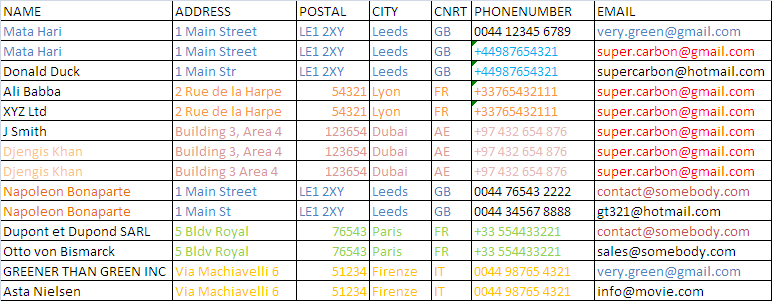




 Liliendahl on Data Quality