Fit for what purpose?

The goal of data quality improvement is often set as ”fit for purpose”. The first purpose addressed will almost naturally be within the domain where the data in question are captured. Then you address other domains where the same data also may be used, but probably with other purposes leading to additional or varying measures for fitness.
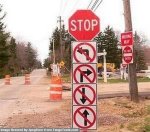
tricky_signIf an organisation identifies several domains where the same data are used the normal approach will be to gather all purposes and then start to align all the needs, find the highest common denominators and so on. This may be a very cumbersome process as you need to consider all the different dimensions of data quality: uniqueness, completeness, timeliness, validity, accuracy, consistency.

Another way will be to assume that if you gather many purposes the total needs will almost certainly tend to be a reflection of the real world objects to which the data refer.

So my thesis is, that there is a break even point when including more and more purposes where it will be less cumbersome to reflect the real world object rather than trying to align all known purposes.

Master Data are often used in many different functions in an organisation and not at least party data – names and addresses – are known to be a focus area for data quality improvement. Here it is very obvious that real world objects exists and they are basically the same to every organisation.acme

Earlier this year I wrote an entry on dataqualitypro about possibilities with external party reference data:  http://www.dataqualitypro.com/data-quality-home/external-reference-data-an-overview.html

In my previous post on this blog I noticed that governments around the world are releasing data stores that surely add traction to the real world approach to data quality improvement.

I will for sure touch this subject in forthcoming posts on this blog.

Bookmark and Share

Government says so

Capitol_Building_Full_ViewExternal reference data are going to play an increasing role in data quality improvement and a recent trend around the world helps a lot: Governments are unlocking their data stores.

Some available initiatives in English are the US data.gov and the UK “show us a better way”.

Today I attended a “Workshop on the use of public data in the private sector” arranged by the Danish National IT and Telecom Agency as part of the similar initiative in my home country.cristiansborg

The initiatives around the world are a bit different in focus areas and on which data to be released depending on the administrative traditions and local privacy policies.

As an organisation you may integrate with such public reference data either directly or through services from private vendors who add value by reformatting, merging, enriching and bundling with other services. One add on service on the international scene will be supplying consistency – as far as possible – between the datasets from each country.

One way or the other public reference data will become a part of the data architecture in most organisations. Applications in the cloud will probably be (actually are) first movers in this field.

Public reference data will bring operational databases and data warehouses closer to that “one version of the truth” that we talk so much about but have so much trouble achieving and even define. Now some of the trouble can be solved by: Government says so.

Bookmark and Share

Qualities in Data Architecture

Data architecture describes the structure of data used by a business and its applications by mapping the data artifacts to data qualities, applications, locations etc.

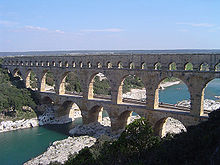
Pont_du_gard2000 years ago the roman writer, architect and engineer Marcus Vitruvius Pollio wrote that a structure must exhibit the three qualities of firmitas, utilitas, venustas — that is, it must be strong or durable, useful, and beautiful.

I have worked with data quality for many years and always been a bit disappointed about the lack of (at)traction that has been around data quality issues. Perhaps the lack of attraction is due to that we focus so much on strength, durability and usefulness and too little about beauty – or at least attractiveness.

But how do the three qualities apply to data quality?

  • Firmitas, strength and durability, is connected to technology and how we tend to make our data be as close to reflecting real world objects as possible in terms as uniqueness, completeness, timeliness, validity, accuracy and consistency.  
  • Utilitas, usefulness, is connected to how we use data as information in business processes. Often “fit for purpose” is stated as a goal for data quality improvement – which makes it hard when multiple purposes exist in an organization.
  • Venustas – beauty or attractiveness – is connected to the mindset of people. Often we blame poor data quality on the people putting data into the data stores and direct initiatives that way using a whip called data governance. But probably we will get more attraction from people if we make or show quality data more attractive.

SidneyOperaHouseCompared to buildings data quality are often the sewers beneath the old cathedrals and new opera houses – which also may explain the lack of attraction.

If you consider yourself a data quality professional – being a tool maker, expert, whatever – you got to get up from the sewers and make and show some attractive data in the halls of the fine buildings. You know how hard it is to make quality data – but do tell about the success stories.

GreatBeltBridge