360° Business Partner View

Having a 360° customer view is a well established term in CRM and Master Data Management. It is typically defined as “providing everyone in the organization with a consistent view of the customer.”

Then some organizations don’t use the term customer but other words like:

  • Citizen is the common term in public sector organizations when dealing with private persons
  • Patient is used in healthcare and the customer/citizen balance is different between countries around the world
  • Member is used in membership organizations like fundraising and those organizing employers and employees

The concept of a 360° customer view is in my eyes easily swapped with 360° citizen / patient/ member view.

Also related to the position in the pipeline we have words as:

  • Prospect being an entity with whom we have a 1-1 dialogue about becoming a customer
  • Lead being an entity we want to engage in such a dialogue

I think embracing prospects and leads is a must for a 360° customer view. Having the same real world object acting as a customer and a prospect/lead at the same time doesn’t make sense.

Hierarchy is of course important here, as the customer and the prospect or lead may belong to the same hierarchy but at a different level or only seen at a higher level. This is true for:

Organizations also have suppliers. In a B2B organization the intersection of business partners being customers / prospects / leads and also suppliers may be surprisingly large. Typically the intersection is not that large seen at branch level but higher if we take a look at the ultimate global mother level.

From my point of view a 360° customer view should be made on consolidated customer and supplier hierarchies in B2B. Even in B2C a private customer may be a business owner or key employee at a supplier.

Employees are another master data entity that may have an intersection with customers and suppliers. Having an employee being a (or spouse of a) business owner at a small business supplier is a classic cause of trouble. I have seen situations where a 360° customer view could include employee entities.

bpOther Business Partner entities exists depending on industry and specific business operations where a 360° customer view would benefit from catching up on other real world party entities.

I think Data Matching and/or upstream prevention by error tolerant search has a busy near future.

Bookmark and Share

Business Rules and Duplicates

When finding or avoiding duplicates or doing similar kind of consolidation with party master data you will encounter lots of situations, where it is disputable what to do.

The “political correct” answer is: Depends on your business rules.

Yea right. Easier said than done.

Often you face the following:

  • Business rules doesn’t exist. Decisions are based on common sense.
  • Business rules differs between data providers.

Lets have an example.

We have these business rules (Owner, Brief):

Finance, No sales and deliveries to dissolved business entities
Logistics, Access to premises must be stated in Address2 if different from Address1
Sales, Every event must be registered with an active contact
Customer Service, In case of duplicate contacts the contact with the first event date wins

In a CRM system we have these 2 accounts (AccountID, CompanyName, Address1, Address2, City):

1, Restaurant San Remo, 2 Main Street, entrance thru no 4, Anytown
2, Ristorante San Remo, 2 Main Street, , Anytown

Also we have some contacts (AccountID, ContactID, JobTitle, ContactName, Status, StartYear. EventCount):

1, 1, Manager, Luigi Calda, Inactive, 2001, 2
1, 2, Chef de la Cusine, John Hothead, Active, 2002, 87
2, 1, Chef de la Cuisine, John Hothead, Duplicate, 2008, 2
2, 2, Owner, Gordon Testy, Active, 2008, 7

We are so lucky that a business directory is available now. Here we have (NationalID, Name, Address, City, Owner, Status):

3, Ristorante San Remo, 2 Main Street, Anytown, Luigi Calda, Dissolved
4, Ristorante San Remo, 2 Main Street, Anytown, Gordon Testy, Active

Under New ManagementSo, I don’t think we will produce a golden view of this business relationship based on the data (structure) available and the business rules available.

Building and aligning business rules and data structures to solve this example – and a lot of other examples with different challenges – may seem difficult and are often omitted in the name of simplicity. But:

  • Master data – not at least business partners – is a valuable asset in the enterprise, so why treat it with simplicity while we do complex handling with a lot of other (transaction) data.
  • Common sense may help you a lot. Many of these questions are not specific to your business but are shared among most other enterprises in your industry and many others in the whole real world.
  • I guess the near future will bring increased number of available services with software and external data support that helps a lot in selecting common business rules and apply these in the master data processing landscape.

Bookmark and Share

Multi-Purpose Data Quality

Say you are an organisation within charity fundraising. Since many years you had a membership database and recently you also introduced an eShop with related accessories.

The membership database holds the following record (Name, Address, City, YearlyContribution):

  •  Margaret & John Smith, 1 Main Street, Anytown, 100 Euro

The eShop system has the following accounts (Name, Address, Place, PurchaseInAll):

  • Mrs Margaret Smith, 1 Main Str, Anytown, 12 Euro
  • Peggy Smith, 1 Main Street, Anytown, 218 Euro
  • Local Charity c/o Margaret Smith, 1 Main Str, Anytown, 334 Euro

Now the new management wants to double contributions from members and triple eShop turnover. Based on the recommendations from “The One Truth Consulting Company” you plan to do the following:

  • Establish a platform for 1-1 dialogue with your individual members and customers
  • Analyze member and customer behaviour and profiles in order to:
    • Support the 1-1 dialogue with existing members and customers
    • Find new members and customers who are like your best members and customers

As the new management wants to stay for many years ahead, the solution must not be a one-shot exercise but must be implemented as a business process reengineering with a continuous focus on the best fit data governance, master data management and data (information) quality.

question-marksSo, what are you going to do with your data so they are fit for action with the old purposes and the new purposes?

Recently I wrote some posts related to these challenges:

Any other comments on the issues in how to do it are welcome.

Bookmark and Share

So, how about SOHO homes

This post is the 3rd in a series of challenges in Data Matching with Party Master Data hierarchies.

80 % of all business entities are one-man-bands operated from so called SOHO’s (Small-Office-Home-Office). The home part is very often seen as a business is sharing a private residence address with a household.

farm

Examples are:

  • Farmers
  • Healthcare professionals
  • Small shops
  • Small membership organisation administrations
  • Fawlty Towers
  • Independent Data Quality consultants

Here we have a 3 layer relationship:

  • An ADDRESS occupied by a HOUSEHOLD and a BUSINESS (if not several)
  • The HOUSEHOLD consists of one or several CONSUMERS
  • The BUSINESS(s) has an EMPLOYEE being the Business Owner / Representative

One of the CONSUMERs and the EMPLOYEE is the same real world individual.

(About party master data entity types please have a look here.)

This very, very common construction creates some challenges in Data Matching and Master Data hierarchy building such as:

  • If you focus on B2B (Business-to-Business) you want to include the Business and Owner in that role, but not the same individual in the consumer role.
  • If you focus on B2C (Business-to-Consumer) you want to include the consumer role of that individual, but not the business (owner) role.
  • If you do both B2B and B2C you may want to assign either a B2B or a B2C category, and that’s tricky with those individuals
  • In several industries business owners, the business and the household is a special target group with unique product requirements. This is true for industries as banking, insurance, telco, real estate, law.

In my previous post on B2B (E2E) and B2C hierarchies methods for solving this is fuzzy matching, exploiting external reference data and other investigations – and so it is with this challenge as well. This makes Data Matching and Master Data hierarchy building a very exciting profession were you need both business and technology skills – and a real world perspective – to go all the way.

Bookmark and Share

Household Householding

When doing B2C (business-to-consumer) activities often you really want to do B2H (business-to-household). But sometimes you also actually want B2C, having a dialogue with the individual customer. So yet again we have a Party Master Data hierarchy, here households each consisting of one or several consumers (typically a nuclear family). In Data Model language there is a parent-child relationship between households and consumers.

The classic reason for wanting to identify households is that it’s a waste of money sending several printed catalogues and other offline mailings to the same household. But a lot of other good reasons based on a shared household budget exist too.

Data captured about consumers could look like this (name, address, city):

  • Margaret Smith, 1 Main Street, Anytown
  • Margaret & John Smith, 1 Main Str, Anytown
  • John Smith, 1 Main Street, Anytown
  • Peggy Smith, 1 Main Street, Anytown
  • Mr. J. Smith, 1 Main Street, Anytown

Here it seems fair to assume that we have:

  • A HOUSEHOLD being the Smith family consisting of
  • A CONSUMER being Margaret nicknamed Peggy
  • And a CONSUMER being John

(About party master data entity types please have a look here.)

But this is an easy example compared to what you see when working with names and addresses. Among complications I have seen are:

  • Households consisting of individuals with separate family names
  • Multi adult generation households and other kinds of households
  • Not having unique addresses may cause forming not existing households
  • Some addresses are not for traditional households, but are nursing homes, campus residence halls and the like
  • The time dimension: un-synchronous relocation capture, marriage (couples), divorce (split)

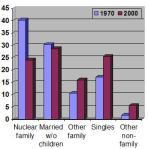
Families_USIn other words: The real world is not that simple and the picture of how households are forming does change.

Available composable methods for maintaining household information are:

  • Ask your customers. An obvious choice but not easy to keep on going – your ROI may not be positive.
  • Fuzzy Data Matching. The higher percent of all citizens in a given region you have in your database the better your matching may be aligned with the real world.
  • Exploiting external reference data. Having knowledge about public address data helps a lot. Such data may tell you about uniqueness of addresses and the attributes of the buildings there. Availability differs around the world, but the trend in open government data may help.

This is the second post in a series around hierarchies in Party Master Data and how this must be handled in data matching. Previous post was about B2B (E2E) data. Next post planned is about SOHO’s.

Bookmark and Share

Service Oriented Data Quality

puzzle

Service Oriented Architecture (SOA) has been a buzzword for some years.

In my opinion SOA is a golden opportunity for getting the benefits from data quality tools that we haven’t been able to achieve so much with the technology and approaches seen until now (besides the other SOA benefits being independent to technology).

Many data quality implementations until now have been batch cleansing operations suffering from very little sustainability. I have seen lots of well cleansed data never making it back to the sources or only being partially updated in operational databases. And even then a great deal of those updated cleansed data wasn’t maintained and prevented from there.

Embedded data quality functionality in different ERP, CRM, ETL solutions has been around for a long time. These solutions may serve their purpose very well when implemented. But often they are not implemented due to bundling of distinct ERP, CRM, ETL solutions and consultancies with specific advantages and data quality tools with specific advantages, which may not always be a perfect match. Also having different ERP, CRM, ETL solutions then often means different data quality tools and functionality probably not doing the same thing the same way.

Data Quality functionality deployed as SOA components have a lot to offer:

Reuse is one of the core principles of SOA. Having the same data quality rules applied to every entry point of the same sort of data will help with consistency.

Interoperability will make it possible to deploy data quality prevention as close to the root as possible.

Composability makes it possible to combine functionality with different advantages – e.g. combining internal checks with external reference data.

During the last years I have been on projects implementing data quality as SOA components. The results seem to be very promising so far, but I think we just started.

Bookmark and Share