Merging Customer Master Data

One of the most frequent assignments I have had within data matching is merging customer databases after two companies have been merged.

This is one of the occasions where it doesn’t help saying the usual data quality mantras like:

  • Prevention and root cause analysis is a better option
  • Change management is a critical factor in ensuring long-term data quality success
  • Tools are not important

It is often essential for the new merged company to have a 360 degree view of business partners as soon as possible in order to maximize synergies from the merger. If the volumes are above just a few thousand entities it is not possible to obtain that using human resources alone. Automated matching is the only realistic option.

The types of entities to be matched may be:

  • Private customers – individuals and households (B2C)
  • Business customers (B2B) on account level, enterprises, legal entities and branches
  • Contacts for these accounts

I have developed a slightly extended version of this typification here.

One of the most common challenges in merging customer databases is that hierarchy management may have been done very different in the past within the merging bodies. When aligning different perceptions I have found that a real world approach often fulfils the different reasoning.

The fuzziness needed for the matching is basically dependent on the common unique keys available in the two databases. These are keys as citizen ID’s (whatever labeled around the world) and public company ID’s (the same applies). Matching both databases with an external source (per entity type) is an option. “Duns Numbering” is probably the most common known type of such an approach. Maintaining a solution for assigning Duns Numbers to customer files from the D&B WorldBase is by the way one of my other assignments as described here.

The automated matching process may be divided into these three steps:

During my many years of practice in doing this I have found that the result from the automated process may vary considerable in quality and speed depending on the tools used.

Bookmark and Share

Matchback and Master Data Management

The term matchback is used by marketers for the process of determining which marketing activity that triggered a given purchase. In these times where multichannel marketing and sale is embraced by more and more companies, doing matchback is becoming more and more complicated.

The core functionality in matchback is the good old data matching, like: Does the name and address in a catalogue sending match (with a certain similarity) the name and address of a new buyer? But you also have to ask questions as: Is this buyer in fact a new buyer or did he buy before – in this channel or in another channel? Was this buyer also included in a concurrent email campaign? If private: Is the new buyer in the same household as an old buyer? If business: Does the new buyer belong to the same company family tree as the old buyer? Was the contact actually a contact at an old business customer?

Answering these questions will be a totally mess if you don’t have a solid party master data management program in place. You need to:

  • Store (or at least reference) all party entities from all channels in one single so called golden copy
  • Identify the same real world entities
  • Build the hierarchies necessary for current and possible future uses of data

Doing matchback is only one of many activities setting the requirements for party master data management program within an enterprise. And by the way: When that is up and running next thing you need is to manage your product master data the same way in order to make further analysis’s – and probably you also need to have a better structure and data quality with your location master data.

I keep my notes about Master Data Management here.

Bookmark and Share

Dealing with annoying customers

No, this is not a blog post about how to handle customers that unjustly complaints about everything.

This is a blog post about how to maintain high quality data in customer databases.

When doing that, there are some types of party entities that are more difficult to handle than others. In general B2B (business) entities are more complex than B2C (consumer/citizen) entities. Some of the B2B types I have spent more time with than others are the following:

Restaurants are some of the more demanding guests in our databases:

  • They do change owner more often than most other business entities making them a new legal entity each time which is important for some business contexts like credit risk.
  • On the other hand it’s the same address despite a new owner, which makes it being the same entity in the eyes of other business contexts like logistics.
  • In many cases you may have a name (trade style) of the restaurant and another official name of the business – a variant of this is when the restaurant is franchised.

Public sector bodies can’t be sliced the same way as private entities:

  • Often it is hard to state if a business partner belongs to a narrow defined or a broader defined unit within a governmental or local authority.
  • Public sector bodies tend to have long names that may be used with different inclusion of words, sequence of words and abbreviations of words.

Global enterprises may be seen as one or as thousands of customers:

  • The need for hierarchy management is obvious when it comes to handle data about business partners that belongs to a global enterprise – risk management, 1-1 marketing, sales force automation and so on will use the same data in many different ways.
  • Company family trees are useful but treacherous. A mother and a daughter may be very close connected with lots of shared services or it may be a strictly matter of ownership with no operational ties at all.

These are some of the facts of life that make it fun and not trivial when you are conducting data matching and other activities in order to achieve and maintain high quality of customer master data.

Bookmark and Share

55 reasons to improve data quality

The business value in data quality improvement is an ever recurring topic in the realm of data quality.

In the following I will list the first 55 reasons that comes to my mind for improving data quality related to the single most frequent data quality issue around, which is duplicates (and unresolved hierarchies) in party master data – names and addresses.

It goes like this:

1.  It’s a waste of money sending the same printed material twice or more times to the same individual consumer.

2.  Allowing the same customer enter twice or more times for an introduction offer challenges the return of investment in such campaigns.

3.  When measuring churn and win-back two or more unrelated accounts for the same business hierarchy will produce an incomplete result leading to a wrong decision.

4.  Sending the same promotion eMail twice or more times to the same individual consumer looks like spam even if different eMail addresses are used. Spam has more offending than selling power.

5.  It’s probably a waste of money sending the same printed material with presentation and offerings to a household already having a customer.

6.  Assigning different credit terms for two or more unrelated accounts for the same business hierarchy will make uncontrolled financial risk.

7.  When measuring cross selling results two or more unrelated accounts for the same household will produce an incomplete result leading to a wrong decision.

8.  When measuring life time value two or more unrelated accounts for the same individual consumer will produce a wrong result leading to a wrong decision.

9.  It’s probably a waste of money sending the same printed material twice or more times to the same household.

10.  When measuring life time value two or more unrelated accounts for the same individual being a consumer and a business owner will produce an incomplete result leading to a wrong decision.

11.  When wanting a 1-1 dialogue two or more unrelated accounts for the same individual consumer will not lead to a 1-1 dialogue.

12.  Having companies represented in two or more unrelated accounts for the same company with a different line-of-business assigned will produce an incomplete segmentation.

13.  When trying to point at your best customers being households in order to find similar households two or more unrelated accounts for the same household will produce an incomplete segmentation.

14.  When measuring cross selling results two or more unrelated accounts for the same individual consumer will produce a wrong result leading to a wrong decision.

15.  It’s a waste of money sending printed material with presentation and offerings to an individual consumer already being a customer.

16.  When wanting a 1-1 dialogue two or more unrelated accounts for the same business hierarchy will not lead to a complete 1-1 dialogue.

17.  When measuring life time value two or more unrelated accounts for the same business hierarchy will produce an incomplete result leading to a wrong decision.

18.  Assigning different credit terms for two or more unrelated accounts for the same individual consumer will increase financial risk.

19.  When measuring cross selling results two or more unrelated accounts for the same individual being a consumer and a business owner will produce only an incoherent result leading to a wrong decision.

20.  When wanting a 1-1 dialogue two or more unrelated accounts for the same household will not lead to a true 1-1 dialogue.

21.  Assigning different credit terms for two or more unrelated accounts for the same business entity could increase financial risk.

22.  Having activities related to companies attached to two or more unrelated accounts for the same company will show an incomplete customer history with the risk of taking damaging actions.

23.  It’s a waste of money and credibility sending printed material with presentation and offerings to an individual business decision maker in a business entity already being a customer.

24.  When buying from a supplier having two or more unrelated accounts despite being the same business entity you may miss discount opportunities.

25.  Having companies represented in two or more unrelated accounts for the same company with a different lead source assigned will produce a false measure of marketing and sales performance.

26.  Sending the same promotion eMail or newsletter twice or more times to the same individual business decision maker looks like spam even if different eMail addresses are used. Spam has more offending than selling power.

27.  When measuring  churn and win-back two or more unrelated accounts for the same household will produce an incomplete result leading to a wrong decision.

28.  Having activities related to influencers attached to two or more unrelated business contact records for the same person will show an incomplete business partner history with the risk of retaking already made actions.

29.  When buying from a supplier having two or more unrelated accounts despite they are belonging the same business hierarchy you could miss discount opportunities.

30.  Having activities related to households attached to two or more unrelated accounts for the same household will show an incomplete customer history with the risk of taking insufficient  actions.

31.  When trying to point at your best customers being individual consumers in order to find similar individuals two or more unrelated accounts for the same individual consumer will produce a wrong segmentation.

32.  Having companies represented in two or more unrelated accounts for the same company with a different address assigned will produce an incomplete segmentation.

33.  When measuring life time value two or more unrelated accounts for the same business entity will produce a false result leading to a wrong decision.

34.  Having activities related to decision makers in companies attached to two or more unrelated contacts for the same person will show an incomplete customer contact history with the risk of not taking appropriate actions.

35.  When wanting a 1-1 dialogue two or more unrelated accounts for the same business entity will not lead to a real 1-1 dialogue.

36.  When trying to point at your best customers being companies in order to find similar companies two or more unrelated accounts for the same company will produce a false segmentation.

37.  Maintaining data related to two or more unrelated accounts for the same real world entity will probably be more costly than necessary when exploiting external reference data.

38.  It’s probably a waste of money sending printed material with presentation and offerings to a business entity already being a customer at a higher or lower hierarchy level.

39.  Having individual consumers represented in two or more unrelated accounts for the same individual consumer with a different lead source assigned will produce a wrong measure of marketing and sales performance.

40.  Allowing the same customer re-enter for an offer already turned down (e.g. credit services) will create unnecessary double validation work.

41.  When measuring churn and win-back two or more unrelated accounts for the same business entity will produce a false result leading to a wrong decision.

42.  When wanting a 1-1 dialogue two ore more unrelated accounts for the same individual being a consumer and a business owner will not lead to a sensible 1-1 dialogue.

43.  When measuring cross selling results two or more unrelated accounts for the same business entity will produce a false result leading to a wrong decision.

44.  Having activities related to individual consumers attached to two or more unrelated accounts for the same individual consumer will show an incomplete customer history with the risk of taking wrong actions.

45.  When measuring life time value two or more unrelated accounts for the same household will produce an incomplete result leading to a wrong decision.

46.  Having activities related to customers attached to two or more unrelated accounts for the same real world entity may lead to that different sales representatives are working against each other.

47.  Allowing sales representatives creating new accounts for already existing customers may create time consuming commission disputes.

48.  Having households represented in two or more unrelated accounts for the same household with a different lead source assigned will produce an incomplete measure of marketing and sales performance.

49.  Maintaining data related to two or more unrelated accounts for the same real world entity will consume more manual work than necessary.

50.  When measuring churn and win-back two or more unrelated accounts for the same individual consumer will produce a wrong result leading to a wrong decision.

51.  When buying from a supplier having two or more unrelated accounts despite being the same business entity you may have multiple unnecessary inventory costs.

52.  It’s a waste of money and credibility sending the same printed material twice or more times to the same individual business decision maker.

53.  When measuring churn and win-back two or more unrelated accounts for the same individual being a consumer and a business owner will produce only an incoherent result leading to a wrong decision.

54.  Assigning different credit terms for two or more unrelated accounts for the same household may increase financial risk.

55.  When measuring cross selling results two or more unrelated accounts for the same business hierarchy will produce an incomplete result leading to a wrong decision.

Bookmark and Share

Slowly Changing Hierarchies

The term “slowly changing dimensions” is known from building data warehouses and attempting to make sense of data with business intelligence using reference data.

family treeThe fact that the world is changing all the time is also present when we look at Master Data Management and the essential hierarchy building taking place when structuring these data.

Company family trees are a common hierarchy structure in Master Data. One source of information about company family trees is the D&B Worldbase – a database operated by Dun & Bradstreet holding over 150 million business entities from all over the world.

I used to have Dun & Bradstreet as a customer. I don’t have that anymore – but I’m still working with the very same project. Because since I started this assignment US based Dun & Bradstreet handed over the operation in a range of European countries to the Swedish publishing group Bonnier. They later handed it over to Swedish company Bisnode. I started the project when I worked for Swedish consultancy group Sigma, continued in my Danish sole proprietorship and now serve Bisnode through German data quality tool vendor Omikron. Slowly changing relationships indeed.

As with many other activities in the realm of data quality establishing the “golden view”, “the single version of the truth” is only the beginning. If that “golden view” is not put into an ongoing maintenance the shiny gold will fade – slowly but steady.

Bookmark and Share

360° Business Partner View

Having a 360° customer view is a well established term in CRM and Master Data Management. It is typically defined as “providing everyone in the organization with a consistent view of the customer.”

Then some organizations don’t use the term customer but other words like:

  • Citizen is the common term in public sector organizations when dealing with private persons
  • Patient is used in healthcare and the customer/citizen balance is different between countries around the world
  • Member is used in membership organizations like fundraising and those organizing employers and employees

The concept of a 360° customer view is in my eyes easily swapped with 360° citizen / patient/ member view.

Also related to the position in the pipeline we have words as:

  • Prospect being an entity with whom we have a 1-1 dialogue about becoming a customer
  • Lead being an entity we want to engage in such a dialogue

I think embracing prospects and leads is a must for a 360° customer view. Having the same real world object acting as a customer and a prospect/lead at the same time doesn’t make sense.

Hierarchy is of course important here, as the customer and the prospect or lead may belong to the same hierarchy but at a different level or only seen at a higher level. This is true for:

Organizations also have suppliers. In a B2B organization the intersection of business partners being customers / prospects / leads and also suppliers may be surprisingly large. Typically the intersection is not that large seen at branch level but higher if we take a look at the ultimate global mother level.

From my point of view a 360° customer view should be made on consolidated customer and supplier hierarchies in B2B. Even in B2C a private customer may be a business owner or key employee at a supplier.

Employees are another master data entity that may have an intersection with customers and suppliers. Having an employee being a (or spouse of a) business owner at a small business supplier is a classic cause of trouble. I have seen situations where a 360° customer view could include employee entities.

bpOther Business Partner entities exists depending on industry and specific business operations where a 360° customer view would benefit from catching up on other real world party entities.

I think Data Matching and/or upstream prevention by error tolerant search has a busy near future.

Bookmark and Share

So, how about SOHO homes

This post is the 3rd in a series of challenges in Data Matching with Party Master Data hierarchies.

80 % of all business entities are one-man-bands operated from so called SOHO’s (Small-Office-Home-Office). The home part is very often seen as a business is sharing a private residence address with a household.

farm

Examples are:

  • Farmers
  • Healthcare professionals
  • Small shops
  • Small membership organisation administrations
  • Fawlty Towers
  • Independent Data Quality consultants

Here we have a 3 layer relationship:

  • An ADDRESS occupied by a HOUSEHOLD and a BUSINESS (if not several)
  • The HOUSEHOLD consists of one or several CONSUMERS
  • The BUSINESS(s) has an EMPLOYEE being the Business Owner / Representative

One of the CONSUMERs and the EMPLOYEE is the same real world individual.

(About party master data entity types please have a look here.)

This very, very common construction creates some challenges in Data Matching and Master Data hierarchy building such as:

  • If you focus on B2B (Business-to-Business) you want to include the Business and Owner in that role, but not the same individual in the consumer role.
  • If you focus on B2C (Business-to-Consumer) you want to include the consumer role of that individual, but not the business (owner) role.
  • If you do both B2B and B2C you may want to assign either a B2B or a B2C category, and that’s tricky with those individuals
  • In several industries business owners, the business and the household is a special target group with unique product requirements. This is true for industries as banking, insurance, telco, real estate, law.

In my previous post on B2B (E2E) and B2C hierarchies methods for solving this is fuzzy matching, exploiting external reference data and other investigations – and so it is with this challenge as well. This makes Data Matching and Master Data hierarchy building a very exciting profession were you need both business and technology skills – and a real world perspective – to go all the way.

Bookmark and Share

Household Householding

When doing B2C (business-to-consumer) activities often you really want to do B2H (business-to-household). But sometimes you also actually want B2C, having a dialogue with the individual customer. So yet again we have a Party Master Data hierarchy, here households each consisting of one or several consumers (typically a nuclear family). In Data Model language there is a parent-child relationship between households and consumers.

The classic reason for wanting to identify households is that it’s a waste of money sending several printed catalogues and other offline mailings to the same household. But a lot of other good reasons based on a shared household budget exist too.

Data captured about consumers could look like this (name, address, city):

  • Margaret Smith, 1 Main Street, Anytown
  • Margaret & John Smith, 1 Main Str, Anytown
  • John Smith, 1 Main Street, Anytown
  • Peggy Smith, 1 Main Street, Anytown
  • Mr. J. Smith, 1 Main Street, Anytown

Here it seems fair to assume that we have:

  • A HOUSEHOLD being the Smith family consisting of
  • A CONSUMER being Margaret nicknamed Peggy
  • And a CONSUMER being John

(About party master data entity types please have a look here.)

But this is an easy example compared to what you see when working with names and addresses. Among complications I have seen are:

  • Households consisting of individuals with separate family names
  • Multi adult generation households and other kinds of households
  • Not having unique addresses may cause forming not existing households
  • Some addresses are not for traditional households, but are nursing homes, campus residence halls and the like
  • The time dimension: un-synchronous relocation capture, marriage (couples), divorce (split)

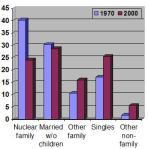
Families_USIn other words: The real world is not that simple and the picture of how households are forming does change.
Available composable methods for maintaining household information are:

  • Ask your customers. An obvious choice but not easy to keep on going – your ROI may not be positive.
  • Fuzzy Data Matching. The higher percent of all citizens in a given region you have in your database the better your matching may be aligned with the real world.
  • Exploiting external reference data. Having knowledge about public address data helps a lot. Such data may tell you about uniqueness of addresses and the attributes of the buildings there. Availability differs around the world, but the trend in open government data may help.

This is the second post in a series around hierarchies in Party Master Data and how this must be handled in data matching. Previous post was about B2B (E2E) data. Next post planned is about SOHO’s.

Bookmark and Share

Echoes in the Database

A basic structure of B2B (Business-to-Business) Party Master Data is that you have accounts being business entities each having one or several contacts being employees in each business entity. These employees act in the roles of decision makers, gate keepers, invoice receivers and so on. In Data Model language there is a parent-child relationship between accounts and contacts.

When doing deduplication with such data you aim to make a golden copy with unique business entities having unique contacts.

After achieving that you may gaze the data and stumble over rows in the golden copy as these (function, contact name, account name, address):

  • HR, John Smith, Smashing Estates Ltd, Same Place in Anytown
  • HR, John Smith, Smashing Solicitors Ltd, Same Place in Anytown
  • IT, Tushnelda von Keine-Mustermann, The Old Treadmill Ltd, Anytown
  • IT, Tushnelda von Keine-Mustermann, Brand New Brands Ltd, Anytown

Duplicates? Probably it’s the same real world individuals.

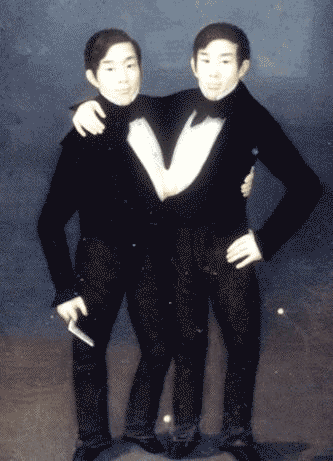
Chang-eng-bunker-PDJohn Smith is the ultimate Anglo common name, but if your favorite external business directory tells you that the 2 companies has the same mother and are modest size organizations, the possibility of John Smith being the same person having the same role at the same time in 2 companies is very high.

Tushnelda has a very unique name, so here there is a high possibility that she has got a new job in a new company, which makes one of the entries inactive. If one is going to be selected as the active survivor it may be chosen from newest update, found in external reference data or investigated otherwise.

B2B is often not actually Business-to-Business but also E2E – Employee-to-Employee – as the relationship exists between employees in the selling and buying business entities and it is not unusual that the relation may follow the employees when they change employer.

So striving for “one version of the truth” through “360 degree view on customer” is not a one layer exercise. This fact must be modeled in the Master Data structure, supported by functionality and prevented by feasible data quality implementations.

It’s my plan to do some blog posts around hierarchies in Party Master Data and how this must be handled in data matching. Next post will be about B2C data.

Bookmark and Share