The Snow Queen

During the existence of this blog I have come to use two tags several times, namely the fairy tale author Hans Christian Andersen as an inspiration for data quality related subjects and the tag happy databases as a counterweight against that we may talk too much about all the bad data quality around.

In embracing these two tags the fairy tale The Snow Queen also starts in the very bad end.

An evil troll makes a magic mirror that has the power to distort the appearance of things reflected in it. It fails to reflect all the good and beautiful aspects of people and things while it magnifies all the bad and ugly aspects so that they look even worse than they really are; for example makes the loveliest landscapes look like “boiled spinach.” I think every child understands that metaphor.

We tend to do the same in the data quality realm. In order to make a case for data and information quality improvement we like to tell about trainwrecks like on the site edited by IAIDQ. And for the record, I am guilty as everyone else in reading, laughing and contributing to the mobbing when everyone else makes a mistake within data management.

Bookmark and Share

Christmas at the old Bookstore

Once upon a time (let’s say 15 years ago) there was a nice old bookstore on a lovely street in a pretty town. The bookstore was a good shopping place caring about their customers. The business had grown during the years. Neighboring shops have been bought and added to the premises along with the apartments above the original shop.

Also the number of employees had increased. The old business processes didn’t fit into the new reality so the wise old business owner launched a business process reengineering project in order to have the shop ready for a new record selling Christmas season. All the employees were more or less involved from brainstorming ideas to the final implementation. All suggestions were prioritized according to business value in supporting the way of doing business: Handing books over the fine old cash desk in the middle of the bookstore.

Even some new technology adoptions were considered during the process. But not too much. As the wise old business owner said again and again: Technology doesn’t sell books. Ho ho ho.

Unfortunately something terrible happened somewhere else. I don’t remember if it was on the other side of the street, on the other side of the river or on the other side of the ocean. But someone opened an internet bookstore. During the next years the market for selling books changed drastically due to orchestrating a business process based on new technology.

The wise old business owner at the nice old bookstore was choked. He actually had read the best management books on the shelf in the bookstore telling him to improve his business processes based on the way of doing business today; rely on changing the attitude of the good people working for him and then maybe use technology as an enabler in doing that. Ho ho ho.

Now, what about a happy ending? Oh yes. Actually some people like to buy some books on the internet and like to buy some other books in a nice old bookstore. Some other people like to buy most books in a nice old bookstore but may want to buy a few other books on the internet. So the wise old business owner went into multi-channel book selling. In order to keep track on who is buying what and where he used a state of the art data matching tool. Ho ho ho. Besides that he of course relied on the good people still working for him. Ho ho ho.

Bookmark and Share

The Overlooked MDM Feature

When engaging in the social media community dealing with master data management an often seen subject is creating a list of important capabilities for the technical side of master data management. I have at some occasions commented on such posts by adding a feature I often see omitted from these lists, namely: Error tolerant search functionality. Examples from the DataFlux CoE blog here and the LinkedIn Master Data Management Interest Group here.

Error tolerant search (also called fuzzy search) technology is closely related to data matching technology. But where data matching is basically none interactive, error tolerant search is highly interactive.

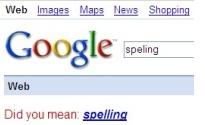
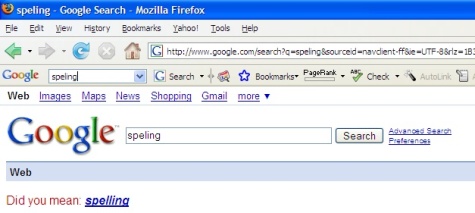
Most people know error tolerant search from googling. You enter something with a typo and google prompts you back with: Did you mean…? When looking for entities in master data management hubs you certainly need something similar. Spelling of names, addresses, product descriptions and so on is not easy – not at least in a globalized world.

As in data matching error tolerant search may use lists of synonyms as the basic technology. But also the use of algorithms is common going from an oldie like the soundex phonetic algorithm over more sophisticated algorithms.

The business benefits from having error tolerant search as a capacity in your master data management solution are plenty, including:

  • Better data quality by upstream prevention against duplicate entries as explained in this post.
  • More efficiency by bringing down the time users spends on searching for information about entities in the master data hub.
  • Higher employee satisfaction by eliminating a lot of frustration else coming from not finding what you know must be inside the hub already.

Error tolerant search has been one of the core features in the master data management implementations where I have been involved. What about you?

Bookmark and Share

Snowman Data Quality

Right now it is winter in the Northern Hemisphere and this year winter has come earlier than usual to Northern Europe where I live. We have already had a lot of snow.

One of the good things with snow is that you are able to build a snowman. Snowmen are beautiful pieces of art but very vulnerable.  Wind and not at least rising temperatures makes the snowman ugly and finally go away sooner or later.

Snowmen have this unfortunate fate common with many data quality initiatives.

Many articles, blog posts and so on in the data quality realm focuses on this fate related to technology based initiatives. The common practice of executing downstream cleansing of data using data quality tools is often criticized. As a practitioner in this field I have to admit that: Yes, I am often making the art of building snowman data quality.

An often stated alternative to using data quality tools is improving data quality through change management including relaying on changing the attitude of people entering and maintaining data. Though it’s not my area of expertise I have seen such initiatives too. And I am afraid that I am not convinced that such initiatives unfortunately also sooner or later have the same fate as the snowman.

As said, I’m not the expert here. I am only the little child watching how this snowman is exposed to the changing winds in many business environments and how it finally disappears when the business climate varies over time.

Now, this is supposed to be a cheerful blog about happy databases. I am ready for getting into some warm clothes and build a beautiful snowman of any kind.  

Bookmark and Share

Sell–side vs Buy-side Master Data Quality

The two most prominent domains in master data management and related data quality improvement are:

  • Party master data and
  • Product master data

Party Master Data

Most of the talk about party master data is about customer master data (including prospect master data). This discipline is often called Customer Data Integration (CDI).  Customer data is the sell-side of party master data. The organizations with the biggest pains in this area are mostly organizations with many customers (and prospects). The largest volumes of customer data is related to business-to-consumer (B2C) activities, but certainly we also see many grown customer databases in the business-to-business (B2B) realm.

The buy-side of party master data is supplier data. Fewer organizations have grown supplier databases, but surely big firms with many different departments and subsidiaries have supplier master data issues like the ones we see on the sell-side.

Also many organizations have a surprisingly large intersection of the same parties being both on the sell-side and on the buy-side. I have touched that subject in the post: 360° Business Partner View.

Product Master Data

Product Information Management (PIM) also has a sell-side and a buy-side. Also here the pains grow with the numbers. Opposite to party master data high sell-side numbers is more seldom than high buy-side numbers with product master data.

We often see high sell-side number of products at retailers where the same product also is buy-side at the same time, but where we maybe haven’t the same requirements for entity resolution at the same time. Most organizations don’t have that big issues (like problems with uniqueness) with own produced products.

Else high number of buy-side products is not so much related to buying raw materials as it is to buying things as spare parts and all kind of small equipment and assets of different kind (with software licenses being most close to herding cats I guess).

Multi-Domain Master Data Management

With multi-domain master data management there is of course a connection between sell-side party master data and sell-side product master data with opportunities in analyzing to whom we sell what and discovering cross selling openings and so on.

On the buy-side there are great potentials in looking into from where we buy similar things, looking into discount possibilities and so on.

Same same but different

A while ago I wrote a blog post about similarities and differences between party master data quality and product master data quality called Same Same But Different.

Besides having the differences between party master data and product master data I also find we have differences between sell-side and buy-side making it four different but somewhat similar and connected disciplines in master data management and data quality improvement.

Bookmark and Share